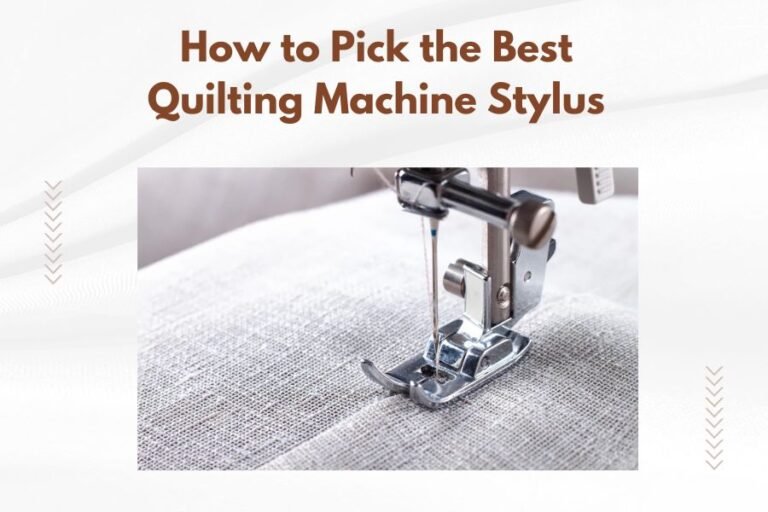

A stitch counter is a tool that tracks how many stitches you make while quilting, helping you maintain consistent patterns and manage large projects more easily.
You can use manual clickers, smartphone apps, or built-in digital counters to keep precise track of your quilting progress without losing count.
What Does a Stitch Counter Actually Do?
Think of a stitch counter as your quilting buddy that never forgets numbers. It sits quietly beside you, clicking away each stitch you make.
This simple tool solves one of quilting’s most annoying problems. You know the feeling – you’re deep in a beautiful pattern when someone calls your name. Suddenly, you’re lost. Was that stitch 47 or 48?
Manual Stitch Counters
Manual counters look like small plastic devices with buttons. You press the button each time you complete a stitch. They’re cheap, reliable, and never run out of battery.
Most manual counters can track up to 9999 stitches. That’s enough for most quilting projects, even large ones.
Digital Stitch Counters
Digital counters offer more features than manual ones. They often include timers, multiple project tracking, and memory functions.
Some digital models can count backwards too. This helps when you need to undo stitches and want to keep your count accurate.
Smartphone Apps as Stitch Counters
Your phone can become a powerful stitch counter. Many free apps let you tap your screen to count stitches.
Phone apps often include features like project notes, photos, and backup to cloud storage. You’ll never lose your count if your phone dies.
Why You Need a Stitch Counter for Quilting
Quilting without counting is like baking without measuring. You might get lucky, but you’ll probably end up frustrated.
Complex Pattern Management
Intricate quilt patterns require exact stitch counts. Even being off by one stitch can throw off your entire design.
I found that quilters working on traditional patterns like log cabin or wedding ring blocks rely heavily on accurate counting. These patterns have mathematical relationships that break down with incorrect counts.
Time Management Benefits
Knowing your average stitches per minute helps you plan quilting sessions better. You can estimate how long a project will take.
This planning becomes useful when you’re working on gifts or commissioned pieces with deadlines.
Progress Tracking
Large quilts can take months to complete. A stitch counter shows you real progress in numbers.
Seeing those numbers climb gives you motivation on days when the project feels endless.
Types of Stitch Counters Available
The market offers several types of stitch counters. Each type works better for different quilting styles.
Clicker Counters
These basic counters make a satisfying click sound when you press them. The sound helps you develop a rhythm while stitching.
Clicker counters cost between $3 and $15. They’re durable and work for years without issues.
Pros of Clicker Counters
- Never need batteries
- Very affordable
- Easy to use
- Pocket-sized
Cons of Clicker Counters
- Only count forward
- No memory if reset accidentally
- Can’t track multiple projects
Row Counters
Row counters help track both stitches and rows. They usually have two separate counting mechanisms.
These work great for quilters who need to track both dimensions of their work simultaneously.
Ring Counters
Ring counters wrap around your finger like jewelry. You can count without putting down your work.
The convenience factor makes ring counters popular with speed quilters and those working on tight deadlines.
How to Choose the Right Stitch Counter
Picking the right counter depends on your quilting style and preferences.
Consider Your Quilting Environment
Do you quilt in bright or dim lighting? Digital displays work better in low light, while manual counters work anywhere.
Noisy environments might make click sounds hard to hear. Silent digital counters work better in these situations.
Think About Your Projects
Simple projects with basic patterns don’t need fancy counters. A basic clicker does the job perfectly.
Complex projects with multiple pattern sections benefit from counters that track several numbers at once.
Budget Considerations
Basic manual counters cost under $10. High-end digital models can cost $50 or more.
Most quilters find that a $15-20 counter provides all the features they actually use.
Using Your Stitch Counter Effectively
Having a counter is one thing. Using it effectively is another skill entirely.
Develop a Counting Rhythm
Press your counter at the same point in each stitch. This creates muscle memory and reduces mistakes.
Many quilters count when they complete each stitch, not when they start it. This timing feels more natural.
Double-Check Your Work
Count every tenth or twentieth stitch by eye. This catches errors before they become big problems.
Mark your fabric lightly every 50 or 100 stitches. These marks help you verify your counter’s accuracy.
Common Counting Mistakes
- Forgetting to click for several stitches
- Double-clicking on single stitches
- Resetting the counter accidentally
- Mixing up stitch and row counts
Managing Multiple Projects
If you work on several quilts at once, write down your counts before switching projects.
Keep a small notebook near your quilting area. Record the project name, date, and current count before stopping.
Troubleshooting Common Issues
Even simple tools like stitch counters can cause headaches sometimes.
Lost Count Problems
When you lose your count, don’t panic. Look for natural stopping points in your pattern where you can restart counting.
Many patterns repeat every 10, 20, or 50 stitches. Find the nearest repeat and start fresh from there.
Counter Accuracy Issues
If your digital counter shows inconsistent numbers, check the battery first. Low batteries cause erratic behavior.
Clean the buttons on manual counters regularly. Fabric dust can make buttons stick or not register clicks.
Motivation and Habit Building
Some quilters forget to use their counters consistently. Attach the counter to your dominant hand or quilting hoop.
Making the counter visible and accessible helps build the counting habit faster.
Advanced Stitch Counting Techniques
Once you master basic counting, you can try more advanced methods.
Sectional Counting
Divide large projects into sections. Count each section separately and record the totals.
This method makes large projects feel more manageable. You celebrate small victories along the way.
Speed Tracking
Time yourself while counting stitches. This data helps you plan future projects more accurately.
I found that most hand quilters average 20-40 stitches per minute, depending on stitch complexity and experience level.
Stitch Counter Maintenance
Taking care of your counter extends its life and maintains accuracy.
Cleaning Your Counter
Wipe down your counter weekly with a slightly damp cloth. Fabric fibers and oils from your hands can build up over time.
For deep cleaning, use a soft brush to clear debris from button gaps and display areas.
Battery Care for Digital Models
Remove batteries if you won’t use your digital counter for several months. This prevents battery leakage damage.
Keep spare batteries in your quilting kit. Nothing’s more frustrating than a dead counter in the middle of a complex pattern.
Alternatives to Traditional Stitch Counters
Not everyone loves gadgets. Several alternatives work just as well for some quilters.
Paper and Pencil Method
Make tally marks on paper every five or ten stitches. This old-school method never fails.
Graph paper works great for this. Each square can represent five or ten stitches.
Bead Counting Systems
String beads on wire or strong thread. Move one bead for each stitch or group of stitches.
This tactile method appeals to quilters who like to keep their hands busy while thinking.
Conclusion
A stitch counter transforms quilting from guesswork into precision. Whether you choose a simple clicker or a fancy digital model, consistent counting improves your quilting quality and reduces frustration.
Start with a basic counter to build the counting habit. You can always upgrade later as your needs change. The key is finding a system you’ll actually use consistently. Your future quilting self will thank you for the accuracy and peace of mind that comes with reliable stitch counting.
Can I use a stitch counter for machine quilting?
Yes, but it’s less common since sewing machines often have built-in stitch counters. Hand-held counters work better for free-motion quilting where you control the stitch placement manually.
How do I count stitches in curved or circular patterns?
Divide curves into equal sections and count each section separately. Mark quarter points or eighth points on circles, then count the stitches between marks to maintain consistency.
What happens if I accidentally reset my counter mid-project?
Look for pattern repeats or natural landmarks in your stitching where you can estimate your progress. Many quilters keep backup counts written on paper to avoid this problem.
Do professional quilters always use stitch counters?
Not always. Experienced quilters often develop an eye for spacing and rhythm that reduces their need for counting. But most still use counters for complex patterns or when precision is critical.
Can children learn to use stitch counters effectively?
Absolutely. Stitch counters actually help children learn quilting basics by breaking complex projects into manageable, countable steps. The clicking sound often makes quilting more engaging for young learners.