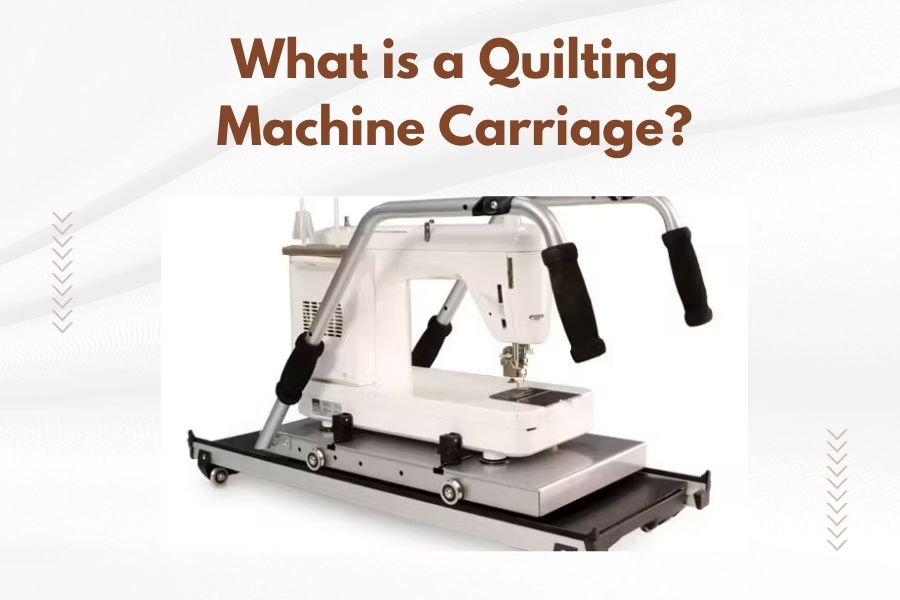
A quilting machine carriage is the moving frame system that holds your quilting machine and guides it smoothly across your quilt top during the quilting process.
The carriage rides on tracks or rails, allowing you to create consistent stitching patterns while maintaining proper tension and speed control throughout your quilting project.
How Does a Quilting Machine Carriage Work?
Think of your quilting machine carriage like a train on railroad tracks. The carriage holds your sewing machine securely while rolling back and forth on metal rails or tracks.
You guide the carriage manually or through computerized controls. As the carriage moves, your machine stitches continuously, creating beautiful quilting patterns across your fabric layers.
The carriage system keeps your machine at the perfect height and angle. This setup prevents hand fatigue and gives you much better stitch quality than handheld quilting.
Main Components of the Carriage System
Every quilting machine carriage has several key parts working together. Let me break down what you’ll find in most systems.
The Carriage Frame
The frame holds your quilting machine securely in place. Most frames are made from sturdy aluminum or steel construction.
You can adjust the frame height to match your comfort level. Some frames also tilt slightly to give you better visibility of your stitching area.
Wheels and Bearings
High-quality wheels or bearings allow smooth movement along the tracks. The best carriages use sealed bearings that resist dust and thread debris.
Poor-quality wheels create jerky movement that shows up in your stitching. That’s why investing in a good carriage system pays off in better results.
Handle Systems
Most carriages feature ergonomic handles for comfortable maneuvering. Some handles include built-in controls for machine functions like needle up/down positioning.
The handle placement affects how easily you can control the carriage. Look for handles positioned where your arms naturally rest during quilting.
Types of Quilting Machine Carriages
You’ll find several different carriage designs on the market. Each type offers specific benefits depending on your quilting style and space requirements.
Track-Based Carriages
Track-based systems use metal rails mounted on a quilting frame. The carriage rides on these tracks, providing extremely smooth and precise movement.
These systems work best for serious quilters who want professional-level precision. The tracks keep your machine perfectly aligned throughout the quilting process.
Advantages of Track Systems
- Incredibly smooth movement in all directions
- Perfect machine alignment every time
- Reduced vibration and machine wobble
- Compatible with computerized quilting systems
Potential Drawbacks
- Higher initial investment cost
- Requires dedicated quilting frame setup
- Takes up significant space in your sewing room
Cable-Suspended Carriages
Some carriage systems suspend your machine from cables rather than using tracks. The cables connect to pulleys mounted above your quilting area.
Cable systems often cost less than track-based options. They also require less floor space since you don’t need extensive track mounting.
Benefits of Cable Systems
- Lower cost compared to track systems
- Easier storage when not in use
- Good for smaller sewing spaces
- Still provides smooth machine movement
Choosing the Right Carriage for Your Machine
Not every carriage works with every quilting machine. You need to match your carriage choice to your specific machine model and quilting goals.
Weight Capacity Considerations
Check your machine’s weight before selecting a carriage. Heavy machines need robust carriage systems with strong frames and quality bearings.
Most domestic sewing machines work fine with standard carriages. Professional quilting machines may need heavy-duty carriage systems.
Machine Mounting Options
Different carriages use different mounting methods to secure your machine. Some clamp onto your machine’s base, while others use custom mounting plates.
Universal mounting systems work with many machine brands. Custom mounts often provide better stability but limit your machine choices.
Quick-Release Mounts
Many quilters love quick-release mounting systems. These let you remove your machine easily for regular sewing projects.
Quick-release mounts use lever-operated clamps or twist-lock mechanisms. You can switch between quilting and regular sewing in just minutes.
Setting Up Your Quilting Machine Carriage
Proper carriage setup makes a huge difference in your quilting results. Take time to get everything adjusted correctly before starting your first project.
Height Adjustment
Set your carriage height so your arms rest comfortably while guiding the machine. Your shoulders shouldn’t hunch up or stretch down unnaturally.
Most experts recommend having your elbows at about 90 degrees when your hands are on the carriage handles. This prevents fatigue during long quilting sessions.
Machine Alignment
Your machine must sit perfectly level in the carriage. An tilted machine creates uneven stitching and thread tension problems.
Use a small level tool to check both front-to-back and side-to-side alignment. Adjust the mounting system until everything is perfectly horizontal.
Testing Movement
Before loading your quilt, test the carriage movement in all directions. The motion should feel smooth and consistent without binding or jerky spots.
Listen for unusual noises that might indicate bearing problems or track misalignment. Address any issues before starting to quilt.
Maintenance Tips for Quilting Machine Carriages
Regular maintenance keeps your carriage system running smoothly for years. Most maintenance tasks are simple and take just minutes to complete.
Cleaning and Lubrication
Keep the tracks or cables clean and free from thread debris. Use a soft brush to remove dust and lint buildup weekly.
Apply light machine oil to moving parts according to your manufacturer’s recommendations. Too much oil attracts dirt, so use just a small amount.
Bearing Inspection
Check your carriage bearings regularly for smooth operation. Worn bearings create rough movement that affects your stitching quality.
Most bearing problems develop gradually, so you might not notice issues immediately. Monthly checks help catch problems early.
When to Replace Parts
Replace bearings when you notice rough or jerky carriage movement. Don’t wait until the problem gets severe.
Worn tracks or cables also need replacement eventually. Signs include visible wear marks or difficulty maintaining smooth movement.
Troubleshooting Common Carriage Problems
Even well-maintained carriages sometimes develop issues. Here are solutions for the most common problems quilters encounter.
Jerky or Rough Movement
Rough carriage movement usually indicates dirty or worn bearings. Clean the bearing areas thoroughly and apply fresh lubrication.
Check for thread or fabric debris caught in the moving parts. Even small pieces of lint can cause movement problems.
Machine Vibration
Excessive vibration often means loose mounting hardware. Check all bolts and clamps to ensure tight connections.
Vibration can also indicate an unbalanced machine setup. Recheck your machine’s level alignment in the carriage.
Inconsistent Stitch Quality
If your stitches vary in size or tension, the problem might be carriage-related rather than machine-related. Uneven carriage movement creates inconsistent stitching.
Test the carriage movement at different speeds. The motion should feel equally smooth whether you move quickly or slowly.
| Problem | Likely Cause | Quick Solution |
|---|---|---|
| Rough movement | Dirty bearings | Clean and lubricate |
| Machine vibration | Loose mounting | Tighten all hardware |
| Uneven stitching | Carriage alignment | Recheck level setup |
| Binding movement | Track debris | Clean tracks thoroughly |
Cost Considerations for Quilting Machine Carriages
Carriage systems range from budget-friendly options under $500 to professional systems costing several thousand dollars. Your choice depends on your quilting frequency and quality requirements.
Budget-Friendly Options
Basic carriage systems work well for occasional quilters. These systems provide smooth movement without advanced features like computerized controls.
You can find decent quality basic carriages for $300-800. These systems handle most home quilting projects perfectly well.
Professional-Grade Systems
Serious quilters often invest in high-end carriage systems with advanced features. These systems offer superior precision and durability for heavy use.
Professional systems typically cost $1500-4000 but provide years of reliable service. The improved stitch quality often justifies the higher cost.
Conclusion
A quilting machine carriage transforms your regular sewing machine into a powerful quilting tool. The carriage provides smooth, controlled movement that creates professional-quality results you can’t achieve with handheld quilting.
Whether you choose a basic track system or invest in a professional-grade carriage, proper setup and maintenance ensure years of reliable performance. Take time to match the carriage to your machine and quilting needs for the best results.
Remember that your carriage is an investment in better quilting. Quality systems pay for themselves through improved stitch consistency and reduced physical strain during long quilting sessions.
What’s the difference between a quilting machine carriage and a quilting frame?
A quilting frame holds your quilt layers in place, while the carriage holds your sewing machine and moves it across the quilt. Many quilters use both systems together, with the carriage riding on tracks mounted to the quilting frame.
Can I use any sewing machine with a quilting machine carriage?
Most domestic sewing machines work with universal carriage systems, but you should verify weight limits and mounting compatibility. Some carriages are designed specifically for certain machine brands or models.
How much space do I need for a quilting machine carriage setup?
Basic carriage systems need about 8×12 feet of floor space, while larger professional setups may require 12×16 feet or more. Consider both the frame size and room to move around the system comfortably.
Do I need special skills to install a quilting machine carriage?
Most carriage systems come with detailed instructions and require only basic tools for assembly. Many quilters successfully set up their own systems, though some prefer professional installation for complex setups.
How often should I replace the bearings in my quilting machine carriage?
Quality bearings typically last 3-5 years with regular use and proper maintenance. Replace them sooner if you notice rough movement or unusual noise, as worn bearings can affect your stitching quality.