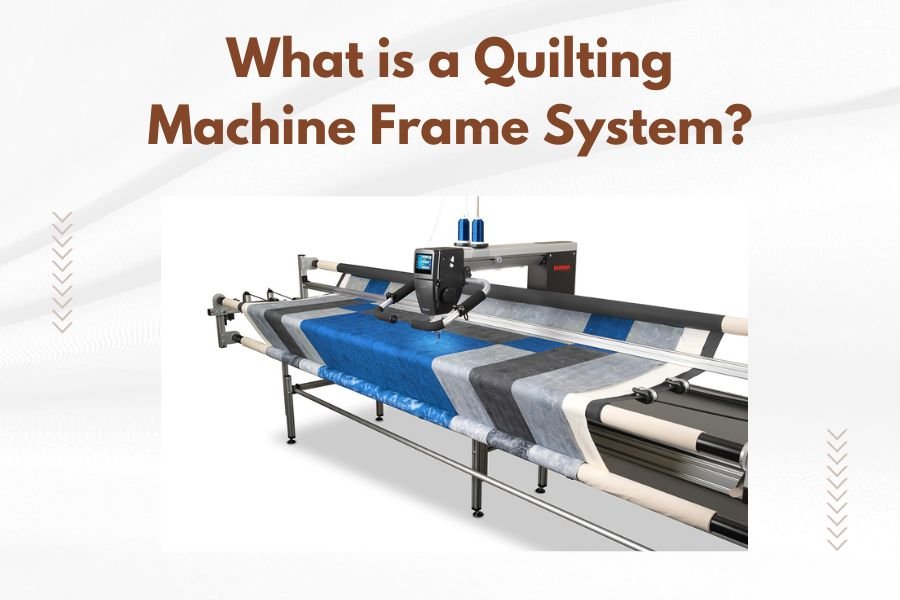
A quilting machine frame system is a support structure that holds your quilting machine above a large quilting surface, allowing you to move the machine smoothly across fabric layers to create professional quilts.
This frame system transforms your regular sewing machine or longarm quilter into a powerful quilting workstation that can handle large projects with better control and less physical strain.
How Quilting Machine Frame Systems Work
Think of a quilting machine frame like a giant easel for your fabric sandwich. Your quilt top, batting, and backing get stretched tight on this frame while your machine glides across the surface.
The frame keeps everything steady while you guide the machine by hand or with computer assistance. No more wrestling with bunched-up fabric or sore shoulders from hunching over a small workspace.
The Basic Components You Need
Every quilting frame system has four main parts that work together:
- Rails that hold your fabric layers stretched and taut
- Carriage system that supports and moves your quilting machine
- Wheels or glides that let the machine move smoothly in all directions
- Clamps or bungee systems that secure your quilt sandwich
Rails: Your Fabric Foundation
Rails run along the edges of your quilt frame. They grab onto your quilt backing and keep it stretched flat without wrinkles.
Most rails adjust to fit different quilt sizes. You can usually handle anything from baby quilts up to king-size bedding.
Machine Carriage: The Moving Platform
Your quilting machine sits on a carriage that rolls along tracks. This carriage system is what makes the magic happen.
High-quality carriages move smoothly without jerking or sticking. Cheaper ones might fight you or create uneven stitches.
Types of Quilting Machine Frame Systems
You have three main options when choosing a frame system. Each serves different needs and budgets.
Stationary Frames for Dedicated Spaces
Stationary frames stay put in your quilting room. They offer the most stability and workspace but need permanent floor space.
These frames typically measure 10-14 feet long and 4-6 feet wide. Perfect if you have a dedicated quilting studio.
Benefits of Stationary Systems
- Rock-solid stability reduces vibration and improves stitch quality
- Larger quilting area means fewer advances and better flow
- Usually compatible with computer-guided quilting systems
- Built to handle heavy longarm machines without flexing
Rolling Frames for Flexible Spaces
Rolling frames fold up or break down for storage. They work great in multipurpose rooms or smaller homes.
You can set up your frame when you want to quilt, then store it away when you need the space back.
Portable Frame Advantages
- Fits in guest rooms, basements, or shared spaces
- Usually costs less than stationary options
- Easy to move if you relocate or rearrange
- Good stepping stone before investing in permanent setup
Tabletop Systems for Small Projects
Tabletop frames sit on your existing table or counter. They work well for smaller quilts and detail work.
These compact systems let you try frame quilting without a huge investment or space commitment.
Choosing the Right Frame Size
Frame size affects what projects you can tackle and how smoothly you work. Bigger isn’t always better.
Standard Frame Dimensions
| Frame Length | Best For | Space Needed |
|---|---|---|
| 8-10 feet | Baby quilts, wall hangings | 10×6 feet room |
| 10-12 feet | Twin to queen quilts | 14×8 feet room |
| 12-14 feet | King quilts, production work | 16×10 feet room |
Measuring Your Available Space
Measure your room carefully before buying. You need extra space around all sides for loading quilts and moving around the frame.
Add at least 2-3 feet on each side of your frame dimensions. This gives you room to work comfortably without bumping walls.
Machine Compatibility Considerations
Not every quilting machine works with every frame system. Check compatibility before you buy.
Domestic Machine Adaptations
Regular sewing machines can work on frames with special mounting systems. You remove the machine from its base and attach it to the frame carriage.
This setup costs less than buying a longarm machine but has some limits on speed and stitch quality.
Popular Domestic Machine Options
- Janome, Brother, and Singer make quilting-friendly models
- Look for machines with good straight-stitch quality
- Avoid machines with automatic features that interfere with frame movement
- Consider throat space – more room makes quilting easier
Longarm Machine Integration
Longarm quilting machines are built specifically for frame systems. They offer more throat space and better control for detailed quilting.
These machines cost more but deliver professional results and work faster on large projects.
Setting Up Your Frame System
Proper setup makes the difference between smooth quilting and frustrating battles with your machine.
Level and Square Your Frame
Your frame must sit level and square on the floor. Use a carpenter’s level to check all rails and adjust leg heights as needed.
Crooked frames cause tension problems and uneven stitches. Take time to get this right from the start.
Loading Your First Quilt
Start with your backing fabric face-down on the frame. Stretch it tight but not so tight that it distorts.
Add your batting next, smoothing out wrinkles as you go. Finally, position your quilt top face-up and secure all layers.
Adjusting Machine Height and Angle
Your machine should sit at a comfortable height for your arms and back. Most frames adjust from 36-42 inches high.
The machine angle affects how you see your stitching. Slight forward tilt usually works best for visibility.
Maintenance and Care Tips
Regular maintenance keeps your frame system running smoothly for years. Simple care prevents expensive repairs.
Cleaning Your Rails and Tracks
Wipe down rails monthly with a damp cloth. Remove fabric lint and dust that can cause dragging or uneven movement.
Check wheels and bearings for smooth operation. A drop of sewing machine oil helps if they start squeaking.
Protecting Your Investment
Cover your frame when not in use to prevent dust buildup. Store clamps and accessories in labeled containers so nothing gets lost.
Check frame square and level every few months, especially if you move or adjust the system frequently.
Cost Considerations and Budgeting
Frame systems range from a few hundred dollars to several thousand. Know what you’re getting for your money.
Budget-Friendly Starting Options
Entry-level frames start around $300-800 for basic rolling systems. These work well for occasional quilting and learning.
Mid-range options ($800-2000) offer better stability and features without breaking the bank.
Professional-Grade Investment
High-end frames ($2000-5000+) include computer compatibility, premium materials, and professional features.
Consider these if you plan to quilt professionally or tackle many large projects each year.
Common Problems and Solutions
Even good frame systems have occasional hiccups. Here’s how to fix the most common issues.
Uneven Stitches
Uneven stitches usually come from tension problems or machine movement issues. Check that your quilt layers aren’t too tight or too loose.
Make sure your machine carriage moves smoothly without binding or jerking.
Fabric Puckering
Puckered fabric often means uneven tension across your quilt sandwich. Re-stretch your layers more evenly.
Sometimes backing fabric stretches differently than quilt tops. Adjust tension on each rail independently.
Getting Started with Frame Quilting
Your first frame quilting projects should be simple and forgiving. Build your skills gradually.
Practice Projects That Build Confidence
Start with straight-line quilting on small projects. Table runners and baby quilts let you learn without huge time commitments.
Practice moving your machine smoothly before attempting complex designs. Muscle memory takes time to develop.
Learning Resources
Many quilting shops offer frame quilting classes. Online videos help you see proper techniques and troubleshooting.
Connect with local quilting groups – experienced frame quilters love sharing tips and tricks.
Conclusion
A quilting machine frame system opens up new possibilities for your quilting projects. You get better stitch quality, less physical strain, and the ability to tackle larger quilts with confidence.
Start by honestly assessing your space, budget, and quilting goals. A basic rolling frame might serve you perfectly, or you might need a professional-grade stationary system.
Remember that your frame system is an investment in your quilting future. Choose quality components that will grow with your skills and serve you well for years to come.
What’s the difference between a quilting frame and a quilting hoop?
A quilting frame holds your entire quilt stretched flat while you move a machine across it, while a quilting hoop only holds a small section for hand quilting. Frames work with sewing machines and cover much larger areas at once.
Can I use my regular sewing machine on a quilting frame?
Yes, many domestic sewing machines can adapt to quilting frames with special mounting hardware. You’ll need a machine with good straight-stitch capability and the ability to drop or cover feed dogs for free-motion quilting.
How much room do I really need for a quilting frame setup?
Plan for at least 2-3 feet of clearance around all sides of your frame. A 12-foot frame needs roughly a 16×10 foot room to allow comfortable movement and quilt loading. Smaller frames work in proportionally smaller spaces.
Do quilting machine frames require special electrical setup?
Most quilting frames only need standard household electrical outlets for the sewing machine motor. Some computerized longarm systems might benefit from dedicated circuits to prevent interference, but basic frames have no special electrical requirements.
How long does it take to load a quilt on a frame system?
Loading a quilt typically takes 15-30 minutes once you learn the process. Your first few times might take longer as you figure out proper tension and positioning, but experienced quilters can load even large quilts quite quickly.