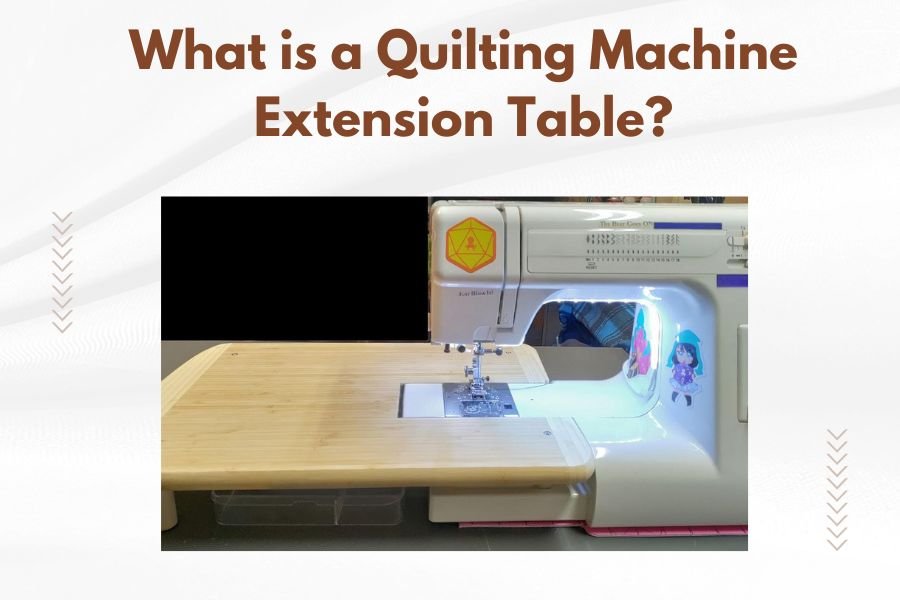
A quilting machine extension table is an additional work surface that attaches to your quilting machine to provide extra support for large quilts and fabric projects.
These tables expand your workspace, reduce fabric drag, and make quilting large projects much easier by keeping your quilt level with the machine bed.
Why Your Quilting Projects Need More Space
Have you ever tried quilting a king-size quilt on a standard sewing machine? It’s like trying to fold a fitted sheet in a closet. There’s just not enough room.
Your quilting machine comes with a small work area. This works fine for placemats or small wall hangings. But when you’re working on bed quilts or large throws, the fabric bunches up. It falls off the edges. You end up wrestling with your project instead of enjoying it.
That’s where extension tables come in. They give your fabric somewhere to rest while you work.
What Exactly Is a Quilting Machine Extension Table
Think of an extension table as a desk extension for your quilting machine. It’s a flat surface that connects to your machine bed. The table creates one continuous, level work area.
Most extension tables are made from smooth acrylic, melamine, or laminated wood. The surface needs to be slippery enough for fabric to glide easily. But not so slippery that your project slides around.
How Extension Tables Connect to Your Machine
Extension tables attach in different ways depending on your machine model. Some clip onto the machine bed. Others slide into grooves or brackets.
The key is getting the table perfectly level with your machine bed. Even a small height difference can catch fabric edges and cause problems.
Standard vs Custom Extension Tables
You can buy universal tables that fit many machine brands. These are cheaper and easier to find. But they might not align perfectly with your specific machine.
Custom tables are made for your exact machine model. They fit better but cost more. Many quilters start with universal tables and upgrade later.
Types of Quilting Machine Extension Tables
Portable Extension Tables
These tables fold up or come apart for storage. Perfect if you take your machine to classes or have limited space. They’re usually lightweight acrylic or plastic.
The trade-off is stability. Portable tables can flex or wobble with heavy quilts.
Permanent Extension Tables
These tables stay attached to your machine or sewing cabinet. They’re more stable and often larger. Great for dedicated sewing rooms.
Some quilters build their machines into custom cabinets with built-in extension surfaces. This creates the ultimate quilting workspace.
L-Shaped Extension Tables
These wrap around your machine on two sides. They provide support both in front and to the side of your machine. Excellent for very large quilts.
L-shaped tables take up more space but give you maximum fabric support.
Benefits of Using an Extension Table
Better Fabric Support
Large quilts are heavy. Without proper support, the weight pulls on your stitching area. This creates tension problems and uneven stitches.
Extension tables hold up the fabric weight. Your stitches come out more even. You have better control over your quilting.
Reduced Physical Strain
Ever finish a quilting session with sore arms and shoulders? You’re probably fighting fabric weight and bulk.
Extension tables let you slide fabric smoothly instead of lifting and wrestling with it. Your body will thank you after long quilting sessions.
Improved Stitch Quality
When fabric drags or pulls, it affects your stitch formation. Extension tables keep fabric moving smoothly past the needle. This leads to more consistent stitches.
Faster Quilting Process
You spend less time adjusting and repositioning fabric. More time actually quilting. Projects finish faster when you’re not constantly managing fabric bulk.
Choosing the Right Extension Table Size
Consider Your Typical Project Size
What size quilts do you make most often? Baby quilts need less support than king-size bed quilts. Match your table size to your most common projects.
A good rule of thumb: your extension table should be at least half the size of your finished quilts.
Factor in Your Space
Bigger isn’t always better if you don’t have room. Measure your sewing space carefully. Remember that you need room to walk around your setup.
Some tables have drop-down leaves or removable sections. These give you flexibility for different project sizes.
Height Matching Is Critical
Your extension table must match your machine bed height exactly. Even a small difference will catch fabric edges.
Many tables have adjustable legs or shims for fine-tuning the height.
Popular Extension Table Materials
Acrylic Extension Tables
Clear acrylic is popular because you can see through it. This helps when following quilting patterns or templates underneath your fabric.
Acrylic is smooth and lightweight. But it can scratch over time and may flex with very heavy quilts.
Melamine Extension Tables
Melamine has a smooth, white surface that’s easy to clean. It’s more rigid than acrylic and often less expensive.
The white surface makes it easy to see dark fabrics. Some quilters prefer this over clear acrylic.
Laminated Wood Extension Tables
These tables are very stable and durable. The laminate surface is smooth enough for fabric to glide easily.
Wood tables are heavier but don’t flex like plastic options. They often last longer with heavy use.
Installation and Setup Tips
Getting the Height Just Right
Use a straight edge to check that your table aligns perfectly with your machine bed. A business card shouldn’t catch when you slide it across the joint.
Most height problems happen because the table legs aren’t adjusted properly. Take time to get this right.
Securing Your Table
Make sure your extension table can’t slide or shift during quilting. Loose tables cause stitching problems and can be dangerous.
Some quilters add rubber pads or grip tape under table legs for extra stability.
Creating Smooth Fabric Flow
The joint between your machine and extension table should be seamless. Any gap or ridge will catch fabric.
Some quilters use clear tape over small gaps as a temporary fix while adjusting table height.
Maintenance and Care
Keeping the Surface Smooth
Clean your extension table regularly with a soft cloth. Avoid abrasive cleaners that might scratch the surface.
For acrylic tables, use plastic polish occasionally to remove small scratches and keep the surface smooth.
Protecting from Damage
Don’t place sharp objects directly on your extension table. Use cutting mats when trimming fabric on the table surface.
Store portable tables carefully to prevent scratches and cracks.
Troubleshooting Common Issues
Fabric Catching at the Joint
This usually means your table height is slightly off. Adjust the legs or add shims until the surfaces are perfectly level.
Table Movement During Quilting
Check that all attachment points are tight. Add rubber pads under legs if the table slides on smooth floors.
Limited Mobility Around Large Tables
Consider tables with removable sections or drop leaves. You can expand the table only when needed for large projects.
DIY vs Store-Bought Extension Tables
Building Your Own Extension Table
Handy quilters sometimes build custom extension tables. You can create exactly the size and features you want.
Basic materials include a smooth top surface and adjustable legs. The challenge is getting professional-quality results.
Buying Ready-Made Tables
Commercial extension tables are designed by engineers who understand fabric flow and machine requirements. They often work better than homemade versions.
The cost might be worth it for the time saved and better results.
Extension Tables for Different Machine Types
Domestic Quilting Machines
Home quilting machines usually have smaller extension table options. Focus on tables that support the right side and front of your machine.
Longarm Quilting Machines
Longarm machines often come with extension tables or have custom options available. These machines handle the largest quilts, so table support is essential.
Mid-Arm Quilting Machines
Mid-arm machines fall between domestic and longarm options. They benefit from medium-sized extension tables that don’t overwhelm smaller sewing spaces.
Cost Considerations
Budget-Friendly Options
Universal extension tables start around $100-200. These work well for many quilters, especially those just starting with larger projects.
Premium Extension Tables
Custom tables designed for specific machines can cost $300-800 or more. Professional quilters often find these worth the investment.
Long-Term Value
A good extension table can last many years. Consider the cost per project over the table’s lifetime when making your decision.
Alternatives to Extension Tables
Adjustable Height Tables
Some quilters use separate tables positioned next to their machines. This works if you can match the height accurately.
Quilting Frames
Large quilting frames hold the entire quilt, eliminating the need for extension tables. But frames take up much more space.
Floor Support Systems
Some quilters use padded surfaces on the floor to support large quilts. This works but requires more physical movement.
Conclusion
A quilting machine extension table transforms your quilting experience from wrestling with fabric to smooth, enjoyable stitching. The right table supports your fabric, reduces physical strain, and improves your stitch quality. While the initial investment might seem significant, the improvement in your quilting process and results makes it worthwhile for anyone working on medium to large projects regularly.
Remember to prioritize proper height alignment and stability when choosing your extension table. Whether you go with a budget universal option or invest in a custom table, you’ll wonder how you ever quilted large projects without one.
Can I use an extension table with any quilting machine?
Most extension tables are designed to work with multiple machine brands, but fit and height alignment vary. Check compatibility with your specific machine model before purchasing, or consider universal tables with adjustable features.
How do I know if my extension table is the right height?
Run a business card or thin ruler across the joint between your machine bed and extension table. It should slide smoothly without catching. Even small height differences will cause fabric to snag during quilting.
Do I need an extension table for small quilting projects?
Extension tables primarily benefit medium to large projects like bed quilts and large throws. For small projects like placemats or wall hangings, your machine’s standard work area is usually sufficient.
What’s the difference between acrylic and melamine extension tables?
Acrylic tables are clear, allowing you to see patterns underneath, but may flex with heavy quilts. Melamine tables are more rigid and often less expensive, with a white surface that makes dark fabrics easier to see.
Can I make my own quilting machine extension table?
Yes, but achieving the precise height alignment and smooth surface quality of commercial tables can be challenging. Consider your woodworking skills and available tools before deciding between DIY and store-bought options.