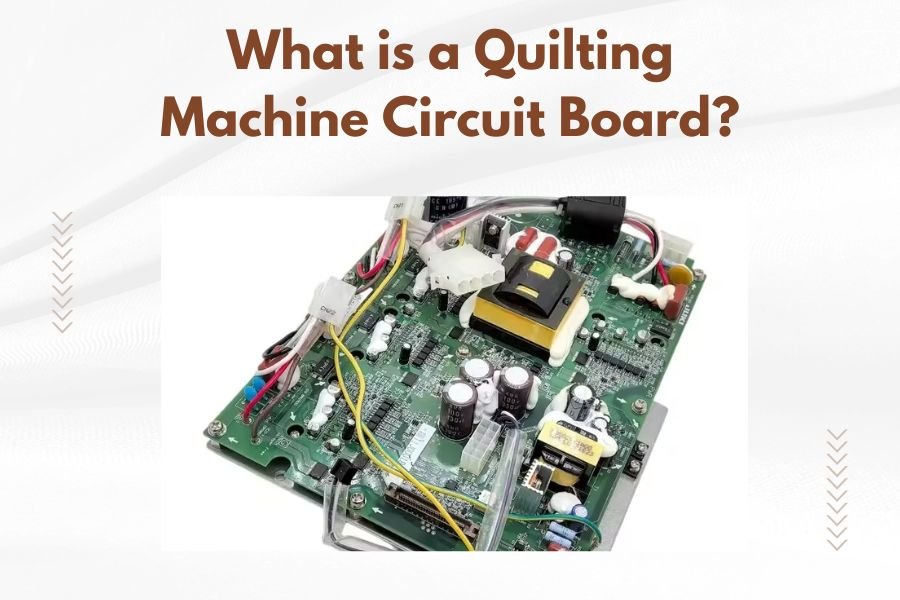
A quilting machine circuit board is the electronic brain that controls your machine’s motors, sensors, and display functions. It processes commands from buttons, touchscreens, and computerized patterns to coordinate stitching movements.
This control board manages everything from stitch selection to thread tension, making modern quilting machines smart enough to handle complex patterns automatically.
How Quilting Machine Circuit Boards Work
Think of your quilting machine’s circuit board like the conductor of an orchestra. It tells each part when to move, how fast to go, and when to stop.
The board receives input signals when you press buttons or select patterns. Then it sends electrical commands to motors that control needle movement, fabric feeding, and thread mechanisms.
Main Components on the Circuit Board
Your machine’s circuit board contains several key parts working together:
- Microprocessor – the main “thinking” chip
- Memory chips – store stitch patterns and settings
- Motor control circuits – manage speed and direction
- Sensor interfaces – read fabric position and tension
- Display controllers – run LCD screens or LED lights
The Microprocessor Does the Heavy Lifting
The microprocessor is like a tiny computer inside your machine. It runs software that interprets your commands and translates them into precise motor movements.
Modern quilting machines can store hundreds of stitch patterns because their processors have enough memory and speed to handle complex calculations in real-time.
Types of Circuit Boards in Different Machines
Not all quilting machines use the same type of circuit board. The complexity depends on what features your machine offers.
Basic Mechanical Machine Boards
Simple quilting machines use basic circuit boards that mainly control motor speed and basic functions. These boards handle:
- Start and stop commands
- Speed adjustment
- Basic stitch selection
- Safety shutoffs
Limited Memory and Features
Basic boards don’t need much processing power. They focus on reliability rather than fancy features.
Computerized Machine Control Boards
Advanced quilting machines have sophisticated circuit boards with more processing power. These handle complex tasks like:
- Embroidery pattern management
- Automatic thread cutting
- Tension adjustment
- USB connectivity
- Touchscreen interfaces
More Memory Means More Patterns
High-end boards can store thousands of designs and even connect to computers for pattern downloads.
Common Circuit Board Problems You Might Face
Even reliable circuit boards can develop issues over time. Here are the most common problems I found that quilters experience.
Power Supply Issues
Your machine might not turn on or randomly shut off. This often happens when the power supply section of the circuit board fails.
You’ll notice the display stays blank or flickers. Sometimes the machine starts but loses power during operation.
Voltage Problems Cause Erratic Behavior
Inconsistent power makes your machine act unpredictably. Stitches might be uneven or the motor could run at wrong speeds.
Memory Corruption
Stored patterns might disappear or display incorrectly. Your machine could forget custom settings or show error messages.
This usually happens gradually. You might lose one pattern at first, then more over time.
Factory Reset Sometimes Helps
Minor memory issues can often be fixed by resetting your machine to factory settings. Check your manual for the specific procedure.
Motor Control Circuit Failures
Your machine might not respond to speed changes or move in jerky motions. The needle could get stuck in one position.
These symptoms point to problems with the circuits that control your machine’s motors.
| Problem | Symptoms | Likely Cause |
|---|---|---|
| Won’t turn on | Blank display, no lights | Power supply circuit |
| Erratic stitching | Uneven patterns, wrong speed | Motor control circuit |
| Lost patterns | Missing designs, error codes | Memory corruption |
| Display problems | Flickering screen, wrong info | Display controller circuit |
Signs Your Circuit Board Needs Attention
How do you know when your quilting machine’s brain is having problems? Watch for these warning signs.
Error Messages and Codes
Your machine’s display might show cryptic error codes or messages you’ve never seen before. Don’t ignore these warnings.
Each manufacturer uses different codes, so check your manual or contact customer service for explanations.
Write Down Error Codes
Keep a record of any error messages. This information helps technicians diagnose problems faster.
Inconsistent Performance
Your machine works fine sometimes but acts up other times. This on-and-off behavior often indicates circuit board issues.
You might notice problems get worse in hot weather or after long sewing sessions. Heat can make failing circuits act up more.
Temperature Affects Electronics
Circuit boards are sensitive to temperature changes. A board that’s starting to fail might work when cool but malfunction when warm.
When to Repair vs Replace Your Circuit Board
Should you fix your current board or buy a new one? The answer depends on several factors.
Age of Your Machine
Machines over 10 years old might not be worth expensive circuit board repairs. Replacement parts become harder to find and more costly.
Newer machines usually justify repair costs because the rest of the machine still has years of life left.
Check Warranty Status First
Many manufacturers cover circuit board failures under warranty. Always check your warranty before paying for repairs.
Cost Comparison
Circuit board replacement can cost $200 to $800 depending on your machine model. Compare this to the price of a new machine with similar features.
If repair costs exceed 50% of a comparable new machine’s price, replacement might make more sense.
Factor in Labor Costs
Don’t forget to include technician labor charges in your cost calculations. Some repairs require several hours of work.
Professional Repair vs DIY Approaches
Can you fix circuit board problems yourself? It depends on your skills and the specific issue.
What You Can Do Yourself
Some basic troubleshooting steps are safe for anyone to try:
- Check all cable connections
- Clean dust from circuit board surfaces
- Perform factory resets
- Update machine firmware
These simple steps solve many apparent “circuit board” problems without any technical expertise.
When to Stop and Call a Pro
Never attempt repairs that involve removing the circuit board or handling electrical components. These tasks require specialized tools and knowledge.
Professional Diagnosis Makes Sense
Qualified technicians can quickly identify whether your problem is really the circuit board or something else entirely.
Many issues that seem like circuit board failures are actually caused by mechanical problems, loose connections, or software glitches.
Protecting Your Circuit Board from Damage
Prevention beats repair every time. Here’s how to keep your quilting machine’s electronic brain healthy.
Keep Your Machine Clean
Dust and lint can cause overheating and short circuits. Clean around your machine regularly and use compressed air to blow dust from vents.
Never use liquid cleaners near electronic components. Stick to dry cleaning methods only.
Monthly Cleaning Prevents Problems
Set a reminder to clean your machine monthly. This simple habit prevents many circuit board issues.
Use Surge Protection
Power surges can instantly destroy circuit boards. Always plug your quilting machine into a good surge protector.
Unplug your machine during thunderstorms or when you’re away for extended periods.
Quality Surge Protectors Pay Off
Don’t skimp on surge protection. A $30 surge protector can save you hundreds in circuit board replacement costs.
Future Technology in Quilting Machine Boards
What’s coming next for quilting machine technology? The trends I found online point to exciting developments.
Wireless Connectivity
Newer machines include WiFi capabilities built into their circuit boards. This lets you download patterns directly from the internet.
Some machines can even send status updates to your smartphone or tablet.
Cloud Storage for Patterns
Future machines might store your patterns in the cloud instead of local memory. This means unlimited storage and access from any connected machine.
Artificial Intelligence Features
Advanced processors are making AI features possible in quilting machines. These might include automatic tension adjustment and fabric recognition.
AI could help beginners by suggesting appropriate settings for different projects.
Conclusion
Your quilting machine’s circuit board is the technological heart that makes modern quilting possible. Understanding how it works helps you troubleshoot problems and make smart decisions about repairs.
Remember that many apparent circuit board issues are actually simple problems you can fix yourself. Clean connections, factory resets, and proper maintenance solve most issues without expensive repairs.
When you do need professional help, don’t delay. Early intervention often prevents minor circuit board problems from becoming major failures. With proper care, your machine’s electronic brain should serve you well for many years of quilting enjoyment.
What causes most quilting machine circuit board failures?
Power surges and overheating are the top causes of circuit board failures. Dust buildup blocks cooling vents, while electrical surges can instantly damage sensitive components. Using surge protectors and keeping machines clean prevents most problems.
How much does it cost to replace a quilting machine circuit board?
Circuit board replacement typically costs $200 to $800 depending on your machine model and complexity. Labor charges add another $100 to $200. Always get quotes from multiple repair shops and compare costs to new machine prices.
Can I upgrade my old quilting machine with a new circuit board?
Circuit boards are specifically designed for each machine model and cannot be upgraded or swapped between different machines. The board must match your machine’s motors, sensors, and mechanical components exactly to function properly.
How do I know if my quilting machine problem is the circuit board or something else?
Circuit board problems typically cause electronic symptoms like error messages, display issues, or complete power failure. Mechanical problems affect stitch quality, thread tension, or fabric feeding. When in doubt, have a technician diagnose the issue.
Is it worth repairing a circuit board on an older quilting machine?
Generally, machines over 10 years old aren’t worth expensive circuit board repairs unless they’re high-end models. Compare repair costs to the price of a new machine with similar features. If repairs exceed 50% of new machine cost, replacement makes more financial sense.