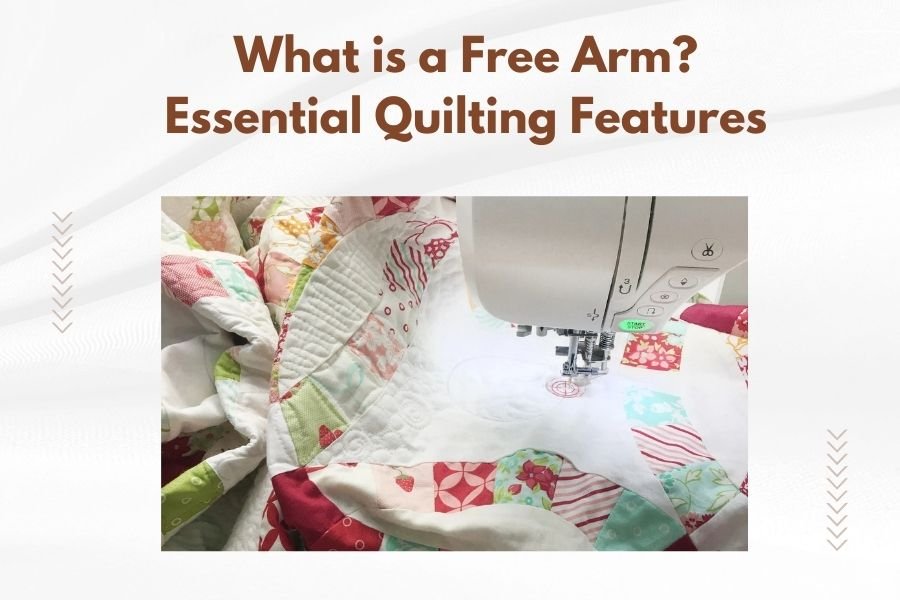
A free arm is a removable section on a sewing machine that creates a narrow, cylindrical work area for sewing sleeves, cuffs, and other tubular items.
This free arm feature transforms your regular flat sewing surface into a smaller workspace, making it much easier to maneuver circular or cylindrical fabric pieces during quilting and sewing projects.
You know that moment when you’re trying to quilt sleeves or add binding to curved edges? That’s when the free arm becomes your best friend. It’s like having an extra pair of hands that hold your fabric perfectly while you guide it through the machine.
How Does a Free Arm Work on Quilting Machines?
The free arm works by removing a detachable section of your machine’s base. Most modern quilting machines have a removable extension table or accessory box that covers the free arm.
When you take off this section, you reveal a narrow arm that extends from the main body of your machine. This arm typically measures 4 to 6 inches in diameter and gives you 360-degree access around your fabric.
Think of it like turning your sewing machine into a miniature version of those large industrial machines you see in factories. The fabric can slide freely around the arm while you stitch.
The Mechanics Behind Free Arm Functionality
Your machine’s motor and needle mechanism stay exactly the same. The free arm doesn’t change how your machine stitches.
What changes is your ability to manipulate the fabric. Instead of pushing large pieces of fabric through a small space between the machine and your table, you can slide tubular items right over the arm.
Types of Free Arms on Different Machines
Most quilting machines offer one of three free arm styles. The standard free arm removes completely and stores separately. Some machines have a flip-down section that hinges open. Others use a slide-out drawer system.
I found that machines with removable sections tend to give you the most working space. The hinge and drawer systems are convenient but sometimes limit your range of motion.
Essential Quilting Projects That Need Free Arms
Free arms shine brightest when you’re working on three-dimensional quilting projects. These are the times when flat sewing just won’t cut it.
Quilted Jackets and Garments
Jacket sleeves are nearly impossible to quilt properly without a free arm. You can slide the sleeve right over the arm and quilt continuous lines without awkward bunching.
The same goes for quilted vests, bags with rounded bottoms, and any garment that has curved seams. Your fabric moves smoothly instead of fighting against a flat surface.
Binding Curved Edges
Curved binding becomes much more manageable with a free arm. You can follow the curve naturally instead of constantly repositioning your fabric.
This works especially well for quilted placemats with rounded corners, baby bibs, and curved wall hangings. The binding lays flat and even.
Circular and Cylindrical Quilts
Some quilters love making tube quilts or circular lap quilts. These projects would be nearly impossible without free arm access.
You can quilt continuous spiral patterns or add decorative stitching around the entire circumference without stopping and starting.
Setting Up Your Free Arm Correctly
Getting your free arm ready takes about 30 seconds once you know the steps. Most quilters skip the setup instructions and miss some helpful tips.
Removing the Extension Table
Look for a small latch or button near your machine’s base. Press or slide this mechanism while gently pulling the extension table away from the machine.
Some tables slide straight out. Others lift up and away. Check your manual if you’re not sure, but don’t force anything.
Storing Your Removed Parts
Keep that extension table close by. You’ll want to put it back on for regular quilting. Some quilters use a small side table or designated storage spot.
Many extension tables have small compartments for bobbins or tools. Don’t dump these out when you remove the table.
Adjusting Your Work Height
Your work surface just got lower. You might need to adjust your chair height or add a cushion to maintain comfortable posture.
The free arm typically sits 2 to 3 inches lower than your regular sewing surface. This change affects how your arms and shoulders align with your work.
Lighting Considerations
Free arm work often happens closer to your machine’s body. Make sure your lighting still reaches your needle area clearly.
You might need to adjust your task light or add a small LED strip to illuminate the work area properly.
Free Arm Techniques for Better Quilting
Using a free arm well takes a bit of practice. The technique is different from regular flat quilting, but these tips help you get comfortable quickly.
Supporting Your Fabric Weight
Heavy fabrics can pull and distort when they hang off the free arm. Use a small table or ironing board to support the bulk of your project.
Position this support so the fabric flows naturally without pulling against your stitching line. You want gentle support, not tight tension.
Controlling Stitch Quality
Free arm stitching can sometimes produce uneven stitches if you rush. Slow down your machine speed by 10 to 20 percent compared to flat quilting.
This gives you better control over fabric movement and helps prevent puckering or skipped stitches.
Managing Fabric Bulk
Thick seams or multiple layers can be tricky on the free arm. Guide these areas through slowly and don’t let the fabric bunch up behind the needle.
Sometimes stopping with the needle down and readjusting your fabric position helps maintain smooth stitching.
Common Free Arm Challenges and Solutions
Every quilter runs into a few free arm issues when starting out. These problems are normal and easy to fix once you know what to look for.
Fabric Bunching Problems
Fabric that bunches or pleats usually means you’re moving too fast or not supporting the weight properly. Slow down and add fabric support.
Another common cause is using the wrong presser foot. Make sure you’re using a foot designed for the type of stitching you’re doing.
Thread Tension Issues
Free arm work sometimes affects thread tension because the fabric angle changes. You might need to adjust your tension settings slightly.
Test on a scrap first. Usually, reducing tension by one number helps compensate for the different fabric angle.
Uneven Stitch Length
Inconsistent stitches often happen when you’re learning free arm control. Keep your hands relaxed and let the machine maintain its rhythm.
Gripping the fabric too tightly or pushing it through too aggressively disrupts the machine’s natural feed.
Choosing Quilting Machines with Good Free Arms
Not all free arms work the same way. Some features make a real difference in how useful this function becomes for your quilting projects.
Free Arm Size Matters
Larger free arms give you more working space but might not fit smaller projects well. Smaller arms work great for sleeves but limit bigger projects.
I found that 5 to 6-inch diameter free arms offer the best balance for most quilting projects. This size handles both small and medium projects comfortably.
Storage and Convenience Features
Look for machines where the extension table stores easily and reattaches securely. Some cheaper machines have tables that feel flimsy or don’t align properly.
The best systems let you remove and replace the extension table in seconds without tools or complicated positioning.
Additional Free Arm Accessories
Some manufacturers offer special free arm accessories. These might include smaller work surfaces, fabric guides, or specialized presser feet.
While not essential, these accessories can make specific projects much easier if you do a lot of free arm work.
Maintenance Tips for Free Arm Mechanisms
Free arm mechanisms need a bit of extra attention to keep working smoothly. The removable parts can collect lint and debris more easily than fixed components.
Cleaning Removable Parts
Clean the connection points between your extension table and machine base regularly. Lint and thread bits can prevent proper attachment.
Use a small brush or compressed air to clear these areas. A cotton swab with a tiny bit of sewing machine oil helps keep connection points smooth.
Checking Alignment
Extension tables can shift over time and not align perfectly with your main work surface. This creates a small step that can catch fabric.
Check alignment monthly and adjust if needed. Most systems have small screws or clips that let you fine-tune the positioning.
Advanced Free Arm Quilting Techniques
Once you’re comfortable with basic free arm use, you can try some advanced techniques that really show off this feature’s capabilities.
Continuous Border Quilting
You can quilt borders on large quilts using the free arm by rolling the quilt into a tube shape. This technique works especially well for adding decorative stitching to borders.
Roll your quilt so the border area sits over the free arm. You can then stitch continuous patterns without repositioning the entire quilt.
Three-Dimensional Quilting Effects
Free arms let you create quilted tubes and cylinders that add dimension to your projects. Think quilted handles for bags or dimensional flowers.
These techniques combine traditional quilting with sculptural elements that aren’t possible with flat quilting methods.
Free Arm Safety Considerations
Working with an exposed machine arm requires a few extra safety precautions. The mechanical parts are more accessible, and your hand positions change.
Hand and Finger Positioning
Keep your fingers away from the free arm’s underside where the bobbin and feed mechanisms operate. These parts move during stitching and can pinch.
Maintain the same finger safety rules as regular sewing, but be extra aware of the 360-degree access around the work area.
Fabric Control Safety
Loose fabric can wrap around the free arm mechanism if you’re not careful. Always maintain control of your fabric’s loose ends and excess length.
Stop stitching immediately if fabric starts to pull or wrap unexpectedly. Turn off your machine before unwrapping any tangled material.
Conclusion
The free arm transforms your quilting machine into a versatile tool for three-dimensional and curved projects. This simple mechanism opens up possibilities that flat sewing just can’t handle, from quilted jacket sleeves to curved binding and dimensional art pieces.
Getting comfortable with free arm techniques takes practice, but the results are worth the effort. Start with simple projects like binding curved edges or quilting tube-shaped items. As your confidence grows, you can tackle more complex three-dimensional quilting projects.
Remember that good free arm work relies on proper setup, fabric support, and controlled machine speed. Take your time, support your fabric weight, and don’t rush the learning process. Your quilting projects will benefit from this expanded capability.
What’s the difference between a free arm and a regular sewing surface?
A free arm is a narrow, cylindrical extension that allows 360-degree fabric access, while a regular sewing surface is flat and wide. Free arms work best for tubular items like sleeves, while flat surfaces handle large, flat quilting projects better.
Can you use a free arm for regular straight-line quilting?
Yes, but it’s not ideal for most straight-line quilting. The narrow work surface makes it harder to support large fabric pieces. Free arms work best for curved, circular, or tubular quilting projects where the shape matches the arm’s design.
How do you prevent fabric from bunching when using a free arm?
Slow down your stitching speed, support the fabric weight with a side table, and use gentle guidance instead of pulling the fabric. Proper thread tension adjustment and using the right presser foot also help prevent bunching issues.
Are free arms standard on all quilting machines?
Most modern quilting machines include free arm capability, but the quality and size vary between models. Some budget machines have smaller or less stable free arms, while higher-end machines offer larger, more robust free arm systems with better accessories.
What size projects work best with free arm quilting?
Projects with 4 to 12-inch diameter openings work best with most free arms. This includes jacket sleeves, bag handles, curved binding, and small to medium cylindrical items. Very small items may be too tight, while very large items become difficult to maneuver.