
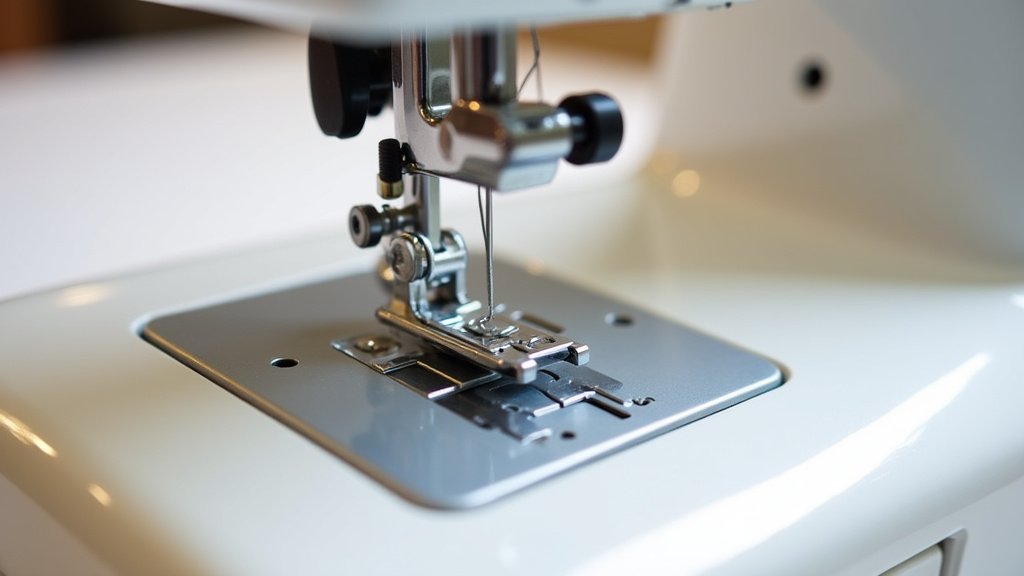
A walking foot is a sewing machine attachment that helps feed multiple layers of fabric evenly through your machine. It has its own set of feed dogs that work with your machine’s feed dogs, preventing fabrics from shifting, puckering, or stretching
Why You Need a Walking Foot for Your Sewing Machine
You need a walking foot when your sewing project involves multiple layers of fabric. It also helps with materials that are slippery, stretchy, or have a nap. This special attachment keeps your fabric layers perfectly aligned, preventing frustrating puckers and shifts.
When Your Fabric Slips and Slides
Have you ever tried to sew two pieces of satin together? It’s like trying to hold onto a greased pig! That’s where a walking foot becomes your best friend. It helps you control those slippery fabrics like silk, charmeuse, or even some synthetics. Without it, your seams might end up wavy and uneven.
Think of it as having an extra set of hands guiding your fabric. It works in unison with your machine’s own feed dogs. This means both the top and bottom layers of fabric move at the exact same speed. Pretty clever, right?
Tackling Tricky Textures and Naps
Some fabrics have a directional nap, like velvet, corduroy, or even fleece. If you sew these without a walking foot, one layer might get stretched while the other gets pushed. The result? Distorted patterns and uneven seams. It can be quite disheartening when you’ve put so much effort into a project.
The walking foot gently but firmly grips these surfaces. This ensures the nap stays aligned and your fabric doesn’t stretch or bunch up. You get a much smoother finish, which is really what we all aim for in our sewing.
Specific Projects That Benefit From a Walking Foot
A walking foot isn’t just for tricky fabrics; it’s a game-changer for many specific sewing projects. If you’ve struggled with these types of sewing in the past, a walking foot might be the solution you’re looking for.
Quilting: Keeping Layers Flat and Even
Quilting is probably the most common use for a walking foot, and for good reason! When you quilt, you’re sewing through three layers: the quilt top, batting, and backing fabric. Without a walking foot, these layers can shift, causing tucks or puckers on your quilt (National Quilting Association).
The walking foot ensures all three layers feed through your machine at the same rate. This is especially helpful for straight-line quilting or when you’re attaching binding. It helps you achieve that coveted flat, professional finish.
Binding a Quilt: A Smooth Edge
Attaching binding is the final step for many quilts. It involves sewing several layers of fabric around the edge of your quilt. If these layers don’t feed evenly, your binding can end up wavy or stretched. A walking foot makes this process much less stressful. You’ll get a beautiful, consistent edge every time.
Sewing Garments with Challenging Fabrics
Making clothes can be incredibly rewarding, but some fabrics make it difficult. Think about knits, chiffon, or even thick denim. These materials can be a nightmare to sew without the right tool. A walking foot can turn frustration into success.
- Knits and Stretchy Fabrics: Knits tend to stretch out of shape when sewn. The walking foot gently guides them, helping maintain their original shape. This means your t-shirts and leggings will fit properly without wavy seams.
- Sheer Fabrics (e.g., Chiffon, Organza): These fabrics are notorious for slipping around. The walking foot helps them stay in place, reducing puckering and improving seam quality.
- Thick Materials (e.g., Denim, Canvas, Upholstery): When you have many layers of thick fabric, your machine’s feed dogs might struggle. The walking foot provides extra gripping power, making it easier to sew through bulk without stalling your machine.
Working with Multiple Layers Beyond Quilts
Beyond quilting, many projects involve multiple fabric layers. Consider bag making, constructing heavy curtains, or even mending thick workwear. All these can benefit from the even feeding action of a walking foot.
Imagine trying to sew through a thick bag handle or several layers of canvas. Your machine might push the top layer faster than the bottom, leading to a misaligned seam. A walking foot helps keep everything together, resulting in a more structurally sound and neat finish.
Walking Foot vs. Regular Presser Foot: What’s the Difference?
You might be wondering, “Why can’t my regular presser foot do this?” It’s a great question! The core difference lies in how they interact with your fabric. Understanding this will highlight why a walking foot is so special.
| Feature | Regular Presser Foot | Walking Foot |
|---|---|---|
| Fabric Feeding | Only the machine’s feed dogs move the bottom fabric layer. | Has its own upper feed dogs that move the top fabric layer, in sync with the machine’s lower feed dogs. |
| Pressure on Fabric | Applies consistent downward pressure. Can cause top layer to ‘creep’. | Applies intermittent pressure, lifting slightly with each stitch to move fabric. Prevents stretching. |
| Best For | Single layers, stable woven fabrics, general sewing. | Multiple layers, slippery fabrics, stretchy knits, napped fabrics, quilting. |
| Problem Solved | Basic sewing tasks. | Fabric shifting, puckering, stretching, wavy seams. |
A regular presser foot holds your fabric down while the machine’s lower feed dogs pull it from underneath. This works fine for single layers of stable fabric. But when you add more layers or stretchy material, the top layer often lags behind. This creates those dreaded uneven seams.
The walking foot, with its built-in upper feed dogs, actively pulls the top layer of fabric. It’s like a synchronized dance between the top and bottom of your fabric sandwich. This synchronization is key to achieving perfectly aligned stitches on challenging materials. It truly minimizes frustration and maximizes the quality of your finished projects.
Choosing and Using Your Walking Foot
So, you’re convinced a walking foot is for you. Great! Now, how do you choose the right one and make the most of it? It’s simpler than you might think.
Finding the Right Fit for Your Machine
Walking feet aren’t one-size-fits-all. You need to make sure you get one that is compatible with your sewing machine. Most walking feet are designed for either “low shank” or “high shank” machines. Check your machine’s manual if you’re not sure which type you have.
Some walking feet are machine-specific, made by the same brand as your sewing machine. Others are generic but designed to fit a range of machines. We found that opting for a walking foot from your machine’s brand often provides the best fit and performance.
Tips for Sewing with a Walking Foot
Once you have your walking foot, using it effectively can make a big difference. Here are a few quick tips:
- Attach it correctly: Ensure the arm of the walking foot sits over the needle clamp screw. This is crucial for its feeding mechanism to work properly.
- Adjust stitch length: Sometimes, a slightly longer stitch length (e.g., 2.5-3.0 mm) can work better with a walking foot, especially on thicker fabrics. Experiment to see what works best for your project.
- Go slow: While the walking foot helps, sewing slowly still gives you better control, especially with those slippery or bulky materials.
- Don’t force it: Let the walking foot do the work. Avoid pulling or pushing your fabric, as this can still lead to distortion. Guide it gently.
- Practice makes perfect: Like any new tool, it might take a few practice runs to get the feel of your walking foot. Don’t be discouraged!
Is a Walking Foot Always Necessary? A Quick Checklist
You don’t need a walking foot for every project. Here’s a quick checklist to help you decide when to reach for it:
- Are you sewing more than two layers of fabric?
- Is your fabric stretchy, like a knit?
- Does your fabric have a nap, like velvet or corduroy?
- Is your fabric slippery, such as satin or chiffon?
- Are you experiencing puckering or shifting with a regular foot?
- Are you working on a quilting project?
If you answered yes to any of these questions, chances are a walking foot will significantly improve your results. It’s truly an indispensable tool for anyone serious about producing high-quality sewing projects, especially those involving multiple layers or tricky materials.
Conclusion
You’ve seen how a walking foot can transform your sewing projects. It truly makes a difference with challenging fabrics and multiple layers. From silky chiffons to bulky quilts, this attachment ensures even feeding and beautiful results. Say goodbye to puckers, shifts, and wavy seams!
By understanding when and how to use this tool, you can achieve a professional finish every time. Don’t let tricky materials intimidate you. Grab a walking foot compatible with your machine and experience the joy of smoother, more confident sewing.
Frequently Asked Questions
Can I use a walking foot for regular seams on stable fabrics?
Yes, you can. While not strictly necessary, using a walking foot for regular seams on stable fabrics won’t harm your project. However, your regular presser foot will usually work perfectly fine for these situations.
