
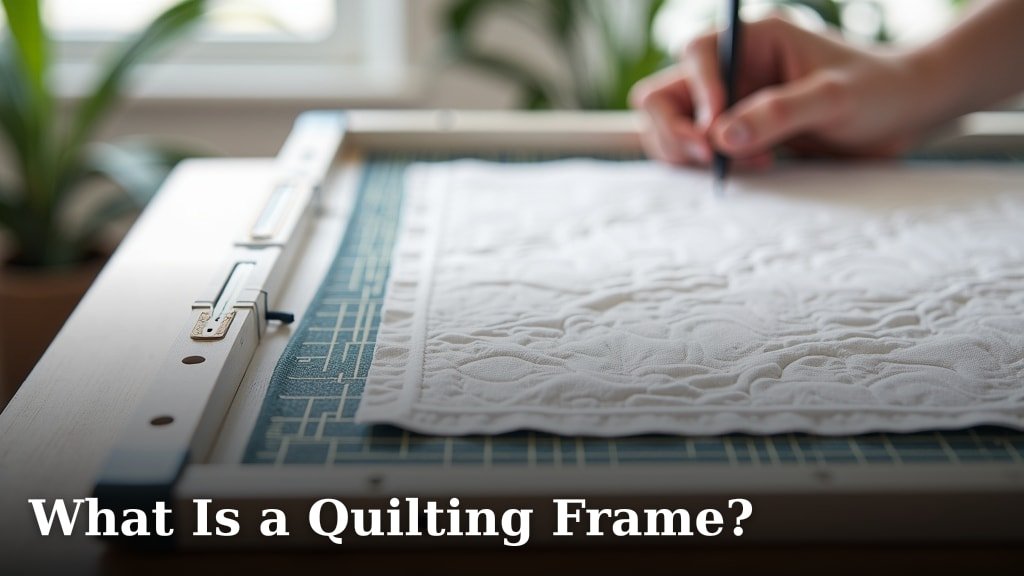
A quilting frame is a specialized tool that holds your quilt layers taut and flat while you stitch them together. It provides a stable surface, making it easier to create even stitches and a smooth finish. We found it’s essential for anyone making larger quilts by hand or machine.
These frames can vary greatly in size and design. Some are simple hoops, while others are large, free-standing structures with rollers. We found that the right frame can reduce strain and improve accuracy for quilters of all skill levels. It helps manage your fabric, so you can focus on the creative process.
- A quilting frame holds quilt layers securely.
- It helps you achieve consistent, even stitches.
- Frames come in various sizes and styles.
- They reduce physical strain during quilting.
- Frames are a key tool for many quilters.
Ready to discover if a quilting frame is right for your projects? Let’s dive into all the details and help you understand this helpful tool.
Understanding What a Quilting Frame Does
A quilting frame is essentially a workstation designed to hold your quilt sandwich tight. It keeps your layers—the top, batting, and backing—perfectly aligned and wrinkle-free while you sew. This stability is key for achieving beautiful, consistent stitches, whether you’re quilting by hand or with a machine.
The Core Purpose: Why Use One?
You might wonder if a frame is truly necessary. We found its main job is to simplify the often-tricky process of quilting large projects. Imagine trying to maneuver a king-sized quilt under your machine or by hand without any support! The frame takes that bulk and makes it manageable.
- It eliminates bunching and shifting of layers.
- It provides an even tension across the entire quilt.
- It reduces strain on your back, shoulders, and wrists.
- It helps you maintain uniform stitch length and spacing.
Basic Components of Most Frames
While designs vary, most quilting frames share common parts. Understanding these helps you see how they work together. You’ll typically find rails, legs, and some form of fabric attachment.
The Rails: Holding Your Fabric
Rails are the long bars that hold your quilt. There are usually two or three of these. Your quilt backing and top are attached to these rails, creating a continuous, taut surface. We found this is where the magic happens for keeping everything flat.
The Legs: Stability and Height
Just like a table, a quilting frame needs legs for support. These hold the rails at a comfortable working height. Many frames offer adjustable height options, which is a big plus for reducing physical discomfort during long quilting sessions.
Fabric Attachment Mechanisms
How do you attach your quilt to the rails? We found several common methods. These include fabric leaders sewn onto the rails, clips, or even sticky strips. The goal is always to hold your quilt firmly and securely.
Types of Quilting Frames Available
Not all quilting frames are created equal. We’ve seen a wide variety, each suited for different needs and budgets. Your choice will depend on your space, your quilting method, and the size of your projects.
Hand Quilting Frames
These frames are designed for those who prefer the meditative rhythm of hand stitching. They typically offer a large, open area where you can comfortably sit and stitch.
Hoops and Lap Frames
The simplest hand quilting frame is a quilting hoop, much like an embroidery hoop but larger. You hold it in your lap or in a small stand. Lap frames are similar but often rectangular and designed to rest on your lap or a table. We found these are great for small projects or if you have limited space (National Quilting Association).
Large Floor Stands
For bigger hand-quilted projects, you might consider a large floor stand. These are free-standing structures that hold a large, often rectangular, frame. They keep your quilt taut, allowing you to move around the frame and work on different sections. Many quilters find these reduce arm fatigue significantly.
Machine Quilting Frames
Machine quilting frames are built to accommodate your sewing machine. They transform your domestic machine or a longarm machine into a precise quilting tool.
Domestic Machine Frames
If you quilt on your regular home sewing machine, there are frames designed specifically for you. These frames usually have a carriage that holds your sewing machine. You move the machine over the stationary quilt, which is rolled onto the frame’s rails. This lets you quilt much larger areas than you could by cramming a quilt under your machine’s arm.
We found these frames can be a more affordable entry point into machine quilting large projects. They do require some learning to master the machine movement, but they open up many creative possibilities.
Longarm Quilting Frames
Longarm frames are typically large, industrial-looking structures designed for dedicated longarm quilting machines. The longarm machine itself is mounted on a carriage that moves along the frame’s rails. Here, your quilt is loaded onto the frame and remains stationary while the longarm machine moves freely across its surface.
This setup allows for quilting very large projects quickly and with great precision. Longarm systems are a significant investment, but they are a staple for professional quilters and those with ample space (Quilting Daily).
Here’s a quick comparison of frame types:
| Feature | Hand Quilting Frame | Domestic Machine Frame | Longarm Quilting Frame |
|---|---|---|---|
| Purpose | Stabilizes quilt for hand stitching | Holds quilt for home sewing machine quilting | Holds quilt for longarm machine quilting |
| Machine Type | None (human-powered needle) | Standard home sewing machine | Specialized longarm quilting machine |
| Quilt Movement | Quilter moves needle; quilt usually stationary in hoop/frame section | Quilt stationary; machine moves over quilt | Quilt stationary; machine moves over quilt |
| Space Needed | Small to moderate | Moderate to large | Very large |
| Cost Range | Low to moderate | Moderate to high | Very high |
Key Benefits of Using a Quilting Frame
So, why go to the trouble of setting up a frame? We found several compelling reasons that make the investment worthwhile for many quilters. It’s about making your quilting journey smoother and more enjoyable.
Improved Stitch Quality and Consistency
When your quilt layers are held taut and flat, your needle has a much easier time piercing through them evenly. This leads to smoother, more consistent stitches. Say goodbye to puckers and uneven tension!
We found that beginners especially benefit from this. It removes one major variable, allowing you to focus on your stitching technique. Even experienced quilters appreciate the precision a frame offers.
Reduced Physical Strain and Fatigue
Let’s be honest, quilting can be hard on your body. Maneuvering a large quilt can lead to back pain, shoulder stiffness, and wrist strain. A quilting frame supports the weight of your project, taking that burden off you.
With an adjustable frame, you can set your working height to be ergonomically comfortable. This means you can quilt longer and more comfortably, which is a huge plus for your well-being (Occupational Health and Safety Administration).
Increased Project Size and Scope
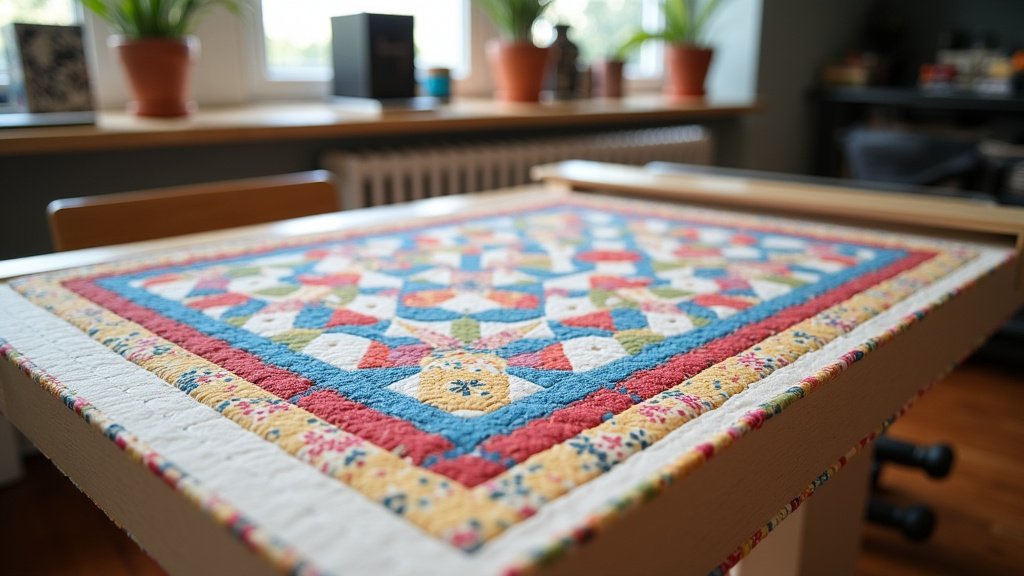
Dreaming of a king-sized bed quilt? Without a frame, quilting anything larger than a throw can become a wrestling match with fabric. Frames remove the size limitations of your machine’s throat space or your arm reach.
You can load a very large quilt onto a frame and work on it section by section. This truly expands the possibilities for your quilting projects, letting you tackle those ambitious designs you’ve always wanted to make.
Considerations When Choosing Your Quilting Frame
Ready to get a frame? Great! But before you buy, think about a few important things. Choosing the right frame means thinking about your unique quilting style and space.
Space Availability in Your Home
This is a big one! Quilting frames, especially machine frames, can take up a lot of room. Measure your available space carefully. Do you have a dedicated craft room, or will this need to be set up and taken down? We found many quilters underestimate the footprint of these larger frames.
- Will it fit comfortably without blocking pathways?
- Is there enough room to walk around it?
- Can you store it easily if it’s not permanent?
- Do you have proper lighting over the frame area?
Your Quilting Method and Preferences
Are you a hand quilter, a domestic machine quilter, or do you aspire to longarm quilting? Your chosen method dictates the type of frame you’ll need. Don’t buy a longarm frame if you only ever hand quilt small projects!
Consider your comfort level with technology too. Some machine frames are very basic, while others have advanced features and controls. Think about what will enhance your enjoyment, not complicate it.
Budget and Investment Level
Quilting frames range widely in price, from under a hundred dollars for a basic hand-quilting hoop to tens of thousands for a full longarm system. Set a realistic budget before you start shopping.
Remember to factor in not just the frame itself, but also any accessories you might need, like leaders, clamps, or even a new machine if you’re upgrading. We found it’s a good idea to consider this a long-term investment in your quilting hobby or business.
Conclusion
You’ve seen that a quilting frame is much more than just a stand; it’s a tool that can truly transform your quilting experience. It offers stability, reduces strain, and opens up new possibilities for larger projects. Whether you choose a simple hoop or a sophisticated longarm system, the right frame can significantly enhance your stitch quality and overall comfort. We encourage you to weigh your needs, space, and budget carefully.
By understanding the different types and their benefits, you’re now ready to make an informed decision. Find the frame that fits your quilting journey and enjoy smoother, more enjoyable, and ultimately more creative sewing.
Frequently Asked Questions
Can a quilting frame be used for embroidery?
While some small quilting hoops might resemble embroidery hoops, dedicated quilting frames are generally not designed for embroidery. Embroidery frames focus on holding a single layer of fabric taut, whereas quilting frames manage multiple layers for stitching a quilt together.
Do I need a special sewing machine for a machine quilting frame?
For domestic machine quilting frames, you use your regular home sewing machine. However, longarm quilting frames require a specialized longarm quilting machine. Your standard home machine won’t fit or function with a longarm frame.
How much space does a typical machine quilting frame require?
A machine quilting frame, even for a domestic machine, can take up a considerable amount of space. You’ll need at least an 8-foot by 5-foot area, often more, to comfortably walk around and operate the machine. Measure your room carefully before committing.
Are quilting frames difficult to assemble?
Assembly difficulty varies greatly by frame type and manufacturer. Simpler hand-quilting frames are usually easy to put together. Larger machine frames, especially longarm systems, can be quite complex and may require several hours or even professional installation.
Can I rent a quilting frame to try it out?
Renting a full quilting frame, especially a machine frame, isn’t common due to size and logistics. However, many local quilt shops offer “longarm rental” services where you can use their longarm machine and frame by the hour. This is a great way to try before you buy a longarm system.
