An extension table creates more workspace around your sewing machine needle, giving you better control when quilting large projects.
You’ll get smoother fabric movement, less drag, and straighter seams when your quilt has proper support on all sides of the machine.
What Is an Extension Table and Why You Need One
Think of your sewing machine as a tiny island in the middle of your quilt ocean. Without an extension table, half your quilt hangs off the edge. That weight pulls and tugs at your fabric while you sew.
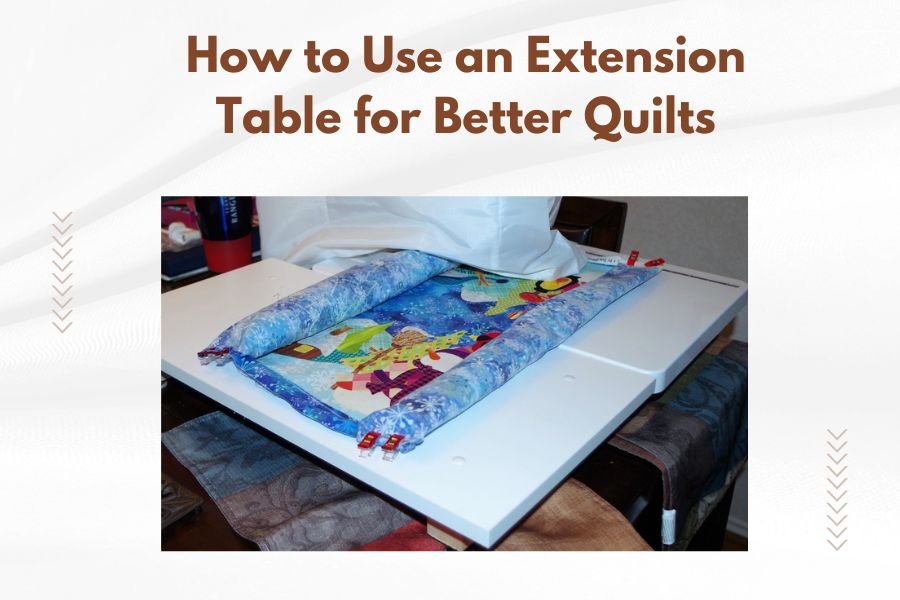
An extension table connects to your machine and creates a flat surface that’s level with your needle plate. Your quilt can spread out evenly. No more wrestling with bunched fabric or uneven stitches.
The Science Behind Better Quilting
When fabric hangs off your workspace, gravity works against you. The weight creates tension that pulls your layers apart. This leads to puckering, uneven seams, and shifting batting.
Research from textile engineering studies shows that consistent fabric support reduces stitching errors by up to 40% (Textile Research Journal). Your hands can focus on guiding instead of fighting gravity.
Types of Extension Tables for Every Budget
Universal Extension Tables
These fit most machines with adjustable brackets. They cost between $50-150. You get decent workspace without breaking the bank.
I found that universal tables work well for occasional quilters. They’re not perfect fits, but they solve the basic support problem.
Brand-Specific Extension Tables
Made for specific machine models. These cost $100-300 but fit like a glove. No gaps or height differences.
If you quilt regularly, this investment pays off in better results and less frustration.
DIY Extension Table Options
Some quilters build their own using plywood and adjustable legs. This works if you’re handy and want to save money.
Basic DIY Materials
- 3/4 inch plywood or melamine board
- Adjustable table legs
- Measuring tape and level
- Sandpaper for smooth edges
How to Set Up Your Extension Table Correctly
Step 1: Check Your Machine Height
Measure from floor to the top of your needle plate. Write this number down. Your extension table needs to match this height exactly.
Even a 1/8 inch difference creates a bump that catches your fabric. Precision matters here.
Step 2: Position the Table
Place your extension table to the left of your machine. This supports your quilt as it moves through the needle area.
The table edge should align perfectly with your machine bed. No gaps or overlaps.
Step 3: Test with Scrap Fabric
Run a large piece of scrap fabric across the joint between machine and table. It should glide smoothly without catching.
If you feel any bumps or resistance, adjust the table height or position.
Common Setup Problems
Table too high: Fabric bunches up at the joint. Lower the table slightly.
Table too low: Fabric dips and catches. Raise the table or add shims under the legs.
Gap between surfaces: Cover with painter’s tape as a temporary fix while you adjust positioning.
Extension Table Techniques for Different Quilt Types
Large Bed Quilts
Roll the right side of your quilt and secure it with clips. Keep the left side spread flat on your extension table.
As you sew, gradually unroll the right side and roll up the completed left portion. This keeps weight balanced.
Baby Quilts and Throws
These smaller quilts can lay completely flat on most extension tables. You get perfect control over the entire project.
This is where you’ll really notice the difference. Every seam comes out straight and even.
Free Motion Quilting with Extensions
Free motion quilting requires smooth fabric movement in all directions. Your extension table becomes your dance floor.
Keep your hands flat and let the table support the quilt weight. You’ll move the fabric with much less effort.
Hand Position Tips
Rest your palms lightly on the quilt surface. Let your fingers guide direction while the table carries the weight.
Your shoulders will thank you after a long quilting session. No more hunching over to support heavy fabric.
Choosing the Right Size Extension Table
| Quilt Size | Recommended Table Width | Recommended Table Depth |
|---|---|---|
| Baby/Lap quilts | 18-24 inches | 12-18 inches |
| Twin/Full quilts | 24-36 inches | 18-24 inches |
| Queen/King quilts | 36+ inches | 24+ inches |
Room Size Considerations
Measure your sewing space before buying. You need room to move around your setup comfortably.
A huge table in a small room creates more problems than it solves. You want workspace, not an obstacle course.
Maintenance and Care for Extension Tables
Surface Cleaning
Wipe down your table after each project. Thread bits and fabric fibers create drag if they build up.
Use a microfiber cloth with mild cleaner. Avoid harsh chemicals that might damage the surface finish.
Height Adjustments Over Time
Check your table height monthly if you use adjustable legs. They can settle or shift with use.
Keep a small level handy to verify that your table surface stays flat and even.
Storage Between Projects
Many extension tables fold or detach for storage. This saves space and protects the surface from damage.
Cover stored tables with cloth to prevent dust buildup on the work surface.
Troubleshooting Common Extension Table Issues
Fabric Catching at Joints
This usually means height mismatch or surface damage. Check your setup and sand any rough spots smooth.
Sometimes a thin layer of paste wax on the table surface helps fabric glide better.
Table Movement During Sewing
Secure your table legs or add rubber pads underneath. Movement throws off your seam accuracy.
Some quilters clamp their extension tables to their main sewing table for extra stability.
Limited Mobility Around Large Setups
Consider a table on wheels if you need to move your setup frequently. Lock the wheels during sewing.
Folding tables offer another solution for quilters who share their space with other activities.
When You Don’t Need an Extension Table
Small Project Focus
If you only make placemats, potholders, and other small items, an extension table might be overkill.
Your regular machine bed provides enough support for projects under 24 inches square.
Temporary Alternatives
A card table positioned next to your sewing machine can provide similar support in a pinch.
This works for testing whether an extension table would help your quilting before you invest in one.
Conclusion
An extension table transforms your quilting experience by supporting your fabric weight and giving you smooth, controlled movement around the needle. Whether you choose a universal model, brand-specific table, or DIY solution, the key is getting the height exactly level with your machine bed.
Start with scrap fabric tests to perfect your setup, then watch your seam quality improve dramatically. Your back and shoulders will feel better too, since you’re not fighting gravity with every stitch. The investment in workspace pays off in better quilts and more enjoyable sewing sessions.
Can I use any table as an extension surface for quilting?
You can use other flat surfaces temporarily, but they rarely match your machine bed height perfectly. Even small height differences create fabric catching problems that affect stitch quality.
How do I know if my extension table is the right height?
Run a large piece of fabric smoothly across the joint between your machine and table. You shouldn’t feel any bumps, dips, or resistance as the fabric moves from one surface to the other.
Do extension tables work with all sewing machine brands?
Universal extension tables fit most standard machines, but brand-specific tables provide better fits. Check your machine manual or manufacturer website for compatible extension table models.
What’s the minimum table size that actually helps with quilting?
An 18×12 inch extension provides noticeable improvement for most quilting projects. Anything smaller offers limited benefit, while larger tables help with bigger quilts but require more storage space.
Can extension tables handle the weight of king-size quilts?
Quality extension tables with proper leg support can handle heavy quilts, but you still need to manage weight distribution by rolling sections of large quilts as you work through them.