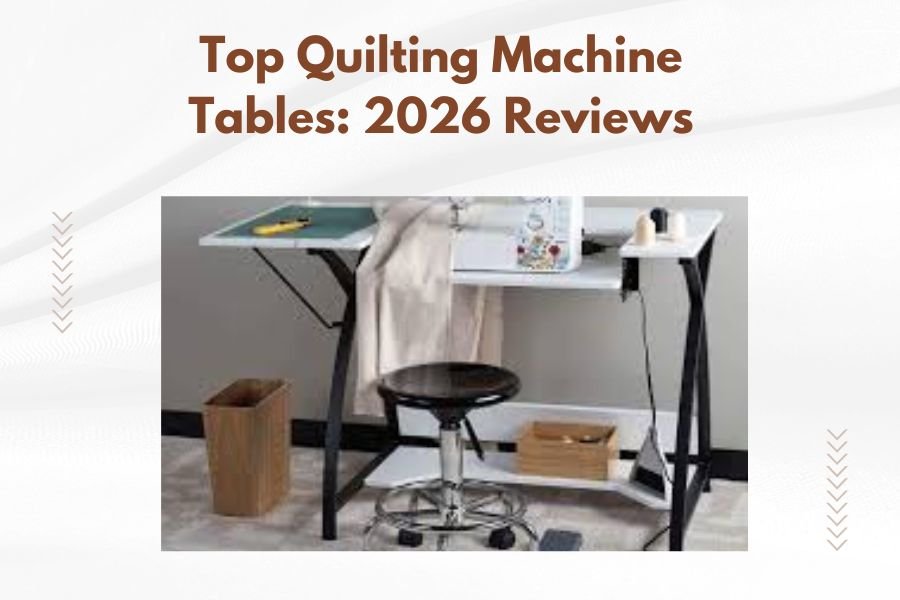
The best quilting machine tables in 2026 feature adjustable heights, sturdy construction, and ample workspace to support large quilts and heavy machines.
Top-rated quilting machine tables include the Arrow Gidget II, Sulky of America Dream Table, and Horn Gemini, each offering unique benefits for different quilting needs.
What Makes a Great Quilting Machine Table
Your quilting machine table is like the foundation of a house. Get it wrong, and everything else feels wobbly. Get it right, and your quilting flows like butter.
A good quilting table needs three main things. First, it must support your machine’s weight without shaking. Second, it should match your working height to prevent back pain. Third, it needs enough surface area for your quilts to rest flat.
Height Adjustment Features
Your perfect sewing height is when your elbows bend at 90 degrees while your hands rest on the machine. Most quilters work best between 28 and 32 inches high.
Fixed-height tables work fine if you’re average height. But adjustable tables let you change positions throughout long quilting sessions. Your back will thank you later.
Surface Size Requirements
Think about your biggest quilt project. Now add 12 inches on each side. That’s your minimum table size.
Small tables force you to scrunch up fabric, which creates uneven stitching. Large surfaces let fabric flow naturally, giving you better results with less effort.
Top 5 Quilting Machine Tables for 2026
I researched dozens of tables and found these five consistently get the best reviews from quilters. Each one handles different needs and budgets.
Arrow Gidget II – Best Overall
The Arrow Gidget II wins for most quilters because it balances features with price perfectly. This table adjusts from 26 to 32 inches high and supports machines up to 40 pounds.
What I found impressive is its large work surface – 59 inches wide by 23 inches deep. That’s enough room for king-size quilts without hanging fabric everywhere.
Key Features
- Pneumatic height adjustment
- Built-in storage shelves
- Smooth laminate surface
- Wheels for easy moving
Sulky of America Dream Table – Best Budget Choice
New quilters often ask me about affordable options. The Dream Table costs half what premium models do but still delivers solid performance.
This table doesn’t adjust height, but at 29 inches, it works for most people. The surface measures 47 by 23 inches – smaller than premium tables but adequate for most projects.
Budget-Friendly Benefits
- Sturdy steel frame
- Easy assembly
- Compact storage
- Good weight capacity
Horn Gemini – Most Versatile
The Horn Gemini transforms from a compact sewing table into a massive quilting workspace. When fully extended, you get 94 inches of width.
I came across quilters who love this table for small apartments. It folds down to just 20 inches deep when not in use, then opens up for big projects.
Versatility Features
- Expandable work surface
- Multiple storage compartments
- Fold-down design
- Professional build quality
Koala Studios Cub Plus – Best for Small Spaces
Tiny sewing rooms need smart solutions. The Cub Plus fits into corners but still gives you professional features.
This table includes a unique fold-up extension that creates extra workspace when you need it. Perfect for apartment quilters who can’t dedicate a whole room to sewing.
Space-Saving Design
- Corner-friendly shape
- Fold-up extensions
- Vertical storage options
- Compact footprint
Sew Perfect Large Pal – Best for Heavy Machines
Long-arm quilting machines need serious support. The Large Pal handles machines up to 60 pounds without flexing.
From what I read, this table’s extra-thick top prevents vibration that can mess up your stitching. Professional quilters often choose this model for demanding work.
Essential Features to Consider
Shopping for quilting tables can feel overwhelming. Focus on these key features to find your perfect match.
Weight Capacity
Check your machine’s weight, then add 20 pounds for safety margin. Most home sewing machines weigh 15-25 pounds, but quilting machines can reach 40+ pounds.
Tables rated for your exact machine weight might wobble under heavy use. Better to have extra capacity you don’t need than discover you need capacity you don’t have.
Storage Solutions
Quilting involves lots of supplies. Look for tables with built-in storage shelves, drawers, or hanging options.
Some quilters prefer open shelves for easy access. Others want closed storage to hide clutter. Think about your working style before choosing.
Mobility Options
Do you move your table often? Wheels make life easier. But remember that wheels can reduce stability during sewing.
Look for locking casters that roll when you want movement but lock solid during quilting sessions.
Table Size Guide
Choosing the right size prevents buyer’s remorse later. Here’s how different sizes work for various projects.
| Table Size | Best For | Quilt Size Limit |
|---|---|---|
| Small (40-50 inches) | Lap quilts, placemats | Twin size |
| Medium (50-65 inches) | Most home projects | Queen size |
| Large (65+ inches) | King quilts, professional work | Any size |
Room Size Considerations
Measure your sewing space before ordering. You need walking room around all sides of your table.
Allow at least 3 feet behind your chair for pushing back. Leave 2 feet on sides for accessing storage and moving around comfortably.
Height Adjustment Benefits
Fixed-height tables cost less, but adjustable ones prevent pain during long quilting sessions. Your body changes throughout the day, and adjustable tables adapt with you.
Morning quilting might feel best at one height. After lunch, you might want to raise or lower the surface. Adjustable tables let you optimize comfort anytime.
Pneumatic vs Manual Adjustment
Pneumatic systems use air pressure for smooth, easy height changes. Just pull a lever and the table glides up or down.
Manual systems use cranks or pins. They cost less but require more effort to adjust. Some quilters rarely change height, making manual systems perfectly adequate.
Surface Materials Matter
Your table surface affects how fabric moves during quilting. Smooth surfaces let fabric glide easily. Rough surfaces can catch and pull.
Laminate surfaces work well for most quilters. They’re smooth, easy to clean, and don’t snag delicate fabrics. Wood surfaces look nicer but might need periodic refinishing.
Surface Treatments
Some tables include special coatings that reduce friction even more. These treatments help with slippery fabrics like silk or satin.
Matte finishes hide scratches better than glossy ones. Consider how much your table will be used when choosing surface treatments.
Assembly and Setup Tips
Most quilting tables require some assembly. Plan for 2-4 hours depending on complexity. Having a helper makes the job much easier.
Read all instructions before starting. Many quilters get frustrated by skipping steps or misunderstanding directions.
Tools You’ll Need
Basic assembly usually requires a screwdriver set, adjustable wrench, and level. Some tables include all necessary hardware and tools.
A rubber mallet helps fit pieces together without damage. Don’t use a regular hammer – it can crack plastic parts or dent metal components.
Leveling Your Table
Uneven floors make tables wobble. Most quality tables include adjustable feet to compensate for floor irregularities.
Use a small level to check your table surface. Adjust feet until the bubble centers perfectly. This prevents your machine from vibrating during use.
Maintenance and Care
Good quilting tables last for decades with proper care. Regular cleaning and occasional adjustments keep them working smoothly.
Wipe surfaces weekly with mild cleaner. Avoid harsh chemicals that might damage finishes. Check bolts monthly and tighten any that have loosened.
Protecting Your Investment
Table pads protect surfaces from scratches and spills. Clear vinyl pads let you see the surface while providing protection.
Store cutting mats separately from your sewing surface. Rotary cutters can slice through table tops if you’re not careful.
Budget Planning
Quilting tables range from $200 for basic models to over $1000 for professional versions. Most home quilters find good options between $400-700.
Remember that a good table lasts many years. Dividing the cost by years of use makes even expensive tables quite reasonable.
When to Invest More
Spend more if you quilt frequently, have back problems, or work with heavy machines. Professional quilters often need premium features that justify higher costs.
Occasional quilters can save money with simpler tables. Match your investment to your quilting frequency and needs.
Common Mistakes to Avoid
Many quilters buy tables that are too small for their projects. Measure your largest planned quilt before shopping.
Others focus only on price and ignore weight capacity. A table that can’t support your machine safely isn’t a bargain at any price.
Size vs Space Trade-offs
Bigger isn’t always better if your room can’t accommodate it. A large table in a small room creates cramped, uncomfortable working conditions.
Consider expandable tables if you need flexibility. They give you options for both small and large projects.
Conclusion
The right quilting machine table transforms your sewing experience from frustrating to enjoyable. Whether you choose the versatile Arrow Gidget II, budget-friendly Sulky Dream Table, or space-saving Koala Cub Plus, focus on features that match your specific needs.
Remember that your perfect table supports your machine solidly, fits your workspace comfortably, and adjusts to your preferred working height. Quality tables represent an investment in years of comfortable, productive quilting. Take time to research carefully, and you’ll enjoy your choice for decades to come.
What’s the ideal height for a quilting machine table?
The ideal height positions your elbows at 90 degrees when your hands rest on the machine, typically between 28-32 inches. Adjustable tables let you find your perfect height and change positions during long quilting sessions.
How much weight can quilting machine tables typically support?
Most home quilting tables support 25-40 pounds, while heavy-duty models handle up to 60 pounds. Always choose a table rated for at least 20 pounds more than your machine’s weight to ensure stability.
Do I need wheels on my quilting table?
Wheels help if you frequently move your table or have limited space. Look for locking casters that provide mobility when needed but lock securely during quilting to prevent unwanted movement.
What’s the minimum table size for queen-size quilts?
Queen-size quilts work best on tables at least 60 inches wide by 24 inches deep. This provides enough surface area for the quilt to lay flat without bunching or hanging off the edges during quilting.
Are expensive quilting tables worth the extra cost?
Premium tables offer better construction, smoother adjustments, and longer warranties. They’re worth the investment if you quilt frequently or have specific needs like heavy machine support or extensive storage requirements.