A dull quilting needle will skip stitches, create uneven tension, and damage your fabric with snags or holes.
Watch for thread breaking frequently, fabric puckering around stitches, and a popping sound when the needle penetrates your quilt layers.
The Hidden Dangers of Using a Dull Quilting Needle
Your quilting needle works harder than you might think. Every stitch puts stress on that tiny metal point. Over time, it dulls and becomes your enemy instead of your friend.
I found that most quilters wait too long to change their needles. They assume expensive needles last forever. But even the best needle has a lifespan.
Why Needle Sharpness Matters More Than You Think
A sharp needle cuts cleanly through fabric fibers. A dull one pushes and tears them apart. Think of cutting paper with sharp scissors versus dull ones.
The difference shows up in your finished quilt. Sharp needles create smooth, professional stitches. Dull needles leave you frustrated and your quilt looking messy.
Sign #1: Your Thread Keeps Breaking
Does your thread snap every few stitches? This drives quilters crazy. But it’s often your needle crying for help.
What Causes Thread Breakage
A dull needle creates extra friction as it moves through fabric. This friction heats up your thread and weakens it. Eventually, the thread can’t handle the stress.
You might think it’s bad thread or wrong tension settings. But research shows that needle condition affects thread breakage more than most other factors.
How to Test This Sign
Try this simple test. Insert a fresh needle and quilt a few inches. If the thread breaking stops, your old needle was the problem.
Keep track of how often you rethread your machine. If it’s more than once per seam, check your needle first.
Sign #2: Skipped Stitches Drive You Crazy
Nothing ruins a quilt line like random skipped stitches. You expect smooth, even stitching. Instead, you get gaps that look unprofessional.
The Science Behind Skipped Stitches
Your sewing machine creates stitches through perfect timing. The needle must form a proper loop for the bobbin hook to catch.
A dull or damaged needle tip can’t form clean loops. The timing gets thrown off. Result? Skipped stitches that make you want to scream.
When Skipping Gets Dangerous
Skipped stitches in quilting aren’t just ugly. They create weak spots in your quilt. These areas can tear apart with normal use.
I found online that many antique quilts fail at points where original stitches were skipped or weak. Your quilt deserves better.
Quick Fix vs Long-term Solution
You might adjust tension or change thread to fix skipping. These sometimes work temporarily. But if your needle is dull, the problem will return.
Save yourself hours of troubleshooting. Change the needle first. It’s the cheapest and fastest solution.
Sign #3: Fabric Puckering Makes Your Quilt Look Amateur
Smooth, flat quilting shows skill and care. Puckered fabric screams “beginner mistake” even when you’re not a beginner.
How Dull Needles Create Puckers
Sharp needles slip between fabric fibers easily. Dull needles push fibers aside forcefully. This pushing distorts the fabric weave.
The distortion shows up as little puckers around each stitch. Your beautiful fabric looks wrinkled and unprofessional.
The Batting Connection
Thick batting makes puckering worse with dull needles. The needle has to work harder to penetrate multiple layers. More force means more distortion.
Cotton batting shows puckers more than polyester. But both types suffer when your needle isn’t sharp enough.
Prevention Beats Correction
You can sometimes press out minor puckering. But severe puckers are permanent. They’re built into your stitching.
Many experts say prevention is your only real option. Keep your needle sharp and your fabric will stay smooth.
Sign #4: Strange Popping Sounds Signal Trouble
Quilting should sound like a gentle rhythm. If you hear popping, clicking, or tearing sounds, pay attention. Your needle is sending you a message.
What Those Sounds Mean
A sharp needle penetrates fabric quietly. A dull needle has to force its way through. This creates audible pops and clicks.
Sometimes you’ll hear tiny tearing sounds. That’s fabric fibers breaking instead of being cut cleanly. Not good for your quilt’s longevity.
Listen to Your Machine
Experienced quilters develop an ear for their machines. They know when something sounds wrong.
Trust your instincts. If quilting sounds different than usual, check your needle condition first.
Sign #5: Visible Holes and Snags Damage Your Fabric
This is the most obvious and dangerous sign. If you see holes or snags around your stitching, stop immediately.
How Dull Needles Damage Fabric
A sharp needle creates tiny, clean holes that fabric fibers can close around. A dull needle tears larger, ragged holes.
These damaged areas never recover. They become permanent weak spots that can grow into bigger tears over time.
Expensive Fabric Deserves Better
Quality quilting fabric costs good money. Why risk ruining it with a worn-out needle that costs less than a cup of coffee?
I came across stories of quilters who damaged irreplaceable vintage fabrics with dull needles. Don’t let this happen to you.
When to Change Your Quilting Needle
Different quilters have different rules. Some change needles after every project. Others wait until problems appear.
Time-Based vs Usage-Based Rules
Research suggests that usage matters more than time. A needle used for thick batting wears faster than one used on thin cotton.
Here’s what I found works for most quilters:
- Change needles after 8-10 hours of quilting
- Replace immediately if you hit a pin
- Switch when you notice any of the five warning signs
- Start each major project with a fresh needle
The Pin Impact Problem
Hitting a pin can damage your needle instantly. Even if it looks okay, the tip might be bent or chipped.
Don’t take chances. Replace the needle and save yourself potential headaches.
Choosing the Right Replacement Needle
Not all quilting needles are the same. The right choice depends on your fabric, thread, and quilting style.
Needle Size Guidelines
| Fabric Weight | Recommended Size | Best For |
|---|---|---|
| Lightweight cotton | 75/11 or 80/12 | Piecing, light quilting |
| Medium cotton | 90/14 | Most quilting projects |
| Heavy or thick layers | 100/16 or 110/18 | Dense batting, multiple layers |
Special Purpose Needles
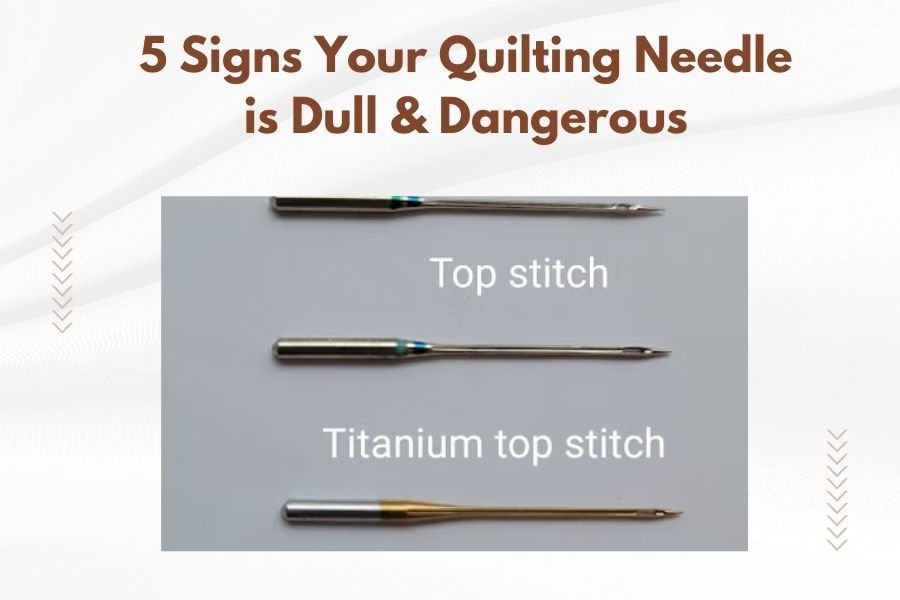
Quilting needles have a slightly rounded tip that helps them slip between fibers. This reduces fabric damage compared to sharp needles.
For metallic threads, try metallic needles with larger eyes. For thick threads, use topstitch needles.
Simple Maintenance Tips
You can extend needle life with proper care. But don’t get so attached that you use them past their prime.
Storage and Handling
Keep spare needles in their original packaging. This protects the points from damage.
Many quilters stick used needles in pin cushions. This can dull the tips. Use a proper needle case instead.
The False Economy of Old Needles
Some people try to save money by using needles too long. This creates more problems than it solves.
Factor in wasted thread, damaged fabric, and frustration time. Fresh needles are actually cheaper in the long run.
Conclusion
Your quilting needle might seem like a small detail, but it makes a huge difference in your results. Watch for these five warning signs: frequent thread breaking, skipped stitches, fabric puckering, strange sounds, and visible holes or snags. When you notice any of these problems, change your needle right away. Your quilts will look more professional, your fabric will stay undamaged, and you’ll enjoy the process much more. Remember, a sharp needle is a quilter’s best friend, while a dull one can ruin hours of careful work.
How often should I change my quilting needle during a large project?
Change your needle every 8-10 hours of actual quilting time, or when you notice any warning signs like thread breaking or skipped stitches. For large quilts, this usually means 2-3 needle changes per project.
Can I sharpen a dull quilting needle instead of replacing it?
While some people try needle sharpening products, they rarely restore a needle to original condition. The microscopic tip geometry can’t be fully restored, so replacement is always more reliable than attempted sharpening.
Why does my needle seem to dull faster on some fabrics than others?
Tightly woven fabrics, synthetic materials, and fabrics with special finishes or coatings wear needles faster. Dense batts also increase needle wear because the needle has to work harder to penetrate multiple layers.
Is there a way to test needle sharpness without quilting?
Try gently drawing the needle point across a smooth piece of fabric. A sharp needle will glide smoothly, while a dull one will catch or drag. You can also look at the tip under good light – dull needles often show visible wear or rough edges.
Do expensive quilting needles last significantly longer than cheap ones?
Quality needles typically hold their sharpness longer and penetrate fabric more smoothly, but all needles eventually dull with use. The main advantage of better needles is consistent performance throughout their lifespan, not dramatically longer life.