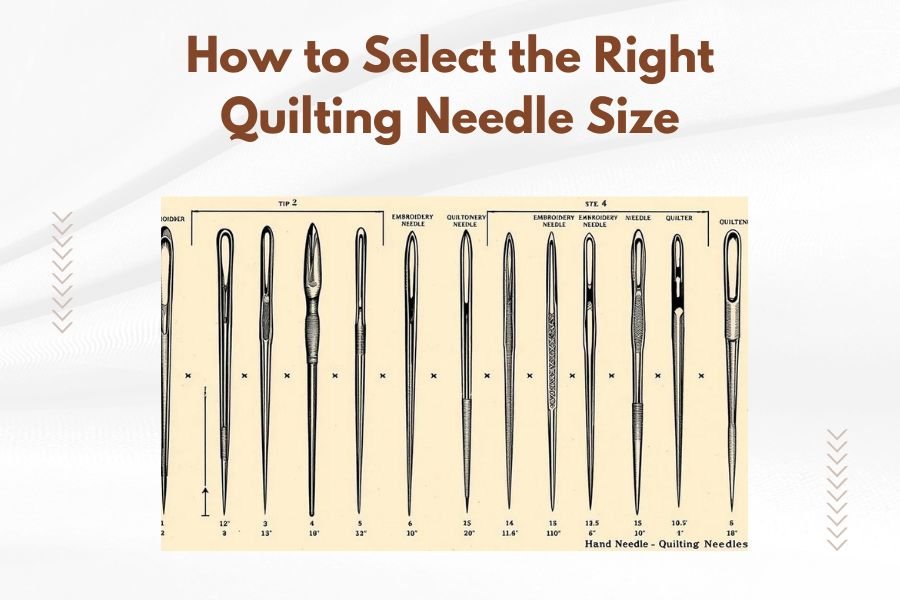
Quilting needle size selection depends on your fabric weight and batting type. Universal sizes 80/12 and 90/14 work for most cotton quilts, while heavier fabrics need 100/16 or 110/18.
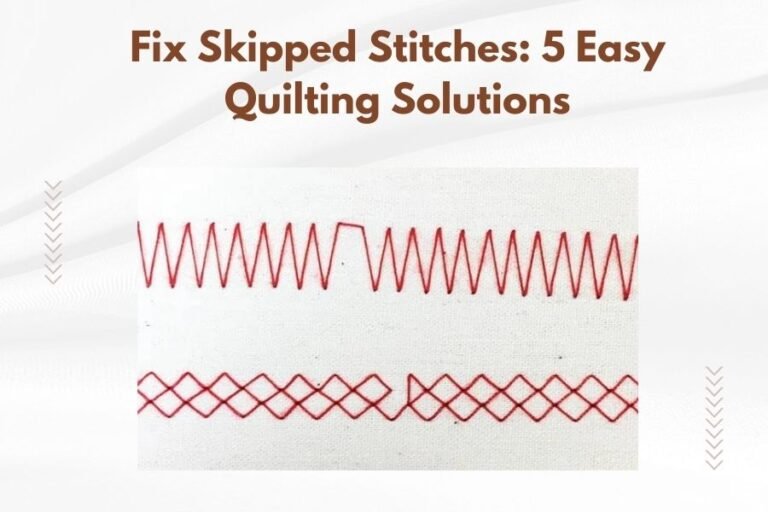
Choose your quilting needle size by matching it to your thread weight and fabric thickness. Thicker threads and denser fabrics require larger needles to prevent skipped stitches and thread breaks.
Quick Reference Guide for Quilting Needle Sizes
You don’t need to memorize every needle size. Start with these basics that cover 90% of quilting projects.
Size 80/12 handles lightweight cotton and thin batting perfectly. Size 90/14 works for most standard quilting cotton and medium batting. Size 100/16 tackles heavier fabrics and thick batting layers.
The first number is European sizing. The second number is American sizing. Both refer to the same needle.
What Those Numbers Actually Mean
Needle sizes tell you the diameter of the needle shaft. A size 70/10 needle measures 0.7mm across. A size 110/18 measures 1.1mm.
Bigger numbers mean thicker needles. Thicker needles create larger holes in your fabric. That’s why you want the smallest needle that still works with your thread and fabric.
Match Your Needle to Your Thread Weight
Thread weight affects which needle size you need. Heavier threads need bigger needles to pass through cleanly.
Cotton Thread Guidelines
40-weight cotton thread pairs well with 80/12 or 90/14 needles. This covers most standard quilting thread you’ll find in stores.
50-weight cotton thread works with 70/10 or 80/12 needles. This finer thread creates less visible stitching lines.
30-weight cotton thread needs 90/14 or 100/16 needles. The thicker thread requires more room to move through the fabric.
Polyester and Other Thread Types
Polyester threads often run slightly thicker than cotton at the same weight number. Start with the same needle size as cotton, then go up one size if you see thread fraying.
Metallic threads need special metallic needles with larger eyes and smoother surfaces. Size 90/14 metallic needles handle most decorative threads.
Fabric Weight Determines Needle Strength
Your fabric type matters as much as thread choice. Dense fabrics can bend or break needles that are too small.
Cotton Quilting Fabrics
Standard quilting cotton works with 80/12 needles most of the time. You can go down to 70/10 for very fine work or up to 90/14 for slightly thicker cotton.
Flannel and brushed cotton need 90/14 needles. The brushed surface creates more friction and can cause smaller needles to heat up.
Denim and Canvas
Heavy fabrics like denim demand 100/16 or 110/18 needles. These needles have reinforced shafts that won’t bend when punching through multiple layers.
Canvas and duck cloth also need these heavy-duty sizes. Don’t try to force a small needle through thick fabric. You’ll end up with bent needles and skipped stitches.
Signs Your Needle Is Too Small
Listen for popping sounds when the needle hits fabric. That means the needle is struggling to pierce cleanly.
Check for holes that look torn rather than pierced. A properly sized needle creates clean, round holes.
Batting Thickness Changes Everything
Your quilt sandwich includes top fabric, batting, and backing. The total thickness determines what needle size you need.
Thin Batting Options
Low-loft cotton and polyester batting work fine with 80/12 needles. These batts add minimal thickness to your quilt sandwich.
Fusible batting often feels stiffer than regular batting. Try 90/14 needles to handle the extra density from the fusible layer.
Medium and High-Loft Batting
Thick batting requires 90/14 or 100/16 needles. The needle needs enough length and strength to penetrate all layers cleanly.
Wool batting feels soft but quilts densely. Start with 90/14 needles and adjust up if needed.
Multiple Batting Layers
Some quilters layer thin batts for custom thickness. Each extra layer means going up one needle size.
Two thin batts might need 100/16 needles even though each individual batt is thin. The combined thickness is what matters.
Special Needle Types for Different Jobs
Universal needles work for most quilting. But specific needle types solve particular problems.
Quilting Needles vs Universal Needles
Quilting needles have slightly rounded points that slip between fabric threads instead of piercing them. This prevents runs in your fabric.
Universal needles have sharper points that work well for piecing and general sewing. Many quilters use universal needles for everything without problems.
Topstitch Needles for Heavy Threads
Topstitch needles have larger eyes and deeper grooves. They accommodate thick threads that might fray in regular needles.
Use topstitch needles when regular needles cause thread breakage. The extra room prevents friction damage to your thread.
Microtex Needles for Precision
Microtex needles have very sharp points for precise piecing. They create clean lines through multiple fabric layers.
These needles work great for paper piecing and detailed patchwork. The sharp point pierces paper and fabric cleanly.
Common Needle Size Problems and Solutions
Wrong needle sizes cause predictable problems. Here’s how to spot and fix the most common issues.
| Problem | Likely Cause | Solution |
|---|---|---|
| Skipped stitches | Needle too small for thread | Go up one or two sizes |
| Large holes in fabric | Needle too big | Try smaller needle size |
| Thread breaking | Needle too small or wrong type | Larger needle or topstitch needle |
| Bent needles | Needle too small for fabric | Heavy-duty needle in larger size |
Thread Shredding Issues
When thread looks fuzzy or breaks frequently, your needle might be too small. The thread rubs against the needle eye and shaft as it passes through.
Try going up one needle size first. If that doesn’t help, switch to a topstitch or metallic needle with a smoother surface.
Machine Timing Problems
Very thick needles can throw off your machine’s timing. If you’re getting loops or birds nests with the right size needle, your machine might need adjustment.
This happens most often when jumping from size 80/12 to 110/18 needles. The timing was set for medium needles.
Testing Your Needle Choice
Always test your needle and thread combination on scraps first. Use the same fabrics and batting you’ll use in your actual quilt.
What to Look for in Test Stitching
Good stitching looks even on both sides. The thread lies flat without puckering or pulling.
Check that holes close up properly after stitching. Holes that stay visible mean your needle might be too large.
Tension Adjustments
Different needle sizes can change how your thread tension looks. You might need minor tension adjustments when switching needle sizes.
Make tension changes gradually. Small adjustments usually fix minor issues.
Needle Maintenance and Replacement
Even the right size needle won’t work well if it’s damaged or dull. Replace needles regularly for best results.
When to Change Needles
Change needles after 8-10 hours of quilting time. Needles get dull gradually, so you might not notice the decline in stitch quality.
Replace needles immediately if you hit pins or hear popping sounds. A damaged needle point creates poor stitches.
Storing Needles Properly
Keep needles in their original packages when possible. The packaging tells you the size and type at a glance.
Magnetic needle holders work well for temporary storage while you’re working. Just remember to put needles back in labeled containers when you’re done.
Building a Needle Collection
Start with three sizes: 80/12, 90/14, and 100/16 universal needles. This covers most quilting situations.
Add specialty needles as you try new techniques. Metallic, topstitch, and microtex needles solve specific problems when they come up.
Conclusion
Choosing the right quilting needle size comes down to matching your needle to your materials. Start with the thread weight, consider your fabric and batting thickness, then test on scraps. Size 80/12 handles most cotton quilts, but don’t hesitate to go larger for thick fabrics or heavier threads. Keep a few different sizes on hand, and replace needles regularly for the best stitching quality. With the right needle choice, your quilting will be smoother and more enjoyable.
What happens if I use a needle that’s too big for my fabric?
Large needles create permanent holes that won’t close properly after stitching. This is especially noticeable on lightweight fabrics where the holes can look like small tears. The holes may also cause your quilt to pucker or distort over time.
Can I use the same needle for piecing and quilting?
Yes, you can use the same needle size for both if you’re using similar threads and fabrics. Many quilters stick with 80/12 or 90/14 universal needles for entire projects. Just make sure to change to a fresh needle when you switch from piecing to quilting since the needle will have accumulated hours of use.
Why does my thread keep breaking even with the right needle size?
Thread breakage can happen from old or poor-quality thread, incorrect machine tension, or a damaged needle eye. Try re-threading your machine, checking your tension settings, and replacing the needle. Also make sure your thread isn’t tangled on the spool or caught on any rough edges.
Do I need different needles for different thread colors?
Thread color doesn’t affect needle choice, but thread material and weight do. A 40-weight cotton thread needs the same needle size whether it’s red, blue, or white. Focus on the thread specifications rather than the color when selecting needles.
How can I tell if my needle is getting dull?
Dull needles create popping sounds when they hit fabric, cause skipped stitches, or leave ragged-looking holes. You might also notice your machine working harder or thread breaking more often. If your stitching quality declines gradually, a dull needle is often the culprit.