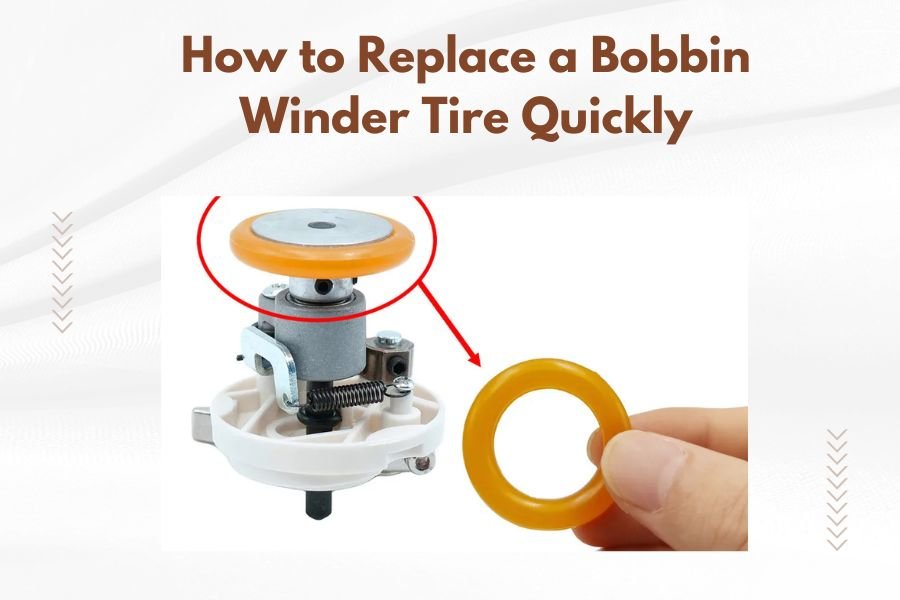
Replacing a bobbin winder tire takes just 10-15 minutes with basic tools like pliers and a small screwdriver.
You’ll know your bobbin winder tire needs replacement when it slips during winding or appears cracked and worn.
What Is a Bobbin Winder Tire
A bobbin winder tire is the small rubber ring that connects your sewing machine’s motor to the bobbin winder. Think of it like a tiny belt in your car engine. It transfers power from the handwheel to spin your bobbin.
This little rubber part does all the heavy lifting when you wind thread onto bobbins. Without it working properly, your bobbins won’t fill evenly or at all.
Why Bobbin Winder Tires Wear Out
Rubber naturally breaks down over time. Heat from your sewing machine speeds up this process. The constant friction from spinning creates wear patterns.
I found that most bobbin winder tires last 2-5 years with regular use. Heavy sewers might need replacements more often.
Signs Your Bobbin Winder Tire Needs Replacement
Your machine will tell you when the tire is failing. Here are the clear warning signs:
- Bobbin spins slowly or stops completely
- Thread winds unevenly on the bobbin
- You hear squealing or grinding noises
- The tire looks cracked or stretched
- Rubber pieces fall off during use
Testing Your Current Tire
Try winding a bobbin with scrap thread. Does it fill smoothly and evenly? If the bobbin wobbles or stops frequently, your tire probably needs changing.
Look closely at the rubber ring. Fresh tires feel firm and springy. Old ones feel mushy or brittle.
Tools and Supplies You’ll Need
Gather these items before starting your repair:
- New bobbin winder tire (check your manual for the right size)
- Small flathead screwdriver
- Needle-nose pliers
- Tweezers (optional but helpful)
- Clean cloth
- Your sewing machine manual
Finding the Right Replacement Tire
Not all bobbin winder tires are the same. Check your machine’s model number and look up the part in your manual.
I found online that using the wrong size tire can damage your machine. When in doubt, take the old tire to your local sewing shop for matching.
Step-by-Step Replacement Process
Ready to fix that bobbin winder? Let’s walk through each step together.
Step 1: Prepare Your Machine
Turn off your sewing machine and unplug it completely. Safety first, right?
Clear your workspace and have good lighting. You’ll be working with small parts that like to disappear.
Accessing the Bobbin Winder Area
Most bobbin winders sit on the top right of your machine. Some machines require removing a small cover plate first.
Take a photo with your phone before disassembly. This helps you remember how everything goes back together.
Step 2: Remove the Old Tire
Locate the rubber ring around the bobbin winder mechanism. It usually sits between two metal wheels.
Use your screwdriver to gently pry one side of the tire off its groove. Work slowly to avoid scratching the metal parts.
Dealing with Stubborn Tires
Old rubber can stick like glue. Try wiggling the tire back and forth while pulling. Sometimes a tiny drop of sewing machine oil helps loosen things up.
If the tire breaks during removal, that’s fine. Use pliers to grab the remaining pieces.
Step 3: Clean the Area
Wipe away any rubber residue or dust from the metal surfaces. A clean installation site helps your new tire last longer.
Check for any bent or damaged parts while you’re cleaning. Now’s the time to spot other problems.
Step 4: Install the New Tire
Stretch the new tire slightly and position it over one wheel first. Then work it around to the second wheel.
The tire should sit evenly in both grooves. If it looks twisted or uneven, remove it and try again.
Getting the Tension Right
Your new tire should feel snug but not overly tight. It needs enough grip to transfer power without slipping.
I found that most replacement tires come slightly smaller than needed. This gives you the right tension when installed.
Testing Your Repair
Plug your machine back in and test the bobbin winder before sewing anything important.
Thread a bobbin with scrap thread. The bobbin should wind smoothly and evenly. Listen for any unusual noises.
Fine-Tuning the Installation
If the bobbin winds too slowly, your tire might be too loose. If it slips or squeals, try adjusting the position slightly.
Some machines have tension adjustments for the bobbin winder. Check your manual for these settings.
Common Installation Mistakes
Even experienced sewers make these errors. Learn from their mistakes:
Using the Wrong Size Tire
A tire that’s too big won’t create proper tension. Too small, and it might snap during use.
Always double-check your machine model against the replacement part number.
Forgetting to Clean First
Old rubber residue prevents proper adhesion. Your new tire might slip or wear out quickly.
Spend an extra minute cleaning for better results.
Incorrect Tire Position
The tire must sit completely in both wheel grooves. Partial installation leads to uneven bobbin winding.
Take your time during installation. Rushing causes more problems than it solves.
Extending Your New Tire’s Life
Want to get the most from your replacement tire? Follow these simple tips:
- Clean dust from the bobbin area monthly
- Don’t over-wind bobbins past their capacity
- Use smooth thread that won’t create excess friction
- Store your machine in a cool, dry place
Regular Maintenance Schedule
Check your bobbin winder tire every six months. Look for signs of wear before they become problems.
Many sewing experts recommend keeping a spare tire on hand. They’re inexpensive and save time when failures happen.
Troubleshooting After Installation
What if your bobbin winder still doesn’t work perfectly after tire replacement?
Bobbin Winds Unevenly
This usually means the tire isn’t seated properly. Remove and reinstall it, making sure both sides sit in their grooves.
Sometimes the bobbin itself is warped or damaged. Try a different bobbin to test.
Winder Makes Noise
Squeaking often indicates the tire is too tight or dry. A tiny drop of sewing machine oil on the moving parts might help.
Grinding sounds suggest metal parts are rubbing together. Stop using the machine and consult a repair technician.
Tire Keeps Slipping Off
You might have bought the wrong size tire. Double-check your machine model and part number.
Sometimes metal wear on older machines prevents proper tire retention. This might require professional repair.
Cost and Replacement Frequency
Bobbin winder tires typically cost $3-8 each. Buying multiple tires often reduces the per-unit price.
I found online that most home sewers replace their tire every 2-4 years. Professional seamstresses might need annual replacements.
| Sewing Frequency | Expected Tire Life | Signs to Watch For |
|---|---|---|
| Occasional (1-2 hours/week) | 4-5 years | Gradual performance decline |
| Regular (5-10 hours/week) | 2-3 years | Uneven bobbin winding |
| Heavy (20+ hours/week) | 1-2 years | Frequent slipping or noise |
When to Call a Professional
Some bobbin winder problems go beyond a simple tire replacement. Consider professional help if:
- Metal parts look bent or worn
- Your machine is still under warranty
- Multiple tire replacements haven’t solved the problem
- You’re not comfortable doing the repair yourself
Warranty Considerations
Opening your machine might void some warranties. Check your documentation before starting any repairs.
Many dealers offer free tire replacement during the warranty period. Why not take advantage of that service?
Conclusion
Replacing a bobbin winder tire is one of the easiest sewing machine repairs you can do yourself. With just a few basic tools and 15 minutes of time, you’ll have your machine winding bobbins like new again.
Remember to buy the right size tire for your specific machine model. Take your time during installation, and don’t skip the cleaning step. Your new tire should give you years of smooth bobbin winding.
Keep a spare tire in your sewing supplies. When you’re in the middle of a big project, you’ll be glad you can fix this problem quickly instead of waiting for repair appointments or shipping delays.
What are the signs that my bobbin winder tire needs immediate replacement?
Stop using your machine if you see rubber pieces falling off, hear grinding metal sounds, or notice the bobbin completely stops spinning during winding. These signs indicate the tire has failed completely and continued use might damage other parts.
Can I use a generic bobbin winder tire instead of the manufacturer’s part?
Generic tires work fine as long as they match the exact dimensions of your original tire. Measure the diameter and thickness carefully, or bring your old tire to the store for comparison. Wrong-sized tires can slip or break quickly.
How do I know if my bobbin winder problems are caused by something other than the tire?
If replacing the tire doesn’t fix uneven winding or spinning problems, check your bobbin for warping and ensure the bobbin winder mechanism engages properly. Sometimes dust buildup or bent metal parts cause similar symptoms.
Should I oil my new bobbin winder tire during installation?
Never put oil directly on the rubber tire as it will cause slipping. Only oil the metal pivot points and moving parts around the winder mechanism. Use just one tiny drop of sewing machine oil on each metal contact point.
How can I make my replacement bobbin winder tire last longer?
Wind bobbins at medium speed rather than maximum speed to reduce heat buildup. Clean dust from the area monthly, avoid overfilling bobbins, and store your machine away from heat sources like radiators or direct sunlight.