Quilting needles are longer, sharper, and thinner than regular sewing needles, designed to penetrate multiple fabric layers without shifting or puckering.
The main difference between quilting vs. sewing needles lies in their length, point sharpness, and eye size – quilting needles handle thick batting while sewing needles work best on single fabric layers.
What Makes Quilting Needles Special
You might wonder why you can’t just use any needle for your quilting project. I found that quilting needles have unique features that make them perfect for their job.
Quilting needles are longer than regular needles. This extra length helps you take bigger stitches through thick quilt sandwiches. The sharp point cuts through multiple layers cleanly.
Length Differences That Matter
Regular sewing needles measure about 1 to 1.25 inches long. Quilting needles stretch to 1.25 to 1.75 inches. That extra half-inch makes a huge difference when you’re stitching through batting.
Longer needles give you better control. You can rock the needle through layers more smoothly. Your stitches stay even and straight.
The Sharp Point Advantage
Quilting needles have extra-sharp points. I researched and found that this sharpness prevents fabric from bunching up as you stitch. The needle slides through cleanly instead of pushing fibers around.
Think of it like cutting paper with sharp scissors versus dull ones. Sharp quilting needles create clean holes that close neatly behind your thread.
Regular Sewing Needles: Built for Different Jobs
Regular sewing needles work great for their intended purpose. They’re shorter and designed for single-layer fabric work or thin seams.
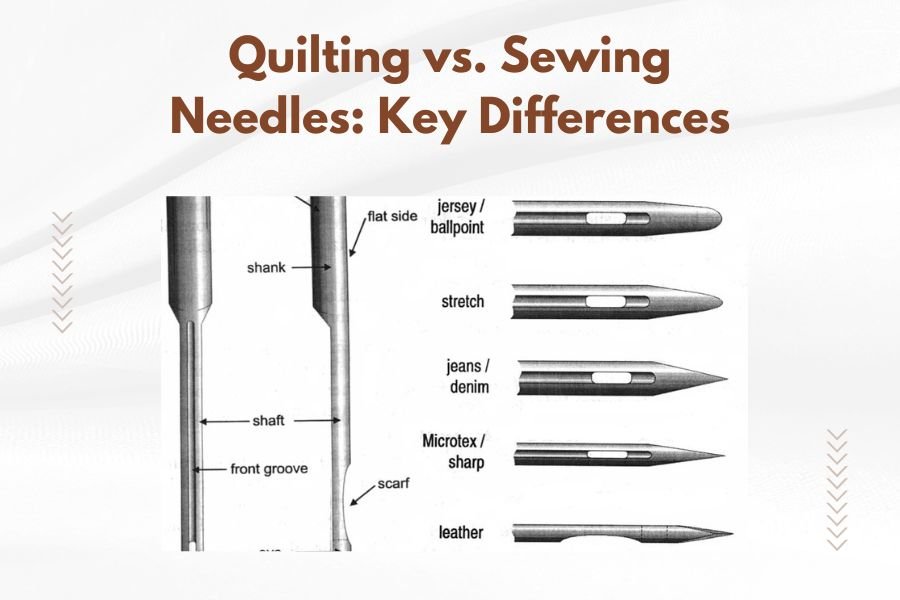
These needles come in many varieties. You’ll find ballpoint needles for knits, universal needles for woven fabrics, and specialty needles for leather or denim.
When Sewing Needles Excel
Sewing needles shine in garment construction. They handle delicate fabrics without damage. The shorter length gives you precision for detailed work like buttonholes or zippers.
For everyday mending and alterations, sewing needles are perfect. They’re easier to control in tight spaces and around curves.
Eye Size Differences
Sewing needle eyes vary based on thread weight. Quilting needle eyes are usually larger to accommodate quilting threads, which tend to be thicker than regular sewing thread.
Size Numbers: What They Really Mean
Needle sizes confuse many people. The numbering system works the same for both quilting and sewing needles, but the ranges differ.
Smaller numbers mean thinner needles. Size 8 is thinner than size 12. I found that quilting needles typically range from size 8 to 12, while sewing needles span from size 8 to 18.
Choosing the Right Size
For quilting, size 8 or 9 works well for fine fabrics and detailed work. Size 10 or 11 handles medium-weight cottons perfectly. Size 12 tackles heavy fabrics and thick batting.
Match your needle size to your thread weight too. Thick thread needs a larger needle eye to prevent fraying.
Thread Weight Guidelines
Use size 8-9 needles with 60-weight thread. Size 10-11 needles pair well with 40-weight thread. Size 12 needles handle 30-weight and decorative threads.
Material Construction Differences
Both needle types use similar steel construction, but quilting needles often get extra treatments. Many have special coatings to reduce friction as they pass through thick layers.
I came across information showing that some quilting needles have titanium or chrome coatings. These coatings help needles stay sharp longer and glide more smoothly.
Handle the Heat
Quilting creates more friction than regular sewing. The needle heats up from passing through thick layers repeatedly. Quality quilting needles resist this heat better than regular needles.
Performance in Different Projects
Can you use quilting needles for regular sewing? Sure, but they’re not ideal. The extra length makes them harder to control for detailed work.
Can you use sewing needles for quilting? You’ll struggle with thick layers. The shorter length and duller point will frustrate you quickly.
Hand Quilting vs. Machine Quilting
Hand quilting needles are even more specialized. They’re called “betweens” and are shorter than machine quilting needles. This short length helps you create tiny, even stitches by hand.
Machine quilting needles are longer and stronger to handle the machine’s speed and force.
Specialty Machine Needles
Some machine quilting needles have special features. Top-stitch needles have larger eyes for thick threads. Metallic needles have special eye coatings to prevent thread shredding.
Cost and Availability
Quilting needles cost slightly more than regular sewing needles. The specialized manufacturing and materials justify the price difference.
You’ll find quilting needles at fabric stores and online. Regular sewing needles are available everywhere, even grocery stores and pharmacies.
Value for Money
Quilting needles last longer in quilting projects than regular needles would. They’re built to handle the extra stress. This durability makes them worth the extra cost.
Common Mistakes to Avoid
Don’t use a dull needle for either quilting or sewing. Dull needles create larger holes, cause fabric damage, and make stitching harder.
Many people use the wrong size needle for their thread. This causes tension problems, thread breakage, and poor stitch quality.
Signs You Need a New Needle
Replace your needle when it starts snagging fabric, creating irregular stitches, or skipping stitches. If you hear a popping sound as the needle enters fabric, it’s too dull.
Needle Lifespan
Change machine needles after 8-10 hours of quilting or every 2-3 projects. Hand quilting needles last longer but should be replaced when they feel dull or bent.
Storage and Care Tips
Store needles in their original packaging or a needle case. This protects the points from damage. Keep different types separated to avoid mix-ups.
Never store needles loose in a drawer. They can get damaged or lost easily.
Keeping Track
Label your needle storage containers. It’s easy to forget which needles are which size or type. A simple label saves time and confusion.
Professional Recommendations
From what I read, professional quilters often keep both types of needles on hand. They use quilting needles for the main quilting work and switch to sewing needles for binding or detail work.
Many experts say that using the right needle type makes quilting more enjoyable and produces better results.
Conclusion
Quilting and sewing needles serve different purposes, and using the right one makes all the difference in your projects. Quilting needles with their extra length, sharp points, and specialized construction handle thick layers beautifully. Regular sewing needles excel at garment construction and detailed work on single fabric layers. Invest in both types if you do various fabric projects – your finished work will thank you for it.
Can I use quilting needles for regular sewing projects?
Yes, but they’re not ideal for detailed work. The extra length makes them harder to control for precise stitching like buttonholes or curved seams. Save quilting needles for quilting projects where their length and sharpness shine.
How often should I change my quilting needles?
Change machine quilting needles after 8-10 hours of stitching or every 2-3 projects. Hand quilting needles last longer but should be replaced when they feel dull, bent, or start snagging fabric consistently.
What size quilting needle should beginners use?
Start with size 10 or 11 quilting needles. These sizes work well with most cotton fabrics and medium-weight batting. They’re forgiving for beginners while still providing good stitch quality through multiple layers.
Do quilting needles work with all types of thread?
Quilting needles work with most threads, but match the needle size to your thread weight. Use smaller needles (size 8-9) with fine threads and larger needles (size 11-12) with thick or decorative threads to prevent thread damage.
Why do my quilting needles keep breaking?
Needles break from hitting pins, using the wrong size for thick fabrics, or forcing the needle through resistant layers. Remove pins before stitching over them, choose larger needles for heavy fabrics, and let the machine do the work without pulling.