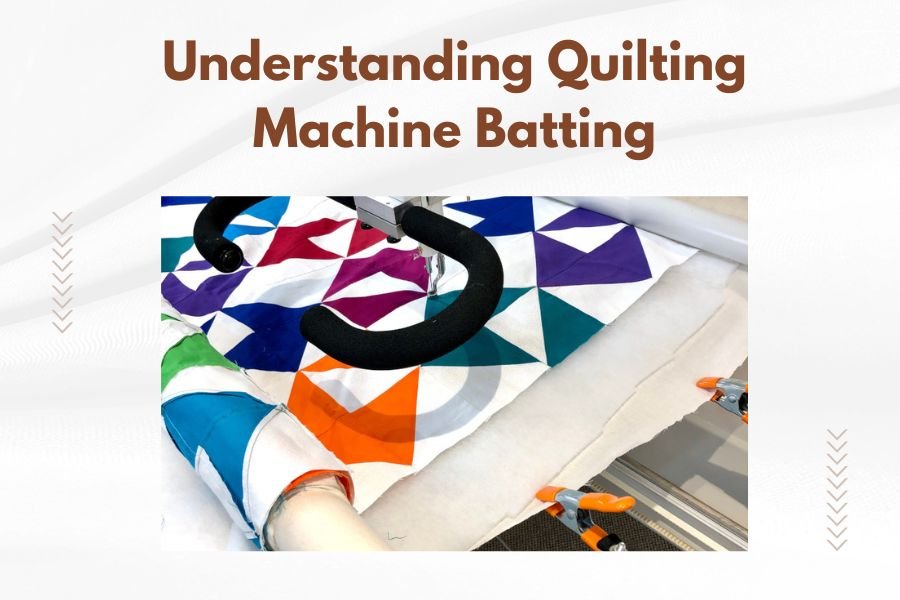
Quilting machine batting is the middle layer that sits between your quilt top and backing, providing warmth, thickness, and structure to your finished quilt.
The type of batting you choose affects everything from how easy your quilt is to machine quilt to how it looks and feels after washing.
What Is Quilting Machine Batting?
Think of batting as the filling in a sandwich. Your quilt top is the bread on top, the backing is the bottom slice, and batting is everything good in between.
This middle layer does more than you might expect. It adds warmth when you need a cozy blanket. It creates the puffy texture that makes quilts look so appealing. And it holds the whole project together once you stitch through all three layers.
Why Batting Choice Matters for Machine Quilting
Not all battings work the same way under your sewing machine. Some glide smoothly as you guide your quilt through. Others fight you every step of the way.
I found that many quilters struggle with their first few projects because they picked batting that didn’t match their skill level or machine setup.
Types of Quilting Machine Batting Materials
Cotton Batting
Cotton batting feels natural and breathable. It shrinks slightly when you wash it, giving your quilt that crinkled, vintage look that many people love.
This type works well for machine quilting because it has some grip. Your layers won’t shift around as much while you sew.
Cotton Batting Pros
- Breathes well for comfortable sleeping
- Creates that classic quilted appearance
- Stays put during machine quilting
- Works with most thread types
Cotton Batting Cons
- Can be harder to push through thick seams
- Shrinks up to 3% when washed
- Needs closer quilting lines than synthetic options
Polyester Batting
Polyester batting is lightweight and easy to work with. It doesn’t shrink, so your quilt will look the same before and after its first wash.
Many beginners find polyester more forgiving. It glides through the machine smoothly and doesn’t require as much quilting to stay stable.
Polyester Batting Benefits
- No shrinkage after washing
- Very lightweight and warm
- Easy to machine quilt
- Less expensive than natural fibers
Polyester Batting Drawbacks
- Can feel less breathable
- May beard (fibers poke through fabric)
- Doesn’t create the same vintage look
Cotton-Polyester Blend Batting
Blend batting tries to give you the best of both worlds. You get some of cotton’s natural feel with polyester’s easy handling.
From what I read, many quilting experts recommend blends for first-time machine quilters. They’re more predictable than pure cotton but still feel natural.
Wool Batting
Wool batting is the warmest option. It’s also naturally flame-resistant and temperature-regulating.
This type can be trickier to machine quilt. The fibers are springy and can make your quilt puffy in ways that are hard to control.
Bamboo Batting
Bamboo batting is newer to the market. It promises the breathability of cotton with the easy care of polyester.
I found that bamboo batting works well for machine quilting, but it’s usually more expensive than other options.
Batting Thickness and Loft Options
Low Loft Batting
Low loft batting is thin and flat. It creates quilts that look more like thick blankets than puffy comforters.
This thickness works great for machine quilting. Your needle doesn’t have to push through much material, and you can see your quilting pattern clearly.
Medium Loft Batting
Medium loft gives you a traditional quilt look. It’s thick enough to show off your quilting patterns but not so thick that it fights your machine.
Most quilters find this the sweet spot for machine quilting projects.
High Loft Batting
High loft batting creates very puffy, thick quilts. Think of the quilts you see in fancy hotel rooms.
Machine quilting high loft batting takes more skill and often a more powerful machine. The bulk can be hard to manage.
How to Choose Batting for Your Machine
Consider Your Machine’s Power
Does your machine struggle with thick seams already? If yes, stick with low to medium loft batting until you upgrade your equipment.
Heavy-duty machines can handle thicker batting better. But even they have limits.
Match Batting to Your Project
Wall hangings need different batting than bed quilts. Table runners need different batting than baby quilts.
Think about how the finished quilt will be used. Will it be washed often? Does it need to be warm or just decorative?
Batting Choices by Project Type
| Project Type | Best Batting | Why |
|---|---|---|
| Baby Quilts | Cotton or Cotton Blend | Breathable and safe |
| Bed Quilts | Cotton or Wool | Comfort and temperature control |
| Wall Hangings | Low Loft Polyester | Lightweight and stable |
| Table Runners | Low Loft Cotton | Lies flat and washes well |
Batting Preparation Tips
Pre-Washing Batting
Should you pre-wash batting? It depends on the type you choose.
Cotton batting often benefits from pre-washing if you want to avoid shrinkage later. Polyester batting doesn’t need pre-washing.
Sizing Your Batting
Cut your batting at least 4 inches larger than your quilt top on all sides. This gives you room to work without running out of batting as you quilt.
Many quilters I heard from make the mistake of cutting batting too small. You can always trim excess, but you can’t add more easily.
Storing Batting
Keep batting flat if possible. Rolling is better than folding, which creates creases that are hard to remove.
Store batting in a dry place. Moisture can cause mold or mildew, especially with natural fibers.
Common Batting Problems and Solutions
Batting Bearding
Bearding happens when batting fibers poke through your quilt top or backing. It looks fuzzy and unprofessional.
Choose batting with a scrim layer to prevent bearding. These battings have a thin stabilizing layer that holds fibers in place.
Batting Bunching
Sometimes batting bunches up as you machine quilt. This creates lumps and uneven areas.
Baste your quilt sandwich more carefully. Use spray basting or pin basting every 4 inches to keep everything smooth.
Needle Breaking
Thick batting can break needles, especially if you’re using the wrong needle size.
Switch to a larger needle when using thicker batting. Size 90/14 or 100/16 needles work better than the standard 80/12.
Batting Brands and Quality
What Makes Quality Batting
Good batting feels consistent throughout. You shouldn’t find thick spots next to thin spots.
Quality batting also doesn’t fall apart when you handle it. Cheap batting can shed fibers all over your workspace.
Reading Batting Labels
Batting packages tell you important information. Look for the maximum quilting distance – how far apart your quilting lines can be.
Some battings need quilting every 2 inches. Others are stable up to 8 inches apart.
Machine Quilting Tips for Different Battings
Thread Selection
Cotton batting works well with cotton thread. Polyester batting pairs nicely with polyester thread.
Matching your thread to your batting isn’t required, but it can make your machine run more smoothly.
Tension Adjustments
Thick batting might require slight tension adjustments on your machine. Test on scraps before quilting your real project.
Write down any settings that work well. You’ll want to remember them for next time.
Budget Considerations
Cost Per Project
Batting prices vary widely. Cotton and wool cost more than polyester. Specialty battings like bamboo cost the most.
But don’t just look at the price per yard. Consider how the batting will perform and how long your quilt will last.
When to Spend More
Spend more on batting for quilts you plan to keep or give as special gifts. Use budget batting for practice projects or quilts that will see heavy wear.
Quality batting can make the difference between a quilt that lasts decades and one that falls apart after a few washes.
Conclusion
Choosing the right quilting machine batting affects every part of your quilting experience. From how smoothly your machine runs to how your finished quilt looks and feels, batting matters more than many beginners realize.
Start with medium-loft cotton or cotton-blend batting for your first machine quilting projects. These options forgive mistakes while teaching you how different battings behave. As your skills grow, experiment with different materials and thicknesses to find your favorites.
Remember that the best batting is the one that matches your project, your machine, and your skill level. Don’t be afraid to try different types until you find what works for you.
What’s the difference between batting and interfacing?
Batting adds warmth and thickness to quilts, while interfacing adds structure to garments and crafts. Batting is much thicker and designed to be the middle layer of a quilt sandwich. Interfacing is thin and usually fused or sewn to fabric to make it stiffer.
Can I use old blankets as batting?
You can use old blankets, but they’re harder to machine quilt through and may not wash well. Old blankets are often thicker and denser than proper batting, making them difficult to push through your machine. They also might shrink differently than your quilt top and backing.
How do I join batting pieces together?
Butt the edges together and stitch them with a wide zigzag stitch, or overlap them by half an inch and trim to create a gradual transition. Don’t overlap full thickness, as this creates a thick line that will show in your finished quilt. Some quilters use spray adhesive to hold joined pieces temporarily.
Why is my batting shifting during quilting?
Insufficient basting is usually the problem. Your quilt sandwich needs more pins, spray basting, or hand basting stitches to keep all layers aligned. Also check that your batting isn’t too small – it should extend beyond your quilt top on all sides while you’re quilting.
Can I machine wash all types of batting?
Most modern battings are machine washable, but always check the package instructions first. Cotton batting may shrink and wool batting often needs gentle cycles or hand washing. Polyester batting is usually the most care-free option and can handle normal machine washing and drying.