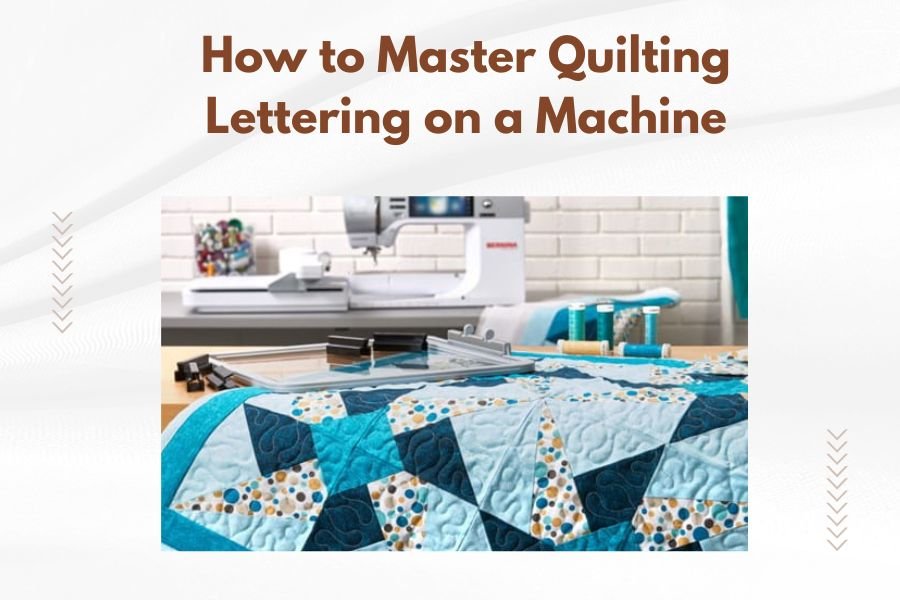
Machine quilting lettering requires setting proper thread tension, using a walking foot or free-motion foot, and practicing consistent stitch speed for clean, professional results.
Start with block letters on practice fabric, trace your design with washable markers, and keep your machine at medium speed to master quilting lettering techniques.
Essential Equipment for Machine Quilting Letters
Your sewing machine needs specific feet to handle lettering well. I found that most quilting experts recommend starting with a walking foot for straight-line letters.
A free-motion quilting foot gives you more control for curved letters. You’ll also need quilting thread, washable fabric markers, and stabilizer fabric.
Best Machine Feet for Lettering
Walking feet work great for block letters and straight lines. They feed all fabric layers evenly through your machine.
Free-motion feet let you move fabric in any direction. This gives you freedom to create script letters and decorative fonts.
Thread Selection Guide
Cotton thread works best for beginners. It’s forgiving and creates clean stitches on most fabrics.
Polyester thread adds shine but can be trickier to control. Save metallic threads for when you’ve mastered basic techniques.
Marking Tools That Work
Water-soluble markers disappear completely when you wash your quilt. Heat-erasable markers vanish with an iron’s touch.
Chalk markers brush away easily. Test any marker on fabric scraps first to make sure it removes cleanly.
Machine Setup and Tension Adjustments
Thread tension controls how your stitches look. Too tight creates puckered fabric. Too loose makes messy, loopy stitches.
Start with your machine’s normal tension setting. Make small adjustments as you test on practice fabric.
Stitch Length Settings
Short stitches give you more control but take longer. I found that 2.5 to 3.0 stitch length works well for most lettering.
Longer stitches move faster but can look choppy on curves. Adjust based on your letter size and style.
Speed Control Tips
Slow, steady speed creates the most consistent letters. Fast stitching often leads to wobbly lines and tension problems.
Many machines have speed limiters. Use them while learning to keep your pace even.
Design Planning and Layout
Plan your letter spacing before you start stitching. Crowded letters look messy. Too much space looks disconnected.
Print your text in the size you want. Cut it out and arrange the letters on your quilt top to check spacing.
Font Selection for Beginners
Block letters are easiest to machine stitch. They have straight lines and simple curves that forgive small mistakes.
Avoid thin, delicate fonts until you’ve practiced more. They require perfect tension and steady hands.
Letter Size Guidelines
Start with letters at least 2 inches tall. Smaller letters are harder to control and read from a distance.
Larger letters show off your stitching better. They’re also more forgiving if your lines aren’t perfectly straight.
Tracing and Transfer Methods
Light boxes make tracing easy. Place your pattern under the fabric and trace with washable markers.
Transfer paper works without special equipment. Trace over your pattern with a blunt tool to mark the fabric.
Template Creation
Make reusable templates from cardboard or plastic. Trace around them for consistent letter shapes across projects.
Freezer paper sticks temporarily to fabric. Print on the paper side, then iron the shiny side to your quilt.
Digital Design Tools
Free online generators create printable letter templates. Type your text, choose size and font, then print.
Simple word processors work too. Make text very large, print, then cut out individual letters.
Basic Stitching Techniques
Start each letter by lowering your needle into the fabric. This anchors your thread and prevents loose ends.
Follow your marked lines steadily. Don’t rush corners or curves. Stop with the needle down to pivot smoothly.
Straight Line Mastery
Keep your eyes on the line ahead of your needle, not on the needle itself. This helps you steer smoothly.
Guide the fabric gently. Let the feed dogs do most of the work. Too much pushing or pulling creates uneven stitches.
Curve Control Methods
Take curves slowly. Stop frequently with your needle down to readjust your fabric position.
Small, gradual turns look smoother than sharp direction changes. Think of steering a car around a gentle bend.
Corner Techniques
Sharp corners need precise pivoting. Stop with your needle down exactly at the corner point.
Lift your presser foot, turn the fabric, lower the foot, then continue stitching. This creates clean, pointed corners.
Free-Motion Lettering Skills
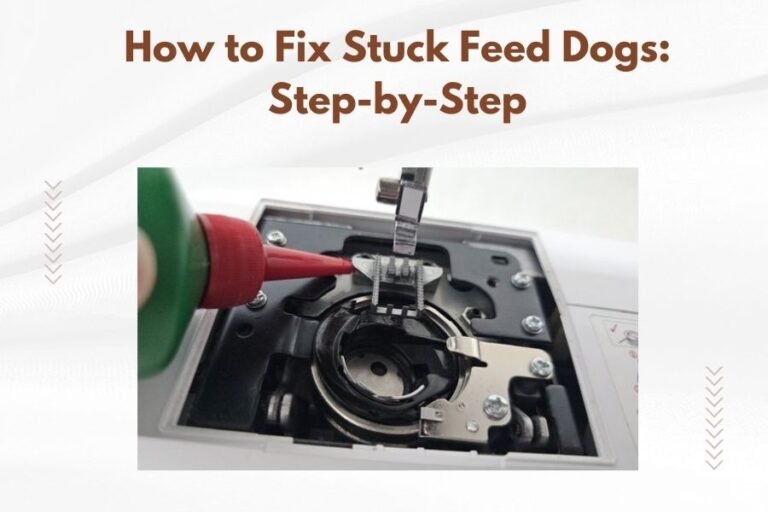
Free-motion quilting drops the feed dogs so you control fabric movement completely. This takes practice but offers unlimited creativity.
Your hands become the feed dogs. Move fabric smoothly while maintaining steady stitching speed.
Hand Position and Movement
Hold fabric firmly but don’t grip tightly. Your hands should glide across the surface easily.
Use both hands to support and guide fabric. Keep movements smooth and deliberate, not jerky or rushed.
Speed Coordination
Balance your hand speed with needle speed. Fast needle with slow hands creates tiny stitches. The opposite makes huge stitches.
Practice moving your hands at different speeds until the motion feels natural. Consistency comes with time.
Common Problems and Solutions
Puckered fabric usually means tension is too tight or you’re pulling the fabric too hard. Loosen tension slightly and guide more gently.
Skipped stitches often come from a dull needle or wrong needle type. Change to a new quilting needle.
| Problem | Likely Cause | Quick Fix |
|---|---|---|
| Wobbly lines | Moving too fast | Slow down, practice control |
| Thread breaks | Tension too tight | Loosen upper tension |
| Messy curves | Not stopping to pivot | Stop more frequently |
Thread Tension Issues
Upper thread showing on the back means upper tension is too loose. Lower thread showing on top means it’s too tight.
Make small adjustments one number at a time. Test on scraps before continuing your project.
Fabric Handling Problems
Large quilts get heavy and awkward. Roll the sides toward your work area to reduce bulk.
Support heavy sections with extra tables or chairs. Don’t let weight pull on your stitching area.
Practice Exercises
Start with simple shapes like circles and squares. Master these before moving to actual letters.
Practice writing your name in block letters. Repeat each letter until it looks consistent.
Progressive Skill Building
Week one: straight lines and basic shapes. Week two: simple block letters. Week three: curved letters like O and S.
Keep practice samples to track your progress. You’ll be surprised how quickly your skills improve.
Sample Projects
Make small wall hangings with single words like “HOME” or “LOVE”. These give you practice without big time commitment.
Baby quilts are perfect for practicing names and dates. The smaller size is less overwhelming for beginners.
Advanced Lettering Styles
Script letters flow together like handwriting. They require smooth, continuous motion and careful planning.
Decorative fonts add personality but need more skill. Start with simple variations of block letters.
Dimensional Effects
Double-line letters look bold and professional. Stitch the outline first, then fill or add inner details.
Shadow effects use two colors. Stitch the shadow slightly offset, then add the main letter on top.
Embellishment Ideas
French knots make great dots for i’s and j’s. Blanket stitch around letter edges adds texture.
Applique letters first, then outline with decorative stitching. This combines techniques for stunning results.
Conclusion
Mastering machine quilting lettering takes patience and practice, but the results are worth every minute you invest. Start with simple block letters, focus on consistent tension and speed, and gradually work up to more complex styles.
Remember that even experienced quilters had wobbly first attempts. Keep practicing on scraps, experiment with different fonts and techniques, and don’t be afraid to make mistakes. Each project teaches you something new about controlling your machine and creating beautiful lettered quilts that tell your unique story.
What’s the best stitch length for quilting letters on a machine?
A stitch length between 2.5 and 3.0 works best for most machine quilting lettering. This length gives you good control while creating smooth, even lines that look professional and are strong enough for regular use.
Can I use regular sewing thread for quilting letters?
Regular sewing thread works for quilting letters, but quilting thread is stronger and designed for multiple fabric layers. Cotton quilting thread is most forgiving for beginners, while polyester adds durability and slight sheen to finished letters.
How do I prevent fabric puckering when machine quilting letters?
Prevent puckering by using proper thread tension, supporting your quilt weight evenly, and not pulling or pushing the fabric too hard. A walking foot helps feed layers evenly, and quilting hoops can stabilize smaller sections during stitching.
What size letters should beginners start with for machine quilting?
Begin with letters at least 2 inches tall. Larger letters are much easier to control, more forgiving of small mistakes, and let you focus on developing smooth stitching techniques before attempting smaller, more precise lettering.
Do I need a special sewing machine for quilting letters?
Any sewing machine that handles multiple fabric layers can quilt letters. Features that help include adjustable presser foot pressure, variable speed control, and the ability to drop feed dogs for free-motion work, but these aren’t absolutely required for basic lettering.