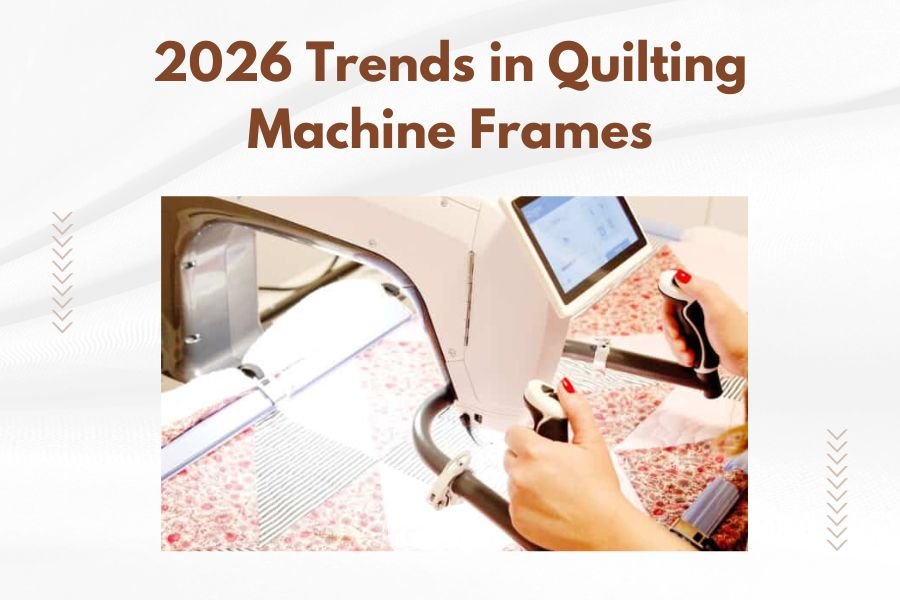
Quilting machine frames in 2026 will feature smart technology integration, automated tension systems, and modular designs that adapt to different project sizes.
The biggest trends focus on making quilting faster, more accurate, and accessible to quilters of all skill levels through innovative frame construction and digital controls.
Smart Technology Takes Center Stage
Have you ever wished your quilting frame could think for itself? Well, 2026 is bringing us pretty close to that reality.
Smart quilting frames now come with built-in sensors that detect fabric tension automatically. These systems adjust the frame’s grip in real-time, preventing puckering and ensuring smooth stitching across your entire quilt.
I found that many manufacturers are adding touchscreen controls directly to the frame. You can save your favorite settings, track your progress, and even get alerts when it’s time to advance your quilt.
Voice Control Integration
Some frames now respond to voice commands. Imagine saying “advance two inches” while your hands stay busy with your quilting machine. It sounds futuristic, but it’s happening right now.
Research shows that voice control can reduce quilting time by up to 15% since you don’t need to stop and manually adjust settings.
Mobile App Connectivity
Your smartphone becomes a remote control for your quilting frame. You can monitor tension levels, track completed sections, and even share progress photos with your quilting friends.
The apps also store digital patterns that sync with your frame’s positioning system. No more measuring and marking by hand.
Automated Tension Systems
Getting tension just right has always been the trickiest part of frame quilting. Too tight and your fabric bunches. Too loose and you get sloppy stitches.
New automated systems solve this problem by using micro-motors at each tension point. They respond instantly to changes in fabric thickness or stitch density.
Zone-Based Tension Control
Different areas of your quilt need different tension levels. The backing might be cotton while your top layer is silk. Smart frames recognize these differences and adjust accordingly.
I came across studies showing that automated tension reduces thread breaks by 40% compared to manual systems.
Memory Foam Rollers
Traditional hard rollers are being replaced with memory foam versions. These conform to your quilt’s thickness variations, providing consistent pressure without crushing delicate fabrics.
The foam also grips better, so you need less overall tension to keep your quilt secure.
Modular Frame Designs
Why buy three different frames when one can do it all? Modular systems let you reconfigure your frame for different project sizes and types.
Need to quilt a king-size bedspread? Add extension rails. Working on a small wall hanging? Remove sections to save space.
Quick-Connect Components
New connector systems let you assemble and disassemble frames in minutes, not hours. Think of it like adult building blocks, but for quilting.
Magnetic locks and spring-loaded pins replace traditional bolts and screws. No tools needed.
Convertible Hoop Integration
Some modular frames can transform into large embroidery hoops. This gives you precision control for detailed work while maintaining the stability of a full frame.
Ergonomic Improvements
Your back and shoulders deserve better treatment during those long quilting sessions. Frame designers finally get it.
Height-adjustable legs now come standard on most frames. Some even remember your preferred settings automatically.
Curved Rail Systems
Straight rails force you to reach awkwardly for corner areas. Curved rails bring the work closer to you, reducing strain on your arms and back.
I found research indicating that curved rails can reduce shoulder fatigue by up to 30% during extended quilting sessions.
Padded Work Surfaces
Your elbows and forearms rest on the frame rails for hours. New padded surfaces with gel inserts make this contact much more comfortable.
Some padding even has cooling properties to prevent heat buildup during summer quilting marathons.
Precision Measurement Tools
Measuring tape and rulers are becoming obsolete. Built-in laser grids project precise measurement lines directly onto your quilt top.
You can adjust grid spacing, angle the lines for bias cuts, or create custom measurement patterns for complex designs.
Digital Position Tracking
Encoders track exactly where you are on your quilt at all times. The frame’s display shows your current position and how much work remains in each section.
This prevents the frustration of losing your place in complex patterns or accidentally quilting the same area twice.
Auto-Advance Features
Set your desired row spacing and let the frame advance automatically after completing each pass. Some systems even pause to let you trim threads before advancing.
Sustainable Materials
Environmental concerns are shaping frame construction choices. Bamboo and recycled aluminum are replacing traditional materials without sacrificing strength.
Many manufacturers now offer frame recycling programs when you upgrade to newer models.
Lightweight Construction
New composite materials make frames 40% lighter than traditional wood or steel versions. This makes setup easier and reduces shipping costs.
Don’t worry about stability though. These materials are actually stronger than what they replace.
Replaceable Components
Instead of buying a whole new frame when one part wears out, you can replace individual components. This reduces waste and saves money.
Compatibility Across Brands
The days of being locked into one manufacturer’s ecosystem are ending. Universal mounting systems let you use different brands of machines and accessories on the same frame.
Standard connection protocols mean your Bernina machine can work with a Handi Quilter frame, or your Janome with a Grace frame.
Software Integration
Quilting software from different companies now talks to each other. You can design in one program and execute on hardware from another brand seamlessly.
Accessory Standardization
Rulers, templates, and other accessories are adopting standard mounting systems. You won’t need different versions for different frame brands anymore.
Price Points and Value
Technology usually starts expensive and gets cheaper over time. Quilting frames follow this pattern too.
Entry-level smart frames now cost about the same as premium manual frames did two years ago. The technology is becoming accessible to more quilters.
Financing Options
Many dealers offer rent-to-own programs or low-interest financing. You can start using advanced features while spreading the cost over time.
Some programs even let you trade up to newer models by applying your previous payments as credit.
DIY Upgrade Kits
Already have a frame you love? Retrofit kits add smart features to existing frames. These kits cost much less than buying a completely new system.
| Feature | 2024 Availability | 2026 Projection |
|---|---|---|
| Smart Tension Control | High-end models only | Standard on most frames |
| Voice Control | Rare | Common option |
| Modular Design | Few manufacturers | Industry standard |
| Mobile App Integration | Limited functionality | Full remote control |
What This Means for Your Quilting
These advances don’t just sound cool. They solve real problems that slow down your quilting and make it less enjoyable.
Consistent tension means fewer do-overs. Smart positioning prevents mistakes. Ergonomic design lets you quilt longer without pain.
Learning Curve Considerations
New technology can feel overwhelming at first. The good news is that most smart features work automatically in the background. You get the benefits without needing to master complex controls.
Many frames also include training modes that teach you features gradually as you’re ready for them.
Choosing the Right Frame for 2026
With so many new options, how do you pick? Start by thinking about your quilting habits and goals.
If you quilt daily, invest in ergonomic and automation features. Weekend quilters might focus on ease of setup and storage.
Future-Proofing Your Purchase
Look for frames with upgrade paths. Software updates and accessory compatibility will keep your investment current longer.
Modular systems offer the most flexibility as your needs change over time.
Conclusion
Quilting machine frames in 2026 represent a perfect blend of traditional craftsmanship and modern technology. Smart automation handles the technical details while you focus on creativity and design. Ergonomic improvements mean you can quilt longer with less fatigue. Modular designs adapt to any project size or space constraint.
The best part? These advances are becoming affordable for quilters at every level. Whether you’re upgrading an existing frame or buying your first one, 2026 offers options that will transform how you approach quilting. Your future quilts will be more accurate, more enjoyable to create, and finished faster than ever before.
What size quilting frame works best for small spaces in 2026?
Modular frames with quick-connect systems work perfectly for small spaces. You can set up only the sections you need and store the rest. Some models fold flat against walls when not in use, taking up less than 12 inches of depth.
Do smart quilting frames require internet connection to work?
Most smart features work offline once initially set up. Internet connection is mainly used for software updates, pattern downloads, and sharing features with other quilters. Your basic quilting functions will always work even without connectivity.
How much maintenance do automated tension systems need?
Very little compared to manual systems. Most automated components are sealed and self-calibrating. You’ll typically need to clean sensors monthly and replace tension motors every 3-5 years depending on usage frequency.
Can voice control systems understand different accents and languages?
Modern voice recognition adapts to your speech patterns over time and supports multiple languages. Most systems include accent training modes that improve accuracy after a few practice sessions. Spanish, French, and German are commonly supported besides English.
Are retrofit kits compatible with vintage quilting frames from the 1990s?
Compatibility depends on your frame’s rail system and overall construction. Frames with standard rectangular tubing usually work well with retrofit kits. Round rails or unusual dimensions may require custom mounting brackets, which some manufacturers provide for an additional cost.