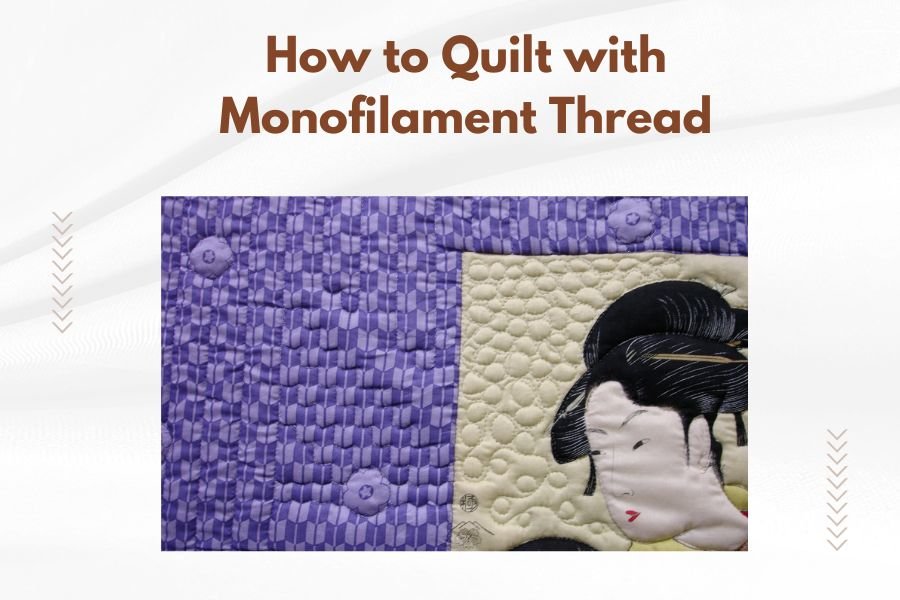
Monofilament thread is a single-strand, nearly invisible thread that creates beautiful, subtle quilting lines without distracting from your fabric patterns.
You can quilt with monofilament thread by using a size 70/10 needle, loosening your top tension, and stitching slowly to prevent thread breakage and achieve professional-looking results.
What Is Monofilament Thread and Why Use It
Think of monofilament thread as fishing line for quilting. It’s made from a single strand of nylon or polyester that’s nearly clear or smoke-colored.
This thread disappears into your quilt top, letting your fabric shine. You get all the benefits of quilting stitches without visible thread lines competing with your design.
I found that many quilters love monofilament for machine quilting because it works on any color fabric. No more buying dozens of thread colors to match every piece.
When Monofilament Thread Works Best
You’ll get the best results with monofilament on busy prints and multicolored fabrics. The invisible stitching lets complex patterns speak for themselves.
Free-motion quilting benefits most from this thread type. Your quilting designs show up as texture rather than visible lines.
Clear vs. Smoke Monofilament
Clear monofilament works on light and medium fabrics. Smoke-colored works better on dark fabrics and creates slightly more visible texture.
I researched which type quilters prefer and found most keep both colors on hand. The difference is subtle but worth having options.
Essential Supplies for Monofilament Quilting
Choosing the Right Needle
Size 70/10 or 80/12 needles work best with monofilament thread. The smaller eye reduces thread friction and prevents breaking.
Topstitch needles have larger eyes and longer shafts. They handle monofilament’s thickness better than universal needles.
Thread Weight and Quality
Look for .004 weight monofilament thread. This weight balances strength with flexibility.
Quality matters more with monofilament than cotton thread. Cheap versions break constantly and create frustrating sewing sessions.
Bobbin Thread Selection
Use lightweight cotton or polyester thread in your bobbin. Match the bobbin thread color to your quilt backing, not the top.
Cotton bobbin thread creates less tension than polyester. This prevents puckering when paired with stretchy monofilament.
Machine Setup and Tension Adjustments
Threading Your Machine Properly
Thread monofilament carefully through each guide. Skip the last thread guide before your needle if your machine allows it.
This reduces friction that causes thread breakage. Some quilting experts recommend this technique for smoother stitching.
Top Tension Settings
Start by lowering your top tension by 1-2 numbers from normal. Monofilament stretches more than cotton, needing looser tension.
Test on practice fabric first. You want the bobbin thread barely visible on top, with no loops on the bottom.
Signs Your Tension Is Wrong
Thread breaking constantly means tension is too tight. Loops on the quilt back mean tension is too loose.
Perfect tension creates small, even stitches with the bobbin thread just touching the quilt top.
Stitch Length and Speed
Use slightly longer stitches than normal quilting. About 10-12 stitches per inch works well.
Sew slower than usual. Fast stitching creates heat that can snap monofilament thread mid-seam.
Step-by-Step Quilting Process
Preparing Your Quilt Sandwich
Pin or spray-baste your quilt layers as usual. Monofilament doesn’t hide uneven basting, so take extra care here.
Smooth out all wrinkles before quilting. Invisible thread won’t camouflage puckered areas.
Starting and Stopping Stitches
Begin with tiny stitches or use your machine’s tie-off function. Monofilament doesn’t knot easily by hand.
Leave 3-4 inch thread tails when starting and stopping. You’ll bury these later with a hand needle.
Securing Thread Ends
Thread monofilament tails onto a sharp hand needle. Pull them between quilt layers and trim close to the surface.
The thread disappears completely using this method. Never leave monofilament tails hanging loose.
Free-Motion Quilting Techniques
Drop your feed dogs and attach a free-motion foot. Move your quilt smoothly while maintaining steady stitching speed.
Practice flowing motions on scraps first. Jerky movements show more with invisible thread than regular quilting thread.
Popular Free-Motion Patterns
Simple stippling works beautifully with monofilament. The texture shows without competing thread colors.
Feathers and swirls create elegant results. I found online that these designs really shine with invisible thread.
Troubleshooting Common Problems
Thread Breaking Issues
Thread breaks usually mean tension is too tight or you’re sewing too fast. Adjust one thing at a time until it improves.
Check your needle condition too. Dull or bent needles snag monofilament more than cotton thread.
Skipped Stitches
Skipped stitches often come from wrong needle size or type. Switch to a topstitch needle if universal needles aren’t working.
Make sure you’re not pulling the quilt while stitching. Let the machine feed the fabric naturally.
Preventing Future Problems
Change needles more often when using monofilament. The thread is harder on needle points than cotton.
Keep your machine clean and oiled. Monofilament creates more lint than you might expect.
Puckering and Gathering
Puckering usually means your tension is unbalanced. Try loosening the top tension another notch.
Check that your bobbin thread isn’t too heavy. Lightweight cotton prevents most gathering issues.
Finishing Techniques
Binding with Monofilament
You can machine-stitch binding with monofilament thread. The invisible stitches look very professional.
Use regular cotton thread for better durability if your quilt gets heavy use. Save monofilament for show quilts.
Final Pressing
Press carefully with medium heat. Monofilament can melt with high heat settings.
Use a pressing cloth between iron and quilt. This protects both the thread and your iron from potential melting.
| Problem | Likely Cause | Quick Fix |
|---|---|---|
| Thread breaking | Tension too tight | Lower top tension 1-2 numbers |
| Skipped stitches | Wrong needle | Use size 70/10 topstitch needle |
| Puckering fabric | Heavy bobbin thread | Switch to lightweight cotton bobbin |
| Visible loops | Tension too loose | Increase top tension slightly |
Conclusion
Quilting with monofilament thread opens up new creative possibilities for your projects. The invisible stitching lets your fabric choices and quilting patterns work together beautifully.
Start with simple projects to get comfortable with the different tension and speed requirements. Once you master the basics, you’ll find monofilament becomes a valuable tool in your quilting arsenal.
Remember to sew slowly, use proper needles, and adjust your tension settings. These small changes make the difference between frustrating thread breaks and smooth, professional results.
Can you use monofilament thread in both the top and bobbin?
Using monofilament in both positions isn’t recommended because it creates too much stretch and can cause tension problems. Stick with lightweight cotton or polyester thread in the bobbin for best results.
How do you store monofilament thread properly?
Store monofilament thread away from direct sunlight and heat sources, which can make it brittle. Keep it in a cool, dry place and avoid storing it in hot cars or sunny sewing rooms.
What’s the difference between nylon and polyester monofilament?
Nylon monofilament has more stretch and flexibility, making it easier to work with for beginners. Polyester monofilament is stronger and more heat-resistant but can be stiffer to handle.
Can you wash quilts made with monofilament thread?
Yes, you can wash quilts with monofilament thread using cool water and gentle cycles. Avoid high heat in the dryer, as excessive heat can damage or melt the thread over time.
Why does monofilament thread keep jamming in my bobbin case?
Monofilament should never go in the bobbin because it’s too stretchy and thick for most bobbin cases. Always use regular cotton or polyester thread in your bobbin when quilting with monofilament on top.