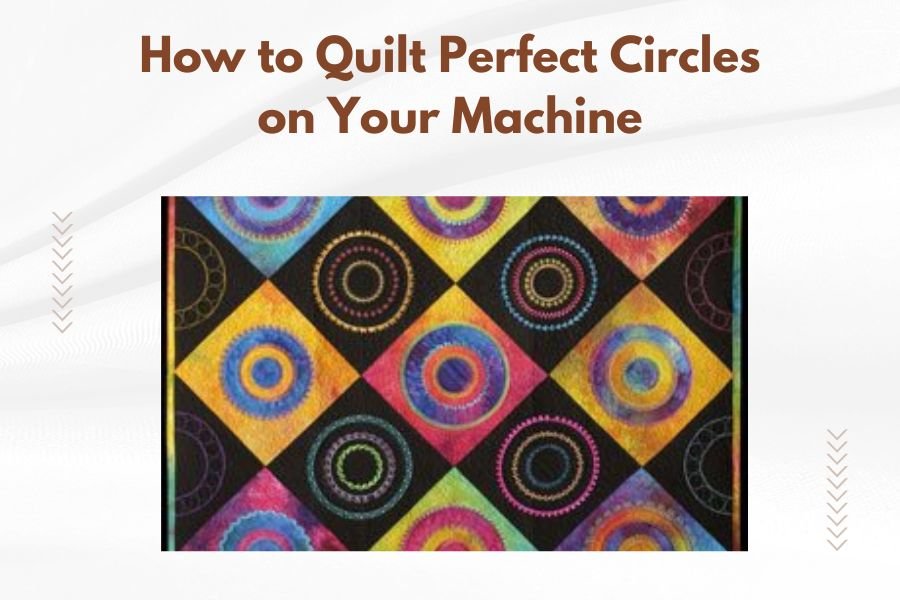
To quilt perfect circles on your machine, use a walking foot with circle templates or compass guides for even stitching and consistent curves.
Machine quilting circles requires proper foot pressure, steady speed control, and either free-motion quilting techniques or specialized circular attachments.
Essential Tools for Machine Circle Quilting
You need the right equipment before you start quilting circles. I found that having proper tools makes the difference between wobbly attempts and smooth, professional-looking curves.
Walking Foot vs Free-Motion Foot
Your choice of presser foot changes everything. A walking foot helps feed fabric evenly through multiple layers. It works best for larger circles with templates.
Free-motion feet give you complete control over direction and speed. They’re perfect for smaller circles and artistic curved designs.
Circle Templates and Guides
Ready-made circle templates save time and guarantee accuracy. You can buy plastic or metal versions in different sizes.
Compass-style attachments work like a mathematical compass. They pivot around a center point to create perfect circles every time.
Homemade Template Options
Can’t find the right size template? Make your own using cardboard, plastic lids, or even dinner plates. Trace around household items for instant circle guides.
Setting Up Your Sewing Machine
Machine setup affects your circle quality more than you might think. Small adjustments make big differences in your final results.
Thread Tension Adjustments
Proper tension prevents puckering and thread breaks. I found that slightly looser top tension often works better for curved quilting lines.
Test your tension on fabric scraps first. Your stitches should look balanced on both sides without pulling or bunching.
Stitch Length and Speed Control
Shorter stitch lengths create smoother curves. Set your machine to 2.0-2.5mm for most circle quilting projects.
Consistent speed matters more than fast speed. Slow, steady stitching gives you better control around curves.
Presser Foot Pressure
Reduce presser foot pressure when quilting thick layers. Too much pressure can cause fabric to drag or bunch during curves.
Template Method for Perfect Circles
Templates offer the easiest way to quilt accurate circles. This method works great for beginners and experienced quilters alike.
Positioning Your Template
Pin your template securely to the quilt top. Use several pins around the edge to prevent shifting during stitching.
Mark the starting point with a small pencil dot. This helps you close the circle neatly without overlapping stitches.
Stitching Around the Template
Start stitching slowly along the template edge. Keep your needle close to the template without hitting it.
Stop with your needle down when you need to reposition your hands. This prevents the fabric from shifting.
Removing Templates Safely
Cut away removable templates carefully with small scissors. Paper templates tear away easily after stitching.
Free-Motion Circle Quilting Technique
Free-motion quilting gives you artistic freedom but requires more practice. Think of it like drawing circles with thread.
Hand Position and Movement
Place your hands like you’re holding a steering wheel. Move the fabric smoothly while maintaining steady speed.
Practice the circular motion without thread first. Get comfortable with the movement before adding stitching.
Starting Your Circle
Begin at the bottom of your planned circle. This starting position feels most natural for right-handed quilters.
Take a few tiny stitches to lock the thread. Then begin your circular motion at a steady pace.
Maintaining Consistent Size
Visual markers help keep circles uniform. Place small dots or use grid lines on your fabric as size guides.
| Circle Size | Best Method | Skill Level |
|---|---|---|
| Under 2 inches | Free-motion | Intermediate |
| 2-6 inches | Template or Free-motion | Beginner to Intermediate |
| Over 6 inches | Template with Walking Foot | Beginner |
Compass Attachment Method
Compass attachments create mathematical precision in your circles. They work like the compass you used in school geometry class.
Installing the Compass Guide
Attach the compass arm to your machine’s free-motion foot. Adjust the radius to your desired circle size.
The center pin anchors into your fabric while the foot moves in a perfect circle around it.
Marking the Center Point
Mark your circle center with a small dot. The compass pin goes exactly on this mark.
Common Circle Quilting Problems
Even experienced quilters face challenges when making circles. Here’s how to fix the most common issues.
Wobbly or Uneven Circles
Inconsistent speed causes wobbly lines. Practice maintaining steady rhythm and consistent hand movements.
Tension problems also create uneven circles. Check your thread tension and presser foot pressure.
Puckering and Gathering
Too much presser foot pressure causes fabric to bunch. Reduce the pressure for smoother fabric feeding.
Pulling the fabric while stitching also creates puckers. Let the machine do the work instead of forcing the fabric.
Thread Breaks During Curves
Sharp curves stress thread more than straight lines. Use high-quality thread and check your needle condition regularly.
Practice Exercises for Better Circles
Like learning to drive, circle quilting improves with targeted practice. These exercises build your muscle memory and confidence.
Paper Practice Sessions
Practice on paper first without thread. This lets you focus on smooth movements without worrying about thread tension.
Draw circles on paper and trace them with your unthreaded machine. This builds the right hand coordination.
Fabric Scrap Experiments
Use fabric scraps to test different techniques. Try various sizes, speeds, and methods to find what works best for you.
Advanced Circle Quilting Designs
Once you master basic circles, you can create more complex patterns. Overlapping circles and spiral designs add artistic flair.
Interlocking Circle Patterns
Plan your circle placement before stitching. Mark center points lightly with removable fabric markers.
Stitch one complete circle before starting the next overlapping circle. This prevents confusion and mistakes.
Spiral Variations
Spirals start like circles but continue inward or outward. Begin with a circle and gradually change the radius as you stitch.
Conclusion
Perfect machine-quilted circles come from the right combination of tools, technique, and practice. Start with templates if you’re new to circle quilting, then progress to free-motion techniques as your confidence grows. Remember that consistent speed and proper machine setup matter more than expensive equipment. With patience and regular practice, you’ll soon be creating beautiful curved designs that add professional polish to your quilts.
How do you keep circles the same size when free-motion quilting?
Use visual guides like grid paper underneath your fabric or mark reference points around your planned circle. Many quilters also practice specific hand positions that naturally create consistent circle sizes through muscle memory.
What needle works best for quilting circles through multiple layers?
A size 90/14 quilting needle handles most batting and fabric combinations well. For very thick quilts, try a size 100/16 needle to prevent bending or breaking during curved stitching.
Can you quilt circles without dropping the feed dogs?
Yes, you can use templates with your feed dogs up and a walking foot attached. This method works well for larger circles and gives beginners more control than free-motion techniques.
How do you fix a circle that’s not quite round after stitching?
Small irregularities often disappear after washing and blocking your quilt. For major shape issues, you can add decorative stitching lines to disguise imperfections or incorporate them into a more complex design.
What’s the smallest circle you can machine quilt effectively?
Most quilters can successfully machine quilt circles as small as 1 inch in diameter using free-motion techniques. Smaller circles become difficult because there’s not enough space for smooth fabric manipulation around the needle.