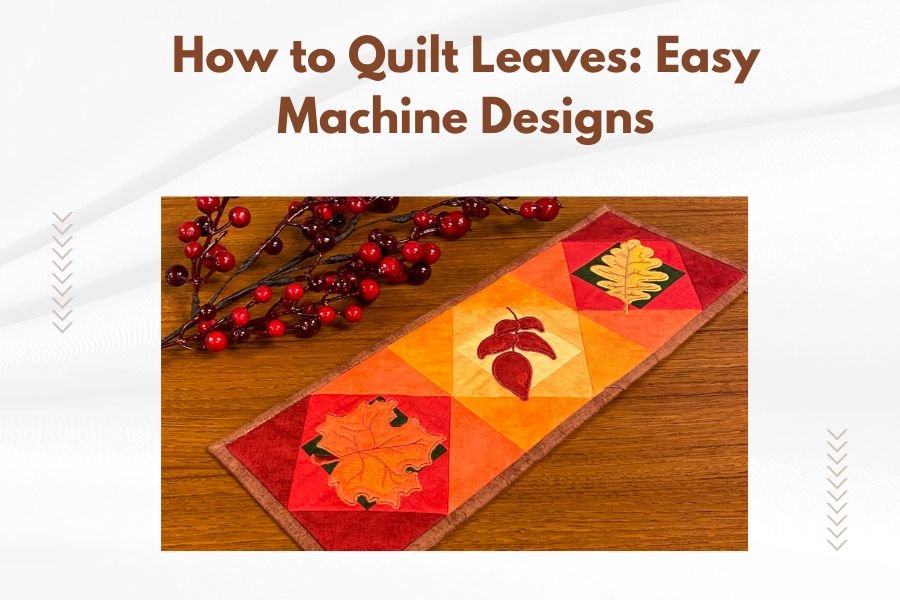
Machine quilting leaves involves using free-motion quilting or walking foot techniques to create leaf shapes, veins, and natural textures directly on your quilt layers.
You can quilt leaves using simple straight-line methods for beginners or detailed free-motion designs for more advanced quilters.
Getting Started with Leaf Quilting
Before you begin quilting leaves, you need the right setup. Your machine should be clean and well-oiled. Fresh needles make a huge difference too.
Choose thread colors that match your leaf theme. Green works great, but don’t forget about autumn colors like gold, orange, and deep red.
Essential Supplies You’ll Need
- Walking foot or darning foot
- Machine quilting thread
- Sharp quilting needles (size 90/14)
- Quilting gloves for grip
- Fabric markers or templates
Simple Walking Foot Leaf Designs
Walking foot quilting gives you the most control when you’re starting out. The foot moves your quilt layers evenly, preventing bunching.
Basic Straight-Line Leaves
Start with simple oval shapes. Stitch an elongated oval for your leaf body. Then add a center vein with one straight line down the middle.
For side veins, stitch diagonal lines from the center vein to the leaf edges. Keep them evenly spaced. This creates a realistic leaf structure without complex curves.
Tips for Even Spacing
Mark your vein lines lightly with a fabric marker first. This keeps your design balanced. Most quilters space veins about half an inch apart.
Feathered Leaf Edges
Make your leaf edges more interesting with small notches. These look like natural leaf serrations.
Stitch small triangular points along your leaf outline. Keep them small and consistent. This technique works great for oak or maple leaf designs.
Free-Motion Leaf Quilting
Free-motion quilting lets you create flowing, organic leaf shapes. You control the movement while the machine handles the stitching.
Setting Up for Free-Motion Work
Lower or cover your feed dogs. Attach your darning foot. This allows you to move the fabric freely in any direction.
Practice on scraps first. Free-motion quilting feels awkward initially, but muscle memory develops quickly.
Hand Position and Movement
Keep your hands flat and relaxed. Think of your hands as a quilting hoop. Move the fabric smoothly while maintaining steady stitching speed.
Continuous Leaf Patterns
Design leaf patterns that connect without stopping. This saves time and reduces thread changes.
Start with one leaf, then flow into the next. Connect them with simple vine lines or overlapping stems.
| Leaf Type | Difficulty | Best Technique |
|---|---|---|
| Simple Oval | Beginner | Walking foot |
| Maple | Intermediate | Free-motion |
| Fern | Advanced | Free-motion |
| Oak | Intermediate | Both methods |
Realistic Leaf Vein Techniques
Leaf veins make your quilting look professional. Real leaves have predictable vein patterns you can copy.
Center Vein Method
Always start with the main center vein. This becomes your foundation for all other veins.
Stitch from the leaf base to the tip in one smooth line. Keep it slightly curved, not perfectly straight. Nature rarely creates perfectly straight lines.
Adding Secondary Veins
Secondary veins branch from your center vein at gentle angles. They should point toward the leaf edges but not necessarily reach them.
Make these veins shorter than your center vein. This creates natural hierarchy in your design.
Echo Quilting Around Leaves
Echo quilting means stitching parallel lines around your leaf shapes. This makes leaves pop from the background.
Start close to your leaf outline. Add more echo lines moving outward. Keep consistent spacing between each echo line.
Different Leaf Shape Ideas
Nature offers endless leaf inspiration. Each shape requires slightly different quilting approaches.
Heart-Shaped Leaves
These work great for beginner quilters. Start with two curved lines meeting at a point. Add your center vein from the point upward.
Heart leaves often have parallel veins rather than branching ones. This makes them easier to quilt consistently.
Sizing Heart Leaves
Keep heart leaves smaller than other shapes. They look more natural when compact. Aim for 2-3 inches maximum width.
Compound Leaves
Some leaves have multiple leaflets on one stem. Think poison ivy or rose leaves.
Quilt several small leaf shapes connected to one central stem. Make the center leaflet largest, with smaller ones on the sides.
Thread Selection for Leaf Quilting
Thread choice affects your final look dramatically. I found that most quilters stick to green, but seasonal colors create more interest.
Variegated Thread Benefits
Variegated thread changes colors automatically as you stitch. This creates natural color variation without changing spools.
Look for threads that shift between different green shades or seasonal color combinations.
When to Use Solid Colors
Solid thread colors work better for precise, geometric leaf designs. They create clean lines without color distraction.
Troubleshooting Common Problems
Even experienced quilters face challenges with leaf quilting. Here are solutions for typical issues.
Uneven Leaf Shapes
Practice consistent hand movements on paper first. Draw leaf shapes repeatedly until the motion feels automatic.
Slow down your stitching speed. Rushing creates wobbly lines and uneven curves.
Thread Tension Issues
Adjust your upper thread tension if stitches look loose or puckered. Test on scraps before working on your actual quilt.
Design Placement Problems
Plan your leaf placement before quilting. Mark major design elements lightly to avoid crowding or awkward spacing.
Step back frequently to check your overall design balance. Sometimes less is more with leaf quilting.
Advanced Leaf Quilting Techniques
Once you master basic leaves, try these advanced methods for stunning results.
Layered Leaf Effects
Create depth by quilting leaves that appear to overlap. Quilt the background leaf first, then add the foreground leaf on top.
Change thread colors between layers. This makes the overlap effect more obvious and realistic.
Shadow Quilting
Add subtle shadow lines beside your main leaf outlines. Use darker thread and stitch just outside your original leaf shape.
Finishing Your Leaf Quilting
Proper finishing makes your leaf quilting look professional. Take time with these final steps.
Thread End Management
Bury all thread ends properly. Pull threads to the back and tie small knots close to the fabric surface.
Trim excess threads carefully. Long thread tails can work loose over time and affect your quilt’s appearance.
Conclusion
Quilting leaves adds natural beauty to any project. Start with simple walking foot designs and gradually work up to complex free-motion patterns. Remember that practice makes perfect, and even imperfect leaves have natural charm. Your quilting skills will improve with each leaf you create, and soon you’ll be designing your own unique leaf patterns with confidence.
What’s the best thread weight for quilting leaves?
40-weight thread works best for most leaf quilting projects. It’s strong enough for detailed work but not so thick that it creates bulk. Use 50-weight thread for very fine detail work on small leaves.
How do I prevent fabric puckering when quilting leaves?
Use proper thread tension and a sharp needle. Baste your quilt layers well before quilting. Move the fabric smoothly without pulling or stretching during free-motion work.
Can I quilt leaves on a regular home sewing machine?
Yes, any sewing machine can quilt leaves. You don’t need an expensive quilting machine. A walking foot and darning foot are the only special attachments you need for most leaf designs.
What’s the easiest leaf pattern for complete beginners?
Simple oval leaves with straight-line veins are perfect for beginners. Use your walking foot and stitch straight lines only. This builds confidence before trying curved free-motion designs.
How do I plan leaf placement across a large quilt?
Sketch your design on paper first, then transfer key placement marks to your quilt top. Start quilting from the center and work outward. This prevents fabric distortion and keeps your design balanced.