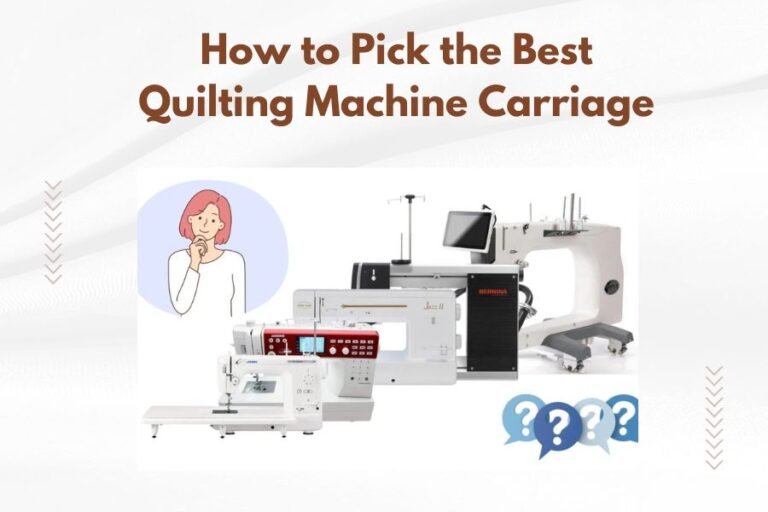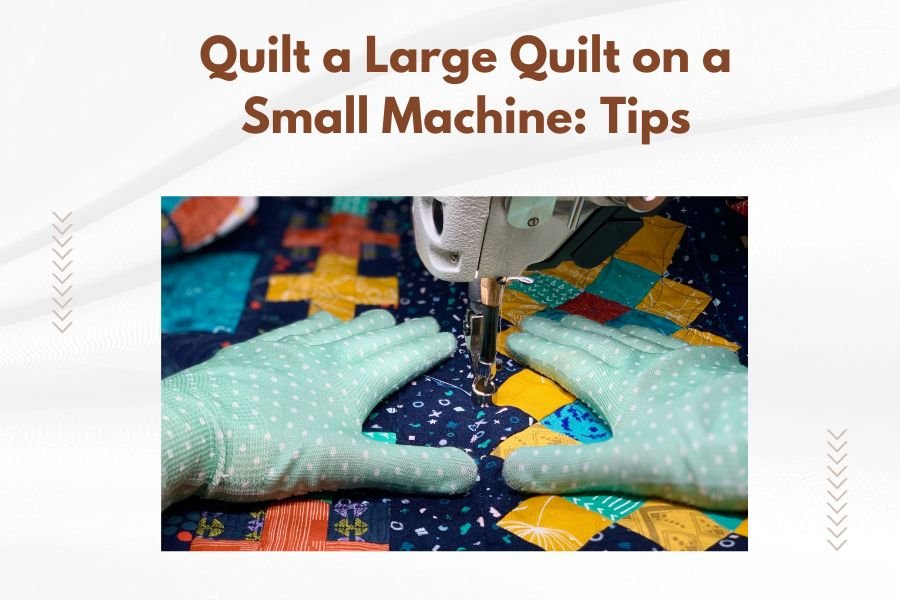
You can quilt a large quilt on a small machine by rolling the quilt sections, using the arm space efficiently, and quilting in sections from the center outward.
Small sewing machines work perfectly for large quilts when you understand proper handling techniques and workspace organization strategies.
Understanding Your Small Machine’s Limits
Small quilting machines typically have 4-6 inches of throat space. That’s the gap between your needle and the machine body. This space determines how much fabric you can maneuver.
Don’t worry about the size difference. I found through research that many award-winning quilts were made on basic home machines. The key is working smart, not having the biggest equipment.
Measuring Your Machine’s Workspace
Grab a ruler and measure from your needle to the right side of your machine. This tells you your actual working space. Most home machines give you about 4.5 to 7 inches.
Write this number down. You’ll use it to plan your quilting strategy.
Weight Capacity Considerations
Large quilts get heavy. A queen-size quilt with batting can weigh 8-12 pounds. Your small machine can handle this weight, but you need to support the quilt properly.
Never let the quilt hang off your table. The pulling weight will throw off your stitching and strain your machine.
Setting Up Your Workspace for Success
Your workspace setup makes or breaks large quilt projects on small machines. Think of it like cooking a big meal in a tiny kitchen – organization is everything.
Table Extensions and Support Systems
You need a large, flat surface around your machine. Card tables, ironing boards, or even TV trays work as extensions. Place them at the same height as your sewing table.
The goal is creating a smooth path for your quilt fabric. No drops, no catches, no friction points.
DIY Table Solutions
I researched several budget-friendly options quilters use successfully. A piece of plywood across two sawhorses creates an instant large workspace. Cover it with a smooth sheet for easy fabric gliding.
Some quilters use their dining room table with their machine on a platform to match the height.
Chair Height and Comfort
You’ll spend hours on this project. Your chair should let your elbows rest naturally while your hands guide the fabric. Too high or too low creates tension and mistakes.
Consider a chair with wheels so you can move around your extended workspace easily.
Planning Your Quilting Strategy
Large quilts need a game plan. You can’t just wing it like you might with a small wall hanging.
Center-Out Method
Start quilting from the center and work outward. This prevents puckers and keeps your quilt flat. Mark your center point with a safety pin before you begin.
Why center-out? It pushes excess fabric toward the edges where you can control it better.
Finding Your True Center
Fold your quilt in half, then in half again. The intersection is your center. Mark it clearly because you’ll lose track once you start quilting.
Section-by-Section Approach
Break your large quilt into smaller sections in your mind. Quilt each section completely before moving to the next. This keeps things manageable.
Most quilters work in roughly 12-inch sections, but adjust based on your machine’s throat space.
Essential Techniques for Large Quilts
These techniques turn your small machine into a large-quilt powerhouse.
The Roll and Tuck Method
Roll up the parts of your quilt you’re not currently working on. Use large safety pins or quilt clips to keep the rolls tight. This keeps excess fabric out of your way.
Think of it like rolling up your sleeves before washing dishes. You’re just getting the extra material out of your workspace.
Rolling Techniques
Roll tightly but not so tight that you create creases. The fabric should lay smoothly when you unroll it. Practice this with a sheet first if you’re nervous.
Securing Your Rolls
Large safety pins work better than small ones for securing rolls. Bicycle clips from office supply stores also work great and won’t scratch your machine.
Supporting the Quilt Weight
Never let parts of your quilt hang unsupported. The weight pulls against your stitching line and makes even quilting impossible.
Use chairs, boxes, or tables positioned around your workspace to support the quilt sections you’re not actively working on.
Choosing the Right Quilting Patterns
Some quilting patterns work better than others on small machines with large quilts.
Straight-Line Quilting
Straight lines are your friend on large quilts. They’re fast, forgiving, and look professional. You can create amazing designs with just straight lines at different angles.
Research shows that many modern quilts use primarily straight-line quilting, even when made on large machines.
Grid Patterns
Simple grids work beautifully on large quilts. Start with 2-inch or 3-inch spacing. Mark your first few lines with a ruler, then use your presser foot as a guide for the rest.
Diagonal Lines
Diagonal quilting adds visual interest without complex curves. Start from one corner and work across. The diagonal movement actually helps with fabric management on small machines.
Simple Curves and Loops
Gentle curves are doable on small machines if you take your time. Avoid tight spirals or complex feather patterns. Save those for smaller projects.
Large, loose loops create beautiful texture and are much easier to navigate around your machine’s limited throat space.
Basting Large Quilts for Small Machines
Proper basting becomes even more important when you’re working with size constraints.
Spray Basting vs. Pin Basting
Spray basting works better for large quilts on small machines. Pins can catch in your machine’s throat and create frustration.
I found that quilters consistently report fewer problems with spray basting on large projects, though it does cost more than pins.
| Basting Method | Pros for Small Machines | Cons |
|---|---|---|
| Spray Basting | No pins to catch, smooth feeding | More expensive, ventilation needed |
| Safety Pin Basting | Adjustable, reusable | Can catch in throat, need removal |
| Thread Basting | Very secure, no bulk | Time-consuming removal |
Basting in Sections
You don’t need to baste your entire large quilt at once. Baste in sections as you plan to quilt them. This keeps things manageable and prevents the batting from shifting over time.
Troubleshooting Common Problems
Large quilts on small machines create unique challenges. Here’s how to solve the most common ones.
Fabric Bunching and Puckers
Bunching happens when you try to force too much fabric through your machine’s throat space. Stop, rearrange your rolls, and take smaller bites.
If you see puckers forming, stop immediately. It’s easier to prevent them than remove them later.
Prevention Strategies
Keep your hands relaxed. Don’t pull or push the fabric too hard. Let your machine’s feed dogs do most of the work.
Check your thread tension. Tension that’s too tight will pucker your quilt top.
Machine Jamming Issues
Thick quilt sections can overwhelm small machines. Use a walking foot if you have one. It helps feed thick layers evenly.
Slow down your stitching speed when working through seam intersections or thick areas.
Thread Breaking Problems
Thread breaks more often when you’re wrestling with large quilts. Use high-quality thread and check that your quilt isn’t pulling against your machine.
Keep your thread path clear. Rolled quilt sections can interfere with thread feeding.
Advanced Tips for Large Quilt Success
These professional techniques will take your large quilt game to the next level.
Using Your Machine’s Features
Drop or lower your feed dogs for free-motion quilting sections. This gives you more control over fabric movement in tight spaces.
Use your machine’s speed control if it has one. Slower stitching gives you better control with large, unwieldy quilts.
Needle and Thread Selection
Use a larger needle (90/14 or 100/16) for thick quilt sandwiches. A small needle will struggle and create thread breaks.
Cotton thread works well for most quilting, but polyester thread has more stretch and forgives tension irregularities better.
When to Change Your Needle
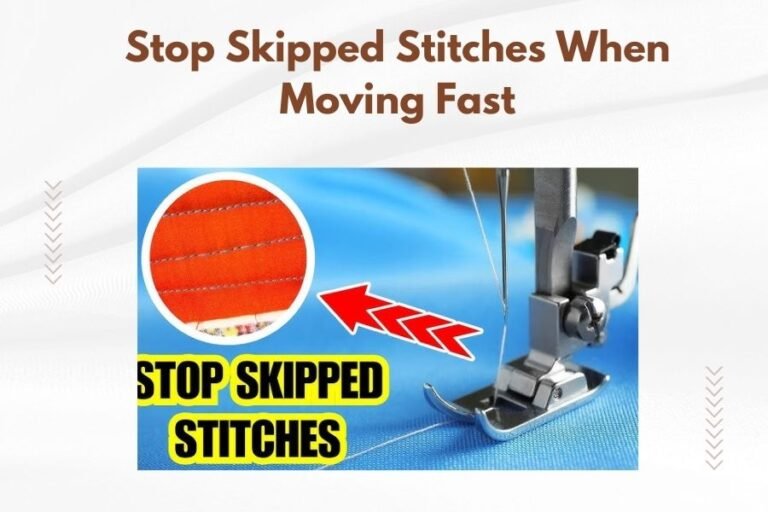
Change your needle more often when quilting large projects. The extra fabric layers dull needles faster. A dull needle creates skipped stitches and thread breaks.
Finishing Techniques for Large Quilts
Getting to the finishing stage is exciting, but don’t rush these final steps.
Trimming and Squaring
Large quilts can grow and distort during the quilting process. Measure carefully and trim gradually. It’s easier to trim more later than to add back what you’ve cut.
Use a large square ruler to check your corners. They should be true 90-degree angles.
Binding Application
Binding a large quilt on a small machine requires patience. Work slowly around corners and don’t stretch the binding.
Consider hand-stitching the binding to the back. It’s traditional and actually faster than trying to machine-stitch both sides perfectly.
Conclusion
Quilting large quilts on small machines is completely doable with the right approach. Focus on workspace setup, proper planning, and patience. Your small machine can create beautiful large quilts that rival anything made on expensive long-arm machines.
Remember that many legendary quilts were made on basic home machines. Your creativity and persistence matter more than your equipment size. Start with these techniques, practice on smaller projects first, and soon you’ll be confidently tackling king-size quilts on your trusty small machine.
Can I quilt a king-size quilt on a regular sewing machine?
Yes, you can quilt king-size quilts on regular sewing machines. Use proper workspace setup with table extensions, roll unused sections tightly, and work from center outward. Plan for extra time and take breaks to avoid fatigue.
What’s the largest quilt size manageable on a small machine?
Most quilters successfully make king-size quilts (108″ x 108″) on small machines. The key is technique, not machine size. Larger quilts require more patience and workspace organization, but they’re definitely achievable.
Do I need special thread for large quilts on small machines?
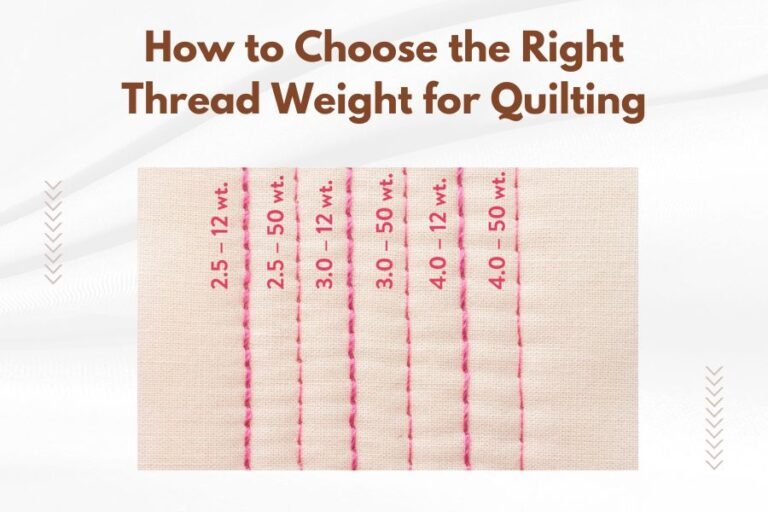
Use high-quality cotton or polyester thread in 40-weight or 50-weight. Avoid bargain thread that breaks easily. Polyester thread has more stretch and forgives tension issues better, making it ideal for large projects on small machines.
How do I prevent my large quilt from puckering?
Prevent puckers by using proper basting, supporting quilt weight on all sides, working from center outward, and avoiding pulling or pushing the fabric. Check thread tension and use a walking foot for even feeding through thick layers.
Should I use spray basting or pin basting for large quilts?
Spray basting works better for large quilts on small machines because pins can catch in the limited throat space. If using pins, place them away from your planned quilting lines and remove them as you work each section.