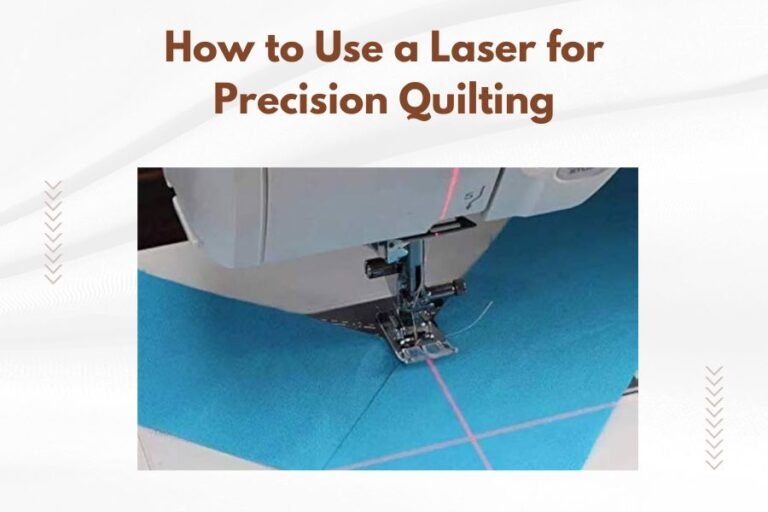
An open-toe foot gives you better visibility to see your quilting stitches and seam lines while sewing, making it easier to follow patterns and maintain accuracy.
This specialized presser foot removes the front metal barrier that blocks your view, allowing you to watch your needle placement in real-time for better quilting vision.
What Makes an Open-Toe Foot Different
Think of it like driving with a clear windshield instead of a foggy one. Regular presser feet have solid metal fronts that hide your work area. Open-toe feet cut away that front section.
The opening creates a window right where you need to see most. You can watch your needle hit exactly where you want it to go.
Design Features That Help
The foot still provides the same pressure and fabric control as standard feet. It just removes the visual barrier.
Most open-toe feet have a U-shaped or completely open front section. Some models include measurement markings on the sides.
Why Quilters Love Better Vision
When you’re quilting, precision matters. A stitch that’s off by even a small amount can throw off your entire pattern.
I found from quilting forums that many sewers struggle with staying on curved lines or matching points perfectly. The open-toe foot solves this problem.
Following Intricate Patterns
Free-motion quilting becomes much easier when you can see where you’re going. You can follow drawn lines or templates without guessing.
Appliqué work also benefits greatly. You can see exactly where your decorative stitches land on the fabric edges.
Curved Seams Made Simple
Curved piecing used to intimidate many quilters. With clear vision, you can ease fabrics together smoothly as you sew.
The foot lets you spot potential puckering before it happens. You can adjust your fabric handling in real-time.
Matching Seam Intersections
Perfect points where seams meet require precise needle placement. The open-toe foot shows you exactly where your seams line up.
You can see if your seam allowances are nesting correctly before you stitch over them. This prevents those frustrating mismatched points.
Types of Quilting Projects That Benefit Most
Not every quilting project needs maximum visibility. But certain techniques really shine with an open-toe foot.
Free-Motion Quilting
This technique requires you to guide fabric freely under the needle. Seeing your path makes all the difference.
You can follow quilting stencils or create your own flowing designs. The clear view helps maintain consistent stitch spacing.
Echo Quilting Patterns
Echo quilting means stitching parallel lines around a shape. These lines should be evenly spaced.
With an open-toe foot, you can keep your lines the same distance apart. No more wonky spacing that ruins the effect.
Appliqué Work
Satin stitching around appliqué edges requires perfect placement. You need to cover the raw edge completely without stitching too far into the background.
The clear view lets you adjust your fabric position as you sew. You can see if you’re catching all the edge fibers.
Blanket Stitch Appliqué
This decorative technique looks best when stitches are evenly spaced. The open-toe foot helps you maintain consistent spacing.
You can see where the needle will bite into the appliqué piece. This prevents stitches that fall short or go too deep.
Decorative Stitching
Modern sewing machines offer hundreds of built-in decorative stitches. Many of these look best when perfectly centered on fabric strips or seam lines.
The open-toe foot lets you guide your fabric to keep decorative stitches exactly where you want them.
Comparing Open-Toe Feet to Standard Feet
| Feature | Standard Foot | Open-Toe Foot |
|---|---|---|
| Visibility | Limited view of needle area | Clear view of stitching line |
| Precision | Must estimate placement | See exact needle position |
| Best for | Straight seams, basic piecing | Curved seams, decorative work |
| Learning curve | Familiar to most sewers | Quick to adapt |
When You Might Skip the Open-Toe Foot
Open-toe feet work great for precision work, but they’re not always necessary. Sometimes a standard foot is actually better.
Speed Piecing
When you’re chain-piecing dozens of identical blocks, speed matters more than seeing every stitch. A standard foot often glides more smoothly.
The solid front edge can help guide fabric pairs through consistently. You develop muscle memory for the seam allowance.
Large Quilt Assembly
Joining big sections of quilts involves long straight seams. These don’t require the precision visibility that an open-toe foot provides.
A standard foot might handle the bulk of large quilt sections more easily.
Heavy Fabrics
Dense fabrics like canvas or heavy denim sometimes need more pressure from the presser foot. Open-toe feet can be slightly less stable on very thick materials.
The solid construction of standard feet provides more even pressure distribution.
Getting the Most From Your Open-Toe Foot
Just switching feet won’t automatically improve your quilting. You need to adjust your technique too.
Lighting Makes a Difference
Good lighting multiplies the benefits of better visibility. Position a bright lamp to eliminate shadows in your work area.
Many quilters use LED strip lights mounted right on their sewing machines. This creates even lighting without heat.
Magnification Helps Too
If you’re over 40, you might benefit from magnifying glasses or a magnifying lamp. Better vision tools work together.
Some sewers use magnifying attachments that clip right onto their machines. These work perfectly with open-toe feet.
Slow Down Your Stitching
The improved visibility lets you sew more accurately, but only if you’re not rushing. Take advantage of what you can see.
Set your machine to a moderate speed. You can always go faster once you’ve mastered the technique.
Use the Needle Down Feature
Most modern machines can stop with the needle down in the fabric. This feature works great with open-toe feet for pivoting around curves.
Stop frequently to check your progress. The clear view makes it easy to spot problems early.
Choosing the Right Open-Toe Foot
Not all open-toe feet are created equal. Different brands and styles offer various features.
Generic vs. Brand-Specific Feet
Generic feet cost less but might not fit your machine perfectly. Brand-specific feet usually offer better quality and fit.
I found from research that most quilters prefer to invest in quality feet from their machine manufacturer. The fit and performance are typically better.
Material Considerations
Metal feet last longer but can scratch delicate fabrics. Plastic feet are gentler but may wear out faster.
Clear plastic feet offer the ultimate visibility. You can see through the entire foot, not just the front opening.
Special Features to Look For
Some open-toe feet include measurement markings. These help with seam allowances and spacing decorative stitches.
Others have adjustable guides or special channels for specific techniques. Consider what types of quilting you do most.
Maintenance and Care
Open-toe feet require the same basic care as other presser feet. Keep them clean and store them safely.
Cleaning After Use
Lint and thread can build up in the open area. Use a small brush to keep the opening clear.
Avoid harsh cleaners that might damage the foot’s finish. A soft cloth and mild soap work fine for most cleaning.
Storage Tips
Store your open-toe foot in the original case or a padded container. The open design can make it more prone to damage if dropped.
Many quilters keep their specialty feet in clear storage boxes. This makes it easy to find the right foot quickly.
Conclusion
An open-toe foot transforms your quilting by giving you clear vision of your needle and stitching line. This simple tool eliminates guesswork and helps you achieve the precision that beautiful quilts require. Whether you’re following curved seams, creating decorative stitching, or working on detailed appliqué, the improved visibility makes challenging techniques much more manageable. While it’s not necessary for every quilting project, having an open-toe foot in your toolkit opens up new possibilities for creative and accurate stitching. The investment in better vision pays off in more professional-looking results and greater confidence in your quilting abilities.
Can I use an open-toe foot for regular sewing projects besides quilting?
Yes, open-toe feet work great for any sewing that requires precision, including hemming curved edges, sewing zippers, and creating buttonholes. The improved visibility benefits many types of detailed sewing work.
Will an open-toe foot work with my older sewing machine?
Most likely yes, as long as you can find a foot that fits your machine’s shank system. Check whether your machine uses a low shank, high shank, or snap-on system, then look for compatible open-toe feet.
Do I need different open-toe feet for different types of stitches?
One good quality open-toe foot handles most quilting and decorative stitching needs. Some specialized techniques like buttonholes or zipper insertion have their own specific open-toe foot designs.
Can I sew thick layers with an open-toe foot?
Yes, but open-toe feet may not provide as much pressure as standard feet on very thick fabrics. For quilting typical cotton layers, open-toe feet work perfectly fine.
How do I know if my stitching problems are caused by my presser foot?
If you’re having trouble staying on lines, matching seam intersections, or placing decorative stitches accurately, switching to an open-toe foot often solves these visibility-related issues immediately.