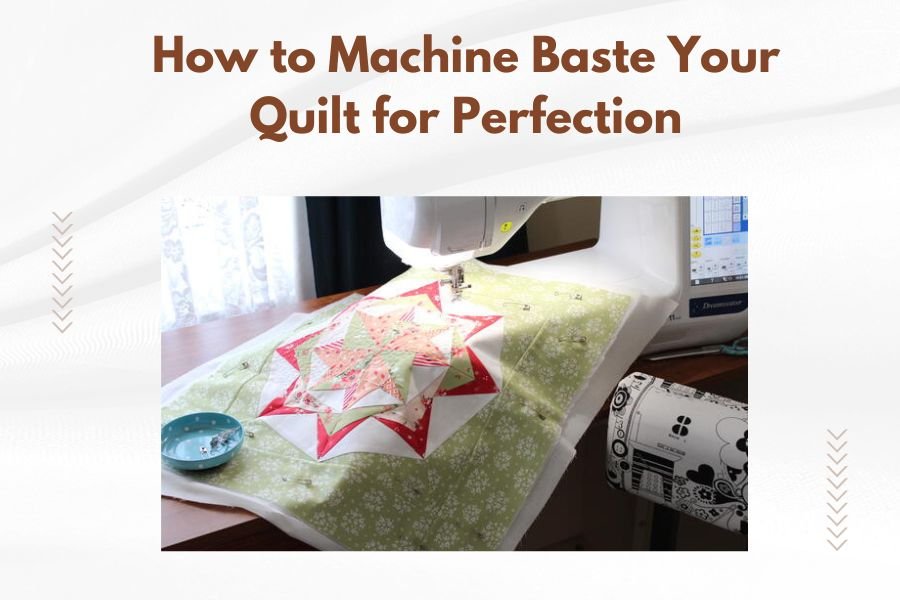
Machine basting your quilt means using long, loose stitches to temporarily hold the quilt layers together before final quilting.
The key to perfect machine basting is using a 4-6mm stitch length with low tension and basting spray or pins for layer stability.
Why Machine Basting Makes All the Difference
Think of machine basting like putting up scaffolding before building a house. You need that temporary structure to keep everything in place.
I found from quilting experts that machine basting prevents three major headaches. Your layers won’t shift during quilting. You won’t get puckering or bunching. And your finished quilt will lay flat and smooth.
Hand basting takes hours. Machine basting cuts that time to minutes. Your sewing machine does the heavy lifting while you guide the fabric.
Essential Supplies for Machine Basting Success
Machine Settings You Need
Set your stitch length to the longest setting. Most machines go to 4-6mm. This creates loose stitches that pull out easily later.
Drop your tension to 2 or 3. Low tension prevents the thread from gripping too tightly. You want these stitches to come out without a fight.
Thread and Needle Choices
Use contrasting thread colors. Bright thread shows up clearly against your fabric. This makes removal much easier when you’re done quilting.
A universal 80/12 needle works perfectly. Don’t overthink this part. Save your fancy needles for the real quilting.
Additional Tools That Help
- Basting spray for temporary adhesion
- Safety pins as backup securing
- Large flat surface for spreading layers
- Seam ripper for easy basting removal
Preparing Your Quilt Layers
Getting Your Backing Ready
Cut your backing fabric 4-6 inches larger than your quilt top on all sides. This extra fabric gives you wiggle room if layers shift slightly.
Press out all wrinkles. Lay the backing face-down on your work surface. Smooth it flat with your hands, working from center outward.
Positioning the Batting
Center your batting over the backing. The batting should be 2-3 inches larger than your quilt top on each side.
Pat down the batting gently. Don’t stretch or pull it. Batting wants to lay naturally, so let it.
Placing Your Quilt Top
Position your pressed quilt top face-up over the batting. Center it carefully. You should see backing fabric peeking out on all edges.
This is your quilt sandwich. Three layers ready for basting magic.
Step-by-Step Machine Basting Process
Starting from the Center
Begin at the center of your quilt. Why? Because fabric shifts outward as you sew. Starting in the middle controls that movement.
Sew a straight line from center to one edge. Keep your stitches loose and steady. Don’t worry about perfect straight lines here.
Creating Your Basting Grid
Sew lines every 3-4 inches across your quilt. Think of drawing a tic-tac-toe grid, but bigger.
Work horizontally first, then vertically. This creates a stable grid that holds everything in place.
Adding Perimeter Basting
Stitch around the entire outer edge, about 1/8 inch from the quilt top edge. This locks your borders and prevents shifting during quilting.
Alternative Basting Patterns
| Basting Method | Best For | Time Required |
|---|---|---|
| Grid Pattern | Large quilts, heavy batting | 15-20 minutes |
| Diagonal Lines | Small quilts, lightweight batting | 10-15 minutes |
| Spiral Pattern | Art quilts, irregular shapes | 8-12 minutes |
Common Machine Basting Mistakes to Avoid
Tension Problems
Too much tension creates tiny stitches that won’t pull out later. You’ll spend forever picking them out with a seam ripper.
Too little tension makes loose, loopy stitches that tangle. Find that sweet spot where stitches look even but relaxed.
Spacing Issues
Basting lines too far apart won’t control shifting. Your layers will still move around during quilting.
Lines too close together waste time and create more threads to remove later. Stick to that 3-4 inch spacing rule.
Speed Control Mistakes
Sewing too fast causes uneven stitches and potential fabric bunching. Take your time. This is prep work, not a race.
Going too slow can cause thread buildup and tension issues. Find a comfortable, steady pace.
Using Basting Spray with Machine Basting
When Spray Helps
Basting spray works great for small quilts or slippery fabrics. It holds layers together while you machine baste.
Spray lightly between your backing and batting, then batting and quilt top. Don’t oversoak the fabric.
Combining Methods
Many quilters use spray for initial hold, then machine baste for security. This combo gives you the best of both worlds.
The spray keeps things steady while you sew. The machine basting provides long-term stability.
Machine Basting for Different Quilt Sizes
Small Quilts and Wall Hangings
Baby quilts and wall hangings need minimal basting. A simple X pattern from corner to corner often works fine.
Add a perimeter line and you’re ready to quilt. Small size means less shifting potential.
Large Quilts and Bedspreads
Big quilts need more basting lines. Use the full grid method for anything larger than a throw size.
Consider basting in sections if your machine struggles with the bulk. Work from center outward in manageable chunks.
Managing Bulk at the Machine
Roll up the sides of large quilts to fit through your machine throat. Secure rolls with clips or pins.
Support the weight of the quilt so it doesn’t pull and distort as you sew.
Troubleshooting Machine Basting Problems
Thread Breaking Issues
Thread breaks usually mean your tension is too tight or your needle is dull. Lower tension first, then try a new needle.
Old thread gets brittle and breaks easily. Fresh thread makes basting much smoother.
Fabric Puckering
Puckering happens when you pull the fabric while sewing. Let the feed dogs do the work. Guide gently, don’t pull.
Check that all layers are smooth before you start each line of basting.
Uneven Stitch Length
Inconsistent stitches often come from varying your sewing speed. Maintain steady pressure on the foot pedal.
Your machine’s stitch length setting might need adjustment. Test on scraps first.
Removing Basting Stitches After Quilting
Easy Removal Techniques
Cut every fourth or fifth stitch with small scissors. The remaining threads will pull out easily in long strips.
Pull from the bobbin side when possible. Bobbin thread usually comes out smoother than top thread.
Stubborn Thread Solutions
If stitches resist removal, your tension was probably too tight. Use a seam ripper to carefully cut stuck threads.
Work slowly to avoid accidentally cutting your quilt fabric. Better safe than sorry.
Machine Basting vs Other Methods
Speed Comparison
Hand basting a large quilt can take 2-3 hours. Machine basting finishes the same job in 20-30 minutes.
Pin basting falls somewhere in the middle but requires removing pins as you quilt. That slows down your quilting process.
Effectiveness Differences
Machine basting holds layers more securely than spray alone. The thread lines prevent shifting better than temporary adhesive.
Hand basting gives you the most control but requires the most time investment. Choose based on your schedule and quilt size.
Conclusion
Machine basting transforms your quilting from frustrating to enjoyable. Those few minutes of preparation prevent hours of fixing problems later. Your layers stay put, your quilting lines stay straight, and your finished project looks professional.
Start with simple grid basting on your next quilt. Use long stitches, low tension, and contrasting thread. Take your time with the setup, and you’ll save time everywhere else. Your quilting machine will glide smoothly over stable layers, and you’ll wonder why you ever skipped this step.
Remember, every expert quilter uses some form of basting. It’s not extra work – it’s smart work. Your quilts deserve that solid foundation that only proper basting provides.
How long should machine basting stitches be?
Set your machine to the longest stitch length available, typically 4-6mm. These long, loose stitches hold layers securely but remove easily when quilting is complete. Shorter stitches become too permanent and difficult to take out later.
Can I machine baste without changing my thread?
While you can use any thread for basting, contrasting colors make removal much easier. Bright thread shows clearly against your fabric, helping you spot and remove every basting line. Using the same color as your fabric makes basting nearly invisible and hard to find later.
What tension setting works best for machine basting?
Lower your tension to 2 or 3 for machine basting. This creates loose stitches that won’t grip the fabric tightly. Higher tension makes permanent-looking stitches that resist removal and can damage your quilt when you try to take them out.
Should I machine baste small quilts differently than large ones?
Small quilts need fewer basting lines since there’s less fabric to shift around. A simple X pattern or minimal grid works fine for baby quilts and wall hangings. Large quilts require more extensive basting with lines every 3-4 inches to prevent shifting during quilting.
Is it normal for my machine to struggle with thick quilt layers during basting?
Yes, thick batting and multiple fabric layers can challenge your machine. Roll large quilts to reduce bulk going through the throat plate. Support the quilt’s weight so it doesn’t pull while sewing. If your machine still struggles, consider hand basting or using a walking foot attachment.