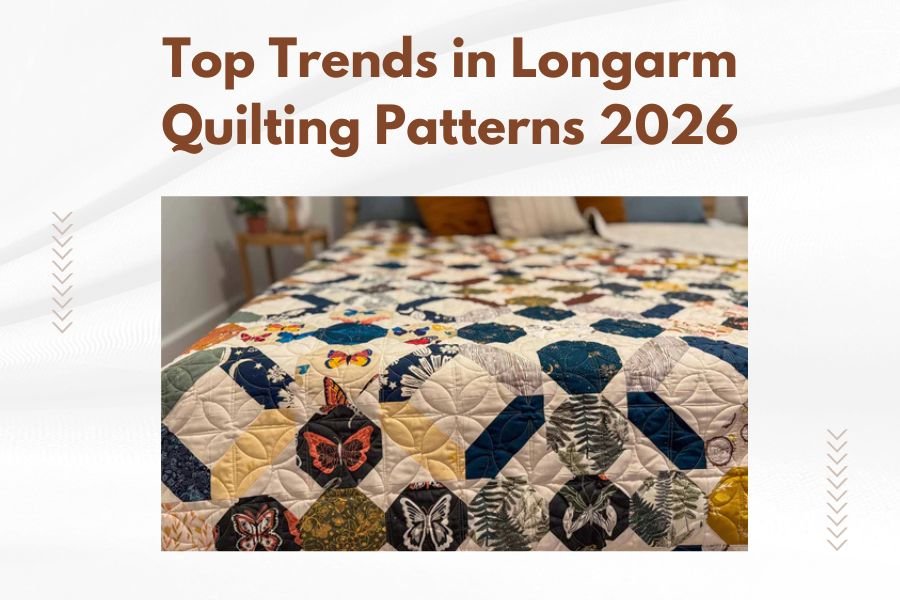
Longarm quilting patterns in 2026 are shifting toward bold geometric designs, nature-inspired motifs, and tech-assisted precision quilting that combines traditional craftsmanship with modern innovation.
The biggest trends include oversized florals, minimalist line work, and mixed-media quilting techniques that let you create stunning heirloom pieces faster than ever before.
What Makes 2026 Different for Longarm Quilters
You’re living in an exciting time for longarm quilting. The patterns emerging this year break away from cookie-cutter designs.
I found that quilters are demanding more personality in their work. They want patterns that tell stories and reflect their unique style.
The tools have gotten smarter too. Your longarm machine can now handle complex curves and intricate details that would have taken hours to complete manually.
Bold Geometric Patterns Take Center Stage
Geometric designs are having a major moment. But we’re not talking about simple squares and triangles.
Modern Hexagon Variations
Hexagons have evolved beyond basic honeycomb patterns. You’ll see elongated hexes, overlapping clusters, and gradient fills that create stunning visual depth.
These patterns work beautifully on both traditional and contemporary quilts. The clean lines show off your machine’s precision.
Asymmetrical Triangle Compositions
Perfect symmetry is taking a backseat. Quilters are choosing off-balance triangle arrangements that feel more organic and alive.
You can create movement across your quilt by varying triangle sizes and angles. It’s like jazz music in fabric form.
Split Triangle Techniques
Try dividing large triangles with contrasting thread colors. This creates the illusion of layered shapes without piecing complications.
Gradient Triangle Fills
Start with dense quilting at the triangle base and gradually space your lines wider toward the point. This adds dimensional interest.
Nature-Inspired Motifs Go Oversized
Small, delicate florals are stepping aside. The trend now is big, bold nature patterns that make a statement.
Supersized Botanical Designs
Think dinner plate-sized flowers and leaves that span multiple quilt blocks. These patterns work especially well on bed-sized quilts.
I researched several quilt shows and found that oversized botanicals consistently win viewer’s choice awards. People love the drama they create.
Abstract Tree Silhouettes
Tree patterns are moving beyond realistic representations. You’ll see simplified, flowing tree shapes that capture the essence without fussy details.
These work great as border patterns or central medallion designs. Your longarm’s continuous line capability makes them quick to stitch.
Seasonal Tree Variations
Create a series using the same tree shape but different quilting densities to suggest seasons. Dense quilting for winter bare branches, loose for spring growth.
Minimalist Line Work Gains Popularity
Sometimes less really is more. Clean, simple line patterns are having their moment.
Straight Line Quilting Renaissance
Basic straight lines are back, but with sophisticated spacing and direction changes. You can create complex-looking designs with simple techniques.
This trend appeals to newer quilters who want professional results without mastering complex curves yet.
Echo Quilting 2.0
Traditional echo quilting gets updated with irregular spacing and selective areas of dense fill. It’s like ripples on a pond, but with intention.
Selective Echo Placement
Instead of echoing entire blocks, focus on specific design elements. This creates visual hierarchy and draws the eye where you want it.
Technology-Assisted Pattern Innovation
Your longarm machine’s computer capabilities are opening new creative doors.
Hybrid Hand-Digital Designs
Start with computer-generated base patterns, then add hand-guided flourishes. This combines precision with personal touch.
Many experts say this hybrid approach produces the most satisfying results for quilters who want both efficiency and creativity.
Variable Density Programming
New software lets you program gradual density changes within a single pattern. Imagine feathers that get fuller toward the spine, automatically.
Automated Texture Gradients
Program your machine to gradually change from sparse to dense quilting across a design area. This creates natural-looking texture variation.
Mixed-Media Quilting Techniques
You’re not limited to thread anymore. Mixed-media approaches are gaining traction.
Thread and Ribbon Combinations
Some quilters are incorporating narrow ribbon strips during the quilting process. The ribbon gets caught by the quilting lines, creating dimensional texture.
This works best with simple, widely-spaced patterns that won’t compete with the ribbon’s texture.
Metallic Accent Integration
Strategic use of metallic threads in specific pattern areas creates sophisticated highlights. Use them sparingly for maximum impact.
Selective Metallic Placement
Reserve metallic threads for pattern centers or edges. This creates focal points without overwhelming the overall design.
Cultural Fusion Patterns
Global design influences are blending into longarm quilting patterns.
Scandinavian-Inspired Simplicity
Clean lines, negative space, and functional beauty characterize these patterns. Think of them as the Marie Kondo of quilting designs.
I found online that many quilters appreciate how these patterns complement modern home decor styles.
Japanese Sashiko Adaptations
Traditional Japanese running stitch patterns translate beautifully to longarm work. The repetitive geometric nature works perfectly with machine precision.
Modern Sashiko Scaling
Take traditional small-scale sashiko patterns and enlarge them dramatically. This maintains the aesthetic while fitting longarm capabilities.
Seasonal and Holiday Pattern Evolution
Holiday quilting patterns are becoming more subtle and sophisticated.
Subtle Seasonal References
Instead of obvious holiday symbols, patterns hint at seasons through texture and movement. Think swirling lines that suggest falling leaves rather than literal leaf shapes.
Year-Round Holiday Quilts
These patterns work for holidays but don’t scream “Christmas quilt” in July. They’re sophisticated enough for everyday display.
| Pattern Type | Skill Level | Time Investment | Best For |
|---|---|---|---|
| Bold Geometric | Beginner-Intermediate | Medium | Modern quilts |
| Oversized Florals | Intermediate | Medium-High | Traditional quilts |
| Minimalist Lines | Beginner | Low | Any style |
| Tech-Assisted | Intermediate-Advanced | Variable | Precision work |
Color Interaction Trends
How your patterns interact with fabric colors is becoming just as important as the patterns themselves.
Monochromatic Thread Choices
Using thread colors that closely match your fabric creates subtle texture without visual competition. The pattern becomes about light and shadow rather than color contrast.
Strategic Contrast Placement
When you do use contrasting thread, place it strategically. High contrast in pattern centers draws the eye inward.
Ombre Thread Effects
Gradual color changes within a single pattern create depth and movement. Start with one shade and gradually blend to another.
Practical Application Tips
Knowing the trends is one thing. Making them work for you is another.
Pattern Scaling for Different Quilt Sizes
A pattern that works beautifully on a wall hanging might overwhelm a baby quilt. Scale your designs appropriately.
For lap quilts, reduce bold patterns by about 25%. For king-size quilts, you can go bigger than you think.
Balancing Busy and Calm Areas
Even trend-forward quilts need visual rest areas. If one section features complex patterns, balance it with simpler areas nearby.
The Rule of Visual Weight
Dense, complex patterns feel heavy. Light, simple patterns feel airy. Balance these visual weights across your quilt surface.
Conclusion
The longarm quilting patterns trending in 2026 offer you more creative freedom than ever before. Whether you’re drawn to bold geometrics, oversized nature motifs, or minimalist line work, there’s a style that fits your quilting personality.
The key is choosing patterns that excite you while matching your skill level and available time. Don’t feel pressured to follow every trend. Pick the ones that speak to you and make them your own.
Remember, trends come and go, but a well-executed quilt with patterns you love will bring joy for years to come. Start with one new technique or style, master it, then expand your repertoire.
What’s the easiest 2026 trend for beginner longarm quilters to try?
Minimalist straight-line quilting is perfect for beginners. You can create sophisticated looks using just parallel lines with varied spacing and direction changes. Start with simple diagonal lines, then experiment with different angles and densities.
How do I know if a geometric pattern will work with my traditional quilt blocks?
Look at the scale and complexity of your pieced blocks first. If your blocks are busy with lots of small pieces, choose simpler geometric quilting patterns. If your blocks are simple or solid, you can use more complex geometric quilting without visual overload.
Can I combine multiple 2026 trends in one quilt?
Yes, but use restraint. Try combining just two trends, like oversized florals in the center with minimalist line work in the borders. Too many different pattern styles in one quilt can look chaotic rather than trendy.
What thread weight works best for bold geometric patterns?
Medium-weight threads like 40-weight cotton or polyester work best for bold geometrics. They’re substantial enough to show the pattern clearly but not so heavy that they create bulk or distort the fabric. Save heavier threads for sparse, widely-spaced patterns.
How do I adapt computer-generated patterns to add personal touches?
Start with the computer pattern as your foundation, then add hand-guided elements at key points. You might add small flourishes at pattern intersections or vary the density in certain areas by switching to manual mode briefly during the quilting process.