Quilting machines evolved from hand-quilting frames in the 1800s to computerized longarm machines today, revolutionizing how quilters create their masterpieces.
The first mechanical quilting machine was patented in 1871, marking the beginning of automated quilting that would transform this ancient craft forever.
Early Beginnings: Hand Quilting Era (Pre-1871)
Before machines changed everything, quilters worked with simple wooden frames and hoops. You might wonder how they managed such detailed work without any mechanical help.
Hand quilting dominated for thousands of years. From what I read in historical textile research, ancient Egyptians and Chinese artisans created quilted garments using basic tools. The process was slow but allowed for amazing artistic control.
Colonial American Quilting Methods
American settlers brought European quilting traditions across the ocean. They used large wooden frames that filled entire rooms. Women gathered for quilting bees, turning necessary work into social events.
These gatherings weren’t just about sewing. They shared news, recipes, and built community bonds while creating warm bedding for harsh winters.
The First Quilting Machine Patent (1871)
Thomas Blanchard changed quilting history when he patented the first mechanical quilting machine on April 4, 1871. His invention marked the start of machine-assisted quilting.
Blanchard’s machine used a simple pantograph system. It could follow patterns while guiding the needle through fabric layers. The concept seems basic now, but it was revolutionary then.
How Blanchard’s Machine Worked
The operator traced a pattern with one stylus while another stylus moved the quilting needle. Think of it like a primitive copy machine for stitching patterns.
Production speed increased dramatically. What took weeks by hand could now be finished in days.
Early Adoption Challenges
Many quilters resisted these early machines. They worried about losing the personal touch that made each quilt special.
Cost was another barrier. Few home sewers could afford such equipment. Most early quilting machines served commercial textile operations.
Industrial Revolution Impact (1880s-1920s)
The late 1800s brought massive changes to textile manufacturing. Steam power and factory systems transformed how quilts were made commercially.
Large textile mills started producing quilted fabrics and finished quilts. These factory-made quilts were affordable but lacked the charm of handmade pieces.
Singer’s Contribution to Home Quilting
Singer sewing machines became household staples in the 1880s. While not designed specifically for quilting, crafty sewers adapted them for piecing quilt tops.
The Singer Model 27 and Model 28 were particularly popular among quilters. Their reliability made them perfect for handling multiple fabric layers.
Quilting Frame Attachments
Clever inventors created attachments that turned regular sewing machines into quilting tools. These frames held fabric taut while allowing machine stitching.
The attachments weren’t perfect, but they gave home quilters their first taste of machine assistance.
Mid-Century Developments (1930s-1960s)
The Great Depression sparked renewed interest in home sewing and quilting. Families needed to stretch every dollar, making quilting practical again.
Machine manufacturers noticed this trend. They began developing features specifically for quilters’ needs.
Domestic Machine Improvements
Zigzag stitching capabilities appeared in the 1930s. This feature opened new decorative possibilities for quilters.
Motor improvements made machines quieter and more reliable. You could sew longer without mechanical problems interrupting your work.
Free-Motion Quilting Emergence
Dropping the feed dogs allowed quilters to move fabric freely in any direction. This technique, called free-motion quilting, gave artists much more creative control.
Skilled operators could create elaborate patterns and custom designs. It bridged the gap between machine efficiency and hand-quilting artistry.
The Longarm Revolution (1970s-1980s)
Everything changed when Dave Gammill built the first commercial longarm quilting machine in his garage in 1979. His invention would reshape the entire quilting industry.
Gammill’s machine featured a large throat space and could handle full-size quilts without bunching. Professional quilters finally had a tool that matched their ambitions.
How Longarm Machines Work
Picture a sewing machine head that moves freely over fabric stretched on a large frame. The operator guides the machine head to create stitching patterns across the entire quilt surface.
This setup allows quilting of king-size quilts without the wrestling match that domestic machines require.
Professional Quilting Services
Longarm machines created a new business model. Professional quilters could offer custom quilting services to home sewers who pieced their own tops.
This partnership system flourished. Hobbyists could focus on piecing while professionals handled the quilting process.
Computer Integration Era (1990s-2000s)
Computer technology revolutionized quilting machines in the 1990s. Automated pattern stitching became possible with computerized systems.
HQ (Handi Quilter) and APQS (American Professional Quilting Systems) introduced computer-guided longarm machines. These systems could stitch perfect pantograph patterns automatically.
Pattern Libraries and Software
Digital pattern libraries eliminated the need for physical templates. Quilters could purchase patterns online and load them directly into their machines.
Software allowed pattern editing and custom design creation. You could modify existing patterns or create entirely new ones on your computer.
Precision and Consistency Benefits
Computer guidance ensured consistent stitch length and pattern placement. Even novice operators could achieve professional-looking results.
Complex geometric patterns that were nearly impossible by hand became routine with computer assistance.
Modern Smart Quilting Machines (2010s-Present)
Today’s quilting machines are essentially computers with needles. Touch screens, Wi-Fi connectivity, and smartphone apps control modern systems.
Brands like Innova, Baby Lock, and Brother offer machines with features that would seem magical to early quilters.
Current Technology Features
Modern machines include automatic thread cutting, tension adjustment, and stitch regulation. Some models can even change thread colors automatically.
Camera systems help with pattern placement and quilt registration. The machine can see where it’s stitching and adjust accordingly.
Home vs. Professional Systems
The line between home and professional quilting machines continues to blur. Many features once reserved for commercial systems now appear in home models.
Price points range from a few thousand dollars for entry-level longarms to over $50,000 for top-tier production systems.
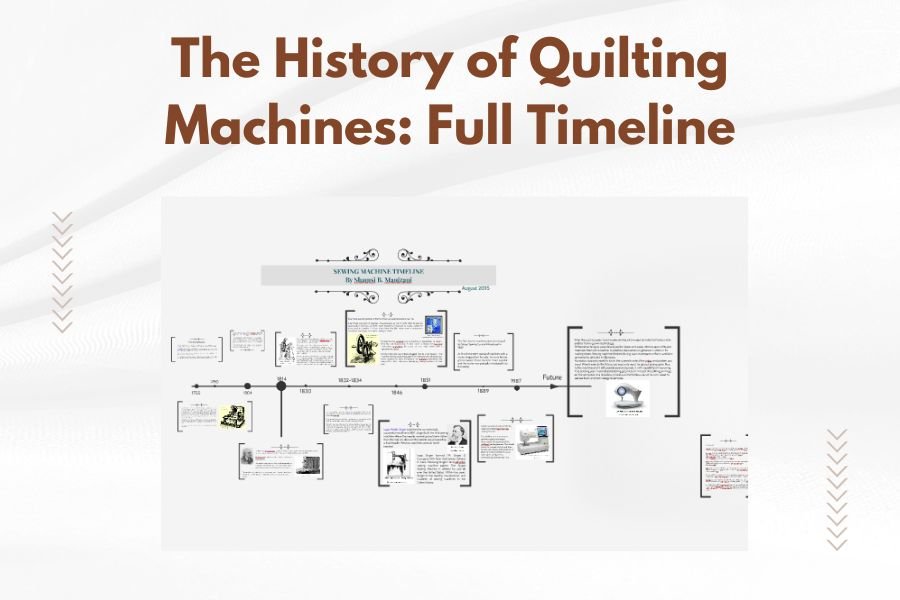
| Era | Key Innovation | Impact |
|---|---|---|
| 1871 | First Patent | Mechanical quilting begins |
| 1880s | Singer Machines | Home piecing becomes common |
| 1930s | Zigzag Stitching | Decorative options expand |
| 1979 | First Longarm | Professional quilting services born |
| 1990s | Computer Control | Automated pattern stitching |
| 2010s | Smart Features | AI-assisted quilting emerges |
Future Trends and Innovations
What’s next for quilting machines? From what I found in industry research, artificial intelligence and robotics will play bigger roles.
Some manufacturers are testing fully automated quilting systems. These machines could analyze quilt tops and suggest appropriate quilting patterns automatically.
Sustainability Focus
Environmental concerns are driving new machine designs. Energy-efficient motors and recyclable components are becoming standard.
Digital thread libraries might replace physical thread storage, reducing waste and inventory needs.
Accessibility Improvements
Voice control and adaptive interfaces will help quilters with physical limitations. The craft should be available to everyone who wants to participate.
Choosing the Right Machine for Your Needs
With so many options available, picking the right quilting machine feels overwhelming. Consider your space, budget, and quilting goals first.
Beginners often do well with domestic machines that have quilting features. You can always upgrade later as your skills and interests develop.
Budget Considerations
Quality quilting machines represent significant investments. However, they often last decades with proper maintenance.
Many quilters find that buying used machines from reputable dealers offers excellent value. Just make sure service support is available in your area.
Conclusion
The journey from Thomas Blanchard’s 1871 patent to today’s computerized longarm systems shows how innovation transforms traditional crafts. Each generation of quilting machines has made this beautiful art form more accessible while preserving its essential creative spirit.
Whether you prefer the control of hand quilting or the efficiency of modern machines, you’re part of a rich tradition that spans over 150 years. The tools may have evolved, but the joy of creating something beautiful with your own hands remains unchanged.
What was the first quilting machine ever invented?
Thomas Blanchard patented the first mechanical quilting machine on April 4, 1871. His invention used a pantograph system where operators traced patterns while the machine guided the needle through fabric layers.
When did longarm quilting machines become popular?
Longarm machines gained popularity in the 1980s after Dave Gammill built the first commercial model in 1979. These machines revolutionized professional quilting by allowing full-size quilts to be quilted without bunching or wrestling with fabric.
Can modern quilting machines work without computer control?
Yes, most modern quilting machines can operate manually even if they have computer features. Many quilters enjoy switching between manual free-motion quilting and automated computer-guided patterns depending on their project needs.
How much do professional quilting machines cost?
Professional quilting machines range from $15,000 for basic longarm models to over $50,000 for top-tier computerized systems. Entry-level home longarms start around $8,000, while high-end domestic quilting machines cost between $3,000-$10,000.
What’s the difference between quilting machines and regular sewing machines?
Quilting machines have larger throat spaces to accommodate thick quilt layers, stronger motors for continuous operation, and specialized feet for free-motion work. Many also include features like stitch regulation and pattern libraries specifically designed for quilting tasks.