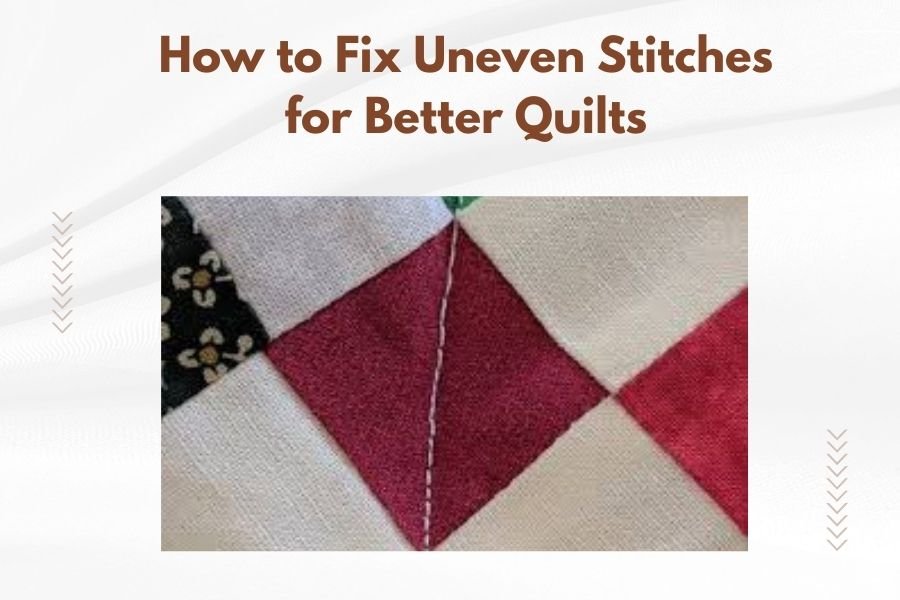
Uneven stitches happen when your quilting machine tension is wrong, your needle is dull, or you’re moving fabric at different speeds.
Fix uneven stitches by adjusting thread tension, changing your needle, and keeping steady fabric movement while quilting.
Why Your Stitches Look Different Sizes
Ever looked at your quilt and wondered why some stitches look perfect while others seem wonky? You’re not alone. This problem bugs quilters at every skill level.
The main culprits are usually simple fixes. Your machine might be fighting against you instead of working with you. Let’s figure out what’s going wrong first.
Thread Tension Problems
Think of thread tension like a tug-of-war between your top and bottom threads. When one side pulls harder, your stitches get lopsided.
Too tight? Your fabric puckers and stitches look pinched. Too loose? You get loops and messy stitches that won’t hold.
Quick Tension Test
Grab two different colored threads. Sew a test line on scrap fabric. If you see the top thread color on the bottom of your fabric, your top tension is too loose. If you see bottom thread color on top, your bottom tension needs help.
Needle Issues That Mess Up Stitches
A dull needle is like trying to cut vegetables with a butter knife. It works, but barely.
Your needle might look fine to you, but it could have tiny burrs or bent spots that grab fabric weird. Change your needle every 8-10 hours of quilting time. Trust me on this one.
Wrong Needle Size Problems
Using a size 90 needle on lightweight cotton? Your holes will be too big. Using a size 70 on thick batting? The needle struggles to pierce cleanly.
Speed Control Makes a Huge Difference
Racing through your quilt like you’re late for dinner creates uneven stitches. Your machine needs consistent timing to form perfect loops.
Slow down. Find a comfortable speed where you feel in control. Your stitches will thank you.
Hand Movement vs Machine Speed
Here’s what I learned from quilting forums: your hands and machine need to work together like dance partners. If your hands move fast but your machine runs slow, you get long stitches. Fast machine with slow hands? Tiny, bunched-up stitches.
Finding Your Sweet Spot
Practice moving fabric at the same rate as your machine stitches. Start slow. You can always speed up later when it feels natural.
Machine Maintenance You Can’t Skip
When did you last clean your machine? Lint buildup affects stitch quality more than most people realize.
That tiny bit of fuzz in your bobbin case can throw off your tension completely. Clean it out after every project.
Timing Issues
If cleaning and new needles don’t help, your machine timing might be off. This happens when machines get bumped hard or used heavily without service.
You’ll need a repair shop for timing issues. But check everything else first since timing problems are less common.
Thread Quality Matters More Than You Think
Cheap thread breaks, shreds, and creates uneven thickness. It’s like trying to write smoothly with a scratchy pen.
Good quilting thread costs more upfront but saves you from redoing work later. Cotton, polyester, or trilobal polyester all work well for different projects.
Thread Weight Confusion
Higher numbers mean thinner thread. Weight 50 is thinner than weight 40. Match your thread weight to your project needs.
Top and Bottom Thread Matching
Use the same weight thread on top and in your bobbin. Different weights create tension problems that show up as uneven stitches.
Fabric and Batting Combinations
Some fabric and batting combos fight each other. Slippery fabrics with thick batting can shift while you quilt, creating uneven stitches.
Pin or spray baste more thoroughly if your layers keep shifting. Shifted layers equal wonky stitches every time.
Hooping Problems
Too tight in the hoop? Your fabric can’t move naturally with the needle. Too loose? Everything shifts around.
Your fabric should feel snug like a drum but not stretched tight enough to distort.
Step-by-Step Stitch Troubleshooting
Start with the easiest fixes first. Most uneven stitch problems come from simple issues.
First Things to Check
- Change your needle
- Clean lint from bobbin area
- Check thread quality
- Test tension on scrap fabric
- Slow down your quilting speed
If Those Don’t Work
- Try different thread brands
- Check your needle size matches your fabric
- Re-thread your entire machine
- Check bobbin winding quality
- Practice consistent hand movement
Common Stitch Problems and Quick Fixes
| Problem | Likely Cause | Quick Fix |
|---|---|---|
| Tiny then big stitches | Inconsistent speed | Practice steady movement |
| Loops on bottom | Top tension too loose | Tighten top tension slightly |
| Puckered fabric | Tension too tight | Loosen both tensions |
| Skipped stitches | Dull or wrong needle | Change needle size/type |
Practice Exercises That Actually Help
Set up practice fabric with different thread colors in top and bobbin. This lets you see exactly what each tension change does.
Draw gentle curves on practice fabric. Follow them while focusing on steady speed. Curves show uneven stitching better than straight lines.
Building Muscle Memory
Spend 15 minutes before each quilting session just practicing steady movement. Your hands will learn the right rhythm faster than you think.
When to Call for Professional Help
Some problems need professional repair. If you’ve tried everything and still get uneven stitches, your machine might have internal issues.
Timing problems, bent internal parts, or worn tension disks all need professional attention. Don’t feel bad about getting help.
Conclusion
Uneven stitches frustrate every quilter at some point. The good news? Most causes have simple fixes. Start with a fresh needle, clean machine, and steady speed. Check your tension settings and thread quality next.
Remember that quilting is a skill that improves with practice. Each project teaches you something new about your machine and your technique. Don’t let uneven stitches discourage you from creating beautiful quilts.
Take time to troubleshoot systematically rather than guessing randomly. Your future quilts will show the difference when you master consistent, even stitching.
Why do my stitches look perfect sometimes but terrible other times?
This usually happens when you change thread brands, fabric types, or quilting speed between projects. Different materials need slight tension adjustments. Keep notes about what settings work for each thread and fabric combination.
How often should I really change my quilting needle?
Change needles every 8-10 hours of actual quilting time, or whenever you start a new project with different fabric. Dense fabrics and metallic threads dull needles faster. When in doubt, put in a fresh needle.
Can using different thread brands in the same project cause uneven stitches?
Yes, different brands often have slightly different thicknesses even in the same labeled weight. This affects tension and can create uneven stitches. Stick with one thread brand throughout each project for best results.
What tension numbers should I start with for quilting?
Most machines work well with tension around 3.5-4.5 for quilting cotton with cotton thread. Start at your machine’s default setting and make small adjustments from there. Test on scraps before adjusting your actual quilt.
Why do my stitches get worse as I quilt longer?
Lint builds up during long quilting sessions and affects tension. Your hands also get tired and move less steadily. Take breaks every hour to clean your bobbin area and rest your hands. Consistent maintenance keeps stitches even.