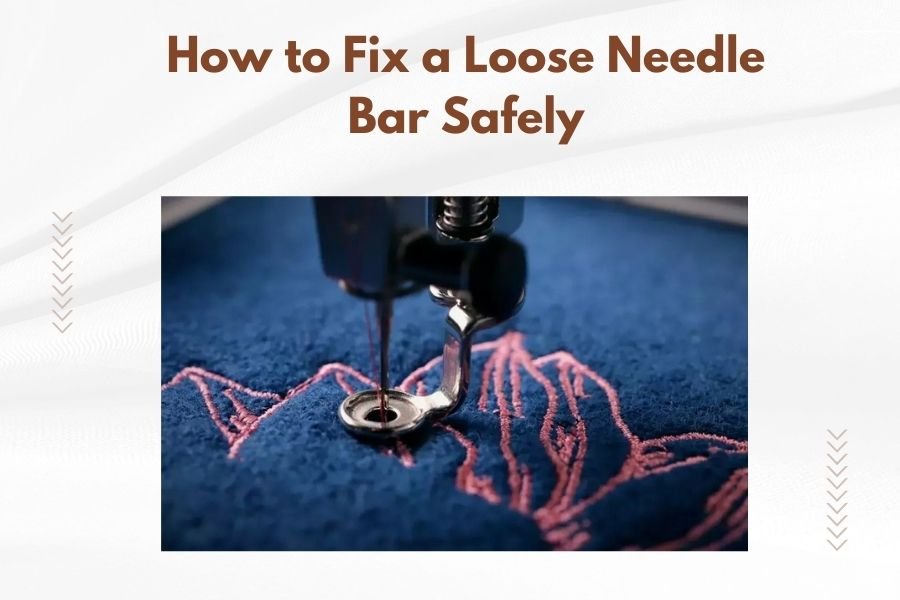
To fix a loose needle bar safely, first turn off your quilting machine and unplug it completely. Then check the needle bar clamp screw and tighten it gradually using the appropriate screwdriver while supporting the needle bar.
A loose needle bar creates poor stitch quality, thread breaks, and potential damage to your quilting project. Most needle bar issues stem from vibration loosening the clamp screw or worn internal components.
What Causes a Loose Needle Bar
Your quilting machine’s needle bar can become loose for several reasons. I found through research that vibration is the most common culprit.
When your machine runs at high speeds, natural vibration slowly loosens the needle bar clamp screw. This happens over time with regular use.
Common Causes of Needle Bar Problems
- Loose needle bar clamp screw
- Worn needle bar bushings
- Damaged needle bar itself
- Improper needle installation
- Machine vibration from uneven surfaces
Signs Your Needle Bar Needs Attention
You’ll notice several warning signs before the needle bar becomes dangerously loose. Watch for these red flags.
Your stitches will look uneven or skip entirely. The needle may wobble visibly during operation. You might hear unusual clicking or rattling sounds.
Stitch Quality Issues
Poor stitch formation is often your first clue. The needle can’t maintain proper position when the bar is loose.
Thread tension becomes inconsistent. Your quilting lines may appear wavy or broken.
Mechanical Symptoms
Listen to your machine carefully. A loose needle bar creates distinct sounds that trained ears can catch.
Excessive vibration in the needle area means trouble. The entire needle assembly may shake more than normal.
Safety Precautions Before Starting
Safety comes first when working on any sewing machine. I always recommend taking these steps before touching anything mechanical.
Turn off your machine completely. Unplug it from the wall outlet. This prevents accidental startup while you’re working.
Workspace Preparation
Set up a clean, well-lit work area. Good lighting helps you see small screws and components clearly.
Gather your tools beforehand. You’ll need the right screwdrivers and possibly needle-nose pliers.
Essential Tools for the Job
- Small flathead screwdriver
- Phillips head screwdriver (if needed)
- Needle-nose pliers
- Clean cloth for wiping components
- Small flashlight or desk lamp
Step-by-Step Repair Process
Now let’s walk through fixing your loose needle bar. Take your time with each step.
Start by removing the current needle. This gives you better access to the needle bar and prevents damage to the needle.
Locating the Needle Bar Clamp
The needle bar clamp holds your needle bar in the correct position. It’s usually a small screw mechanism near the needle area.
Look for a small screw on the side or front of the needle bar assembly. This screw controls how tightly the bar is held.
Identifying the Right Screw
Don’t guess which screw to adjust. Your machine’s manual shows the exact location of the needle bar clamp screw.
If you don’t have your manual, most manufacturers provide diagrams online. Search for your specific machine model.
Tightening the Needle Bar
Use gentle pressure when tightening the clamp screw. Over-tightening can damage the threads or strip the screw head.
Turn the screw clockwise in small increments. Test the needle bar movement between adjustments.
Testing for Proper Tightness
The needle bar should feel secure but not completely rigid. You shouldn’t be able to move it by hand.
Install a needle and check that it sits straight. A crooked needle means the bar isn’t positioned correctly.
Advanced Troubleshooting
Sometimes tightening the clamp screw doesn’t solve the problem. Deeper issues may need professional attention.
Worn bushings inside the needle bar assembly cause persistent looseness. These parts wear out over years of use.
When to Call a Professional
If the needle bar still moves after tightening, stop working on it yourself. Internal wear requires special tools and expertise.
Professional repair technicians have replacement parts and proper alignment tools. They can also spot other potential problems.
Signs You Need Professional Help
- Needle bar won’t stay tight after adjustment
- Visible wear on the needle bar itself
- Unusual grinding or scraping sounds
- Needle bar moves up and down loosely
Temporary Solutions
While waiting for professional repair, you might need temporary fixes to finish urgent projects.
Check and retighten the clamp screw before each quilting session. This isn’t a permanent solution but can help short-term.
Prevention Tips
Preventing needle bar problems saves time and money. Regular maintenance keeps your machine running smoothly.
Check your needle bar tightness monthly during regular cleaning. This catches loosening before it becomes a problem.
Regular Maintenance Schedule
Create a simple maintenance routine that includes needle bar inspection. I found that monthly checks work well for most quilters.
Add needle bar checking to your existing cleaning routine. It only takes an extra minute but prevents bigger issues.
Monthly Inspection Checklist
- Check needle bar clamp screw tightness
- Look for visible wear or damage
- Listen for unusual sounds during operation
- Test stitch quality on sample fabric
Proper Machine Setup
Your quilting table and machine placement affect needle bar stability. An uneven or wobbly table increases vibration.
Make sure your machine sits level and stable. Use a spirit level to check your quilting surface.
| Problem | Cause | Solution |
|---|---|---|
| Excessive vibration | Uneven table surface | Level the table or add padding |
| Loose screws | Normal machine vibration | Monthly tightness checks |
| Worn components | Age and heavy use | Professional replacement |
Conclusion
Fixing a loose needle bar safely protects both you and your quilting machine. Most needle bar issues come from simple loosening that you can fix yourself with basic tools and patience.
Remember to always unplug your machine before starting any repair work. Take your time and don’t force anything that doesn’t move easily.
Regular maintenance prevents most needle bar problems. Monthly checks take just a few minutes but save hours of frustration later.
When in doubt, consult a professional repair technician. They have the expertise and tools to handle complex internal problems safely.
How often should I check my needle bar tightness?
Check your needle bar tightness monthly during regular machine cleaning and maintenance. Heavy users may need to check every two weeks, while occasional quilters can extend this to every six weeks.
Can I use any screwdriver to tighten the needle bar clamp?
Use only the correct size screwdriver that fits snugly in the screw head. Wrong-sized tools can strip the screw head or damage surrounding components. Most quilting machines use small flathead or Phillips head screws.
What happens if I over-tighten the needle bar clamp screw?
Over-tightening can strip the screw threads, crack the clamp mechanism, or bend the needle bar itself. Always tighten gradually and test between adjustments to find the right tension.
Why does my needle bar keep coming loose after I fix it?
Repeatedly loosening needle bars often indicate worn internal bushings or a damaged clamp mechanism. These problems require professional repair or replacement of internal components that you cannot safely fix at home.
Is it safe to continue quilting with a slightly loose needle bar?
Never continue quilting with a loose needle bar. It can damage your fabric, break needles, create poor stitches, and potentially cause injury if the needle breaks or comes loose during operation.