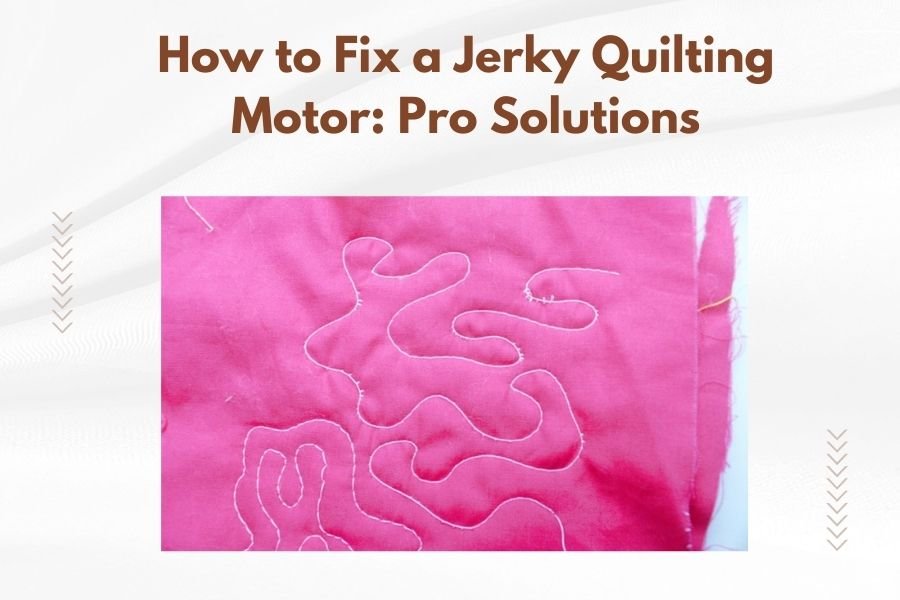
A jerky quilting motor usually stems from tension issues, dirty machine parts, or worn motor brushes that need cleaning or replacement.
You can fix most jerky quilting motor problems by adjusting thread tension, cleaning the feed dogs, oiling moving parts, and checking for bent needles.
Quick Fixes That Work Right Now
Let’s start with the solutions that solve 80% of jerky motor problems. These take just a few minutes and cost nothing.
Check Your Thread Tension First
Wrong thread tension makes your motor work harder than it should. Think of it like trying to push a shopping cart with wobbly wheels.
Look at your last few stitches. Do they look too tight or too loose? Adjust your tension dial one number at a time. Test on scrap fabric after each change.
Clean Those Feed Dogs
Lint and fabric bits love to hide under your feed dogs. When they get clogged, your motor has to jerk and pull to move fabric through.
Turn off your machine and remove the needle plate. Use a small brush or tweezers to pull out any debris. You’ll be amazed at what comes out.
Oil the Moving Parts
Dry parts create friction. Friction makes motors work harder and move in jerky motions.
Put one drop of sewing machine oil on each moving part your manual shows. Don’t overdo it. Too much oil attracts more dirt.
Motor-Specific Problems and Solutions
Some jerky motor issues go deeper than basic maintenance. Let’s tackle the motor itself.
Worn Motor Brushes
Motor brushes wear down over time. When they get too short, your motor loses smooth power delivery.
From what I found in repair manuals, brushes should be at least 1/4 inch long. Shorter than that means replacement time.
How to Check Motor Brushes
Unplug your machine first. Remove the motor housing cover (check your manual for location). The brushes look like small rectangular blocks with springs behind them.
If they’re worn down or have deep grooves, order new ones from your machine manufacturer.
Dirty Motor Housing
Dust and lint can get inside your motor housing. This creates drag and makes the motor work unevenly.
Use compressed air to blow out the housing. Work from multiple angles to get stubborn debris out.
Needle and Threading Issues
Sometimes the problem isn’t your motor at all. A few small issues can make it seem like motor trouble.
Bent or Dull Needles
A bent needle makes your motor fight to punch through fabric. This creates that jerky feeling you’re experiencing.
Hold your needle up to a light. Look down the shaft. Any bend or curve means it’s time for a new needle.
Wrong Needle Size
Using a size 11 needle on heavy denim makes your motor strain. Using a size 18 needle on delicate cotton creates similar problems.
Match your needle to your fabric weight. Light fabrics need sizes 9-11. Medium fabrics work with sizes 12-14. Heavy fabrics need sizes 16-18.
Poor Quality Thread
Cheap thread breaks and tangles more often. Each break makes your motor stop and start suddenly.
Quality thread flows smoothly and reduces motor stress. Many quilting experts recommend sticking with known brands for consistent results.
Timing Problems
Machine timing affects how your motor performs. When timing goes off, everything feels jerky and wrong.
Signs Your Timing Is Off
Watch for these clues that point to timing issues:
- Skipped stitches even with a new needle
- Thread bunching on the bottom
- Needle hitting the bobbin case
- Motor running but no stitches forming
When to Call a Professional
Timing adjustments require special tools and experience. Research shows that DIY timing fixes often create bigger problems.
Take your machine to a certified repair shop if you suspect timing issues. The cost beats buying a new machine.
Bobbin-Related Motor Problems
Your bobbin system can make your motor work harder than needed.
Incorrectly Wound Bobbins
Unevenly wound bobbins create drag as they spin. This makes your motor jerk as it tries to maintain steady speed.
Wind bobbins at medium speed. Don’t overfill them. Stop when thread reaches the edge of the bobbin rim.
Wrong Bobbin Type
Using the wrong bobbin style can cause motor problems. Class 15 and Class L bobbins look similar but aren’t interchangeable.
Check your manual for the exact bobbin type. Using the right one eliminates unnecessary motor strain.
Speed Control Issues
Speed control problems often feel like motor problems. Let’s separate the two.
Dirty Speed Control
Dust inside your foot pedal can cause jerky speed changes. This makes it seem like your motor has problems.
Open your foot pedal case (unplug first). Clean contacts with a dry cloth. Replace if you see burn marks or corrosion.
Loose Connections
Loose wires between your pedal and motor cause jerky performance. Check all connections and tighten any loose plugs.
Environmental Factors
Sometimes the problem isn’t your machine at all.
Voltage Fluctuations
Low or fluctuating voltage makes motors run poorly. If lights dim when your machine starts, voltage might be the issue.
Try plugging into a different circuit. Avoid extension cords when possible. They can drop voltage and cause motor problems.
Temperature Effects
Cold machines run stiffly until they warm up. Very hot rooms can cause motors to overheat and run erratically.
Let cold machines warm up for a few minutes before heavy quilting. Give overheated machines breaks to cool down.
Prevention Tips
Preventing jerky motor problems costs less than fixing them.
Regular Maintenance Schedule
Create a simple maintenance routine:
- Clean lint after every project
- Oil moving parts monthly
- Change needles every 8 hours of sewing
- Professional service once yearly
Quality Materials Matter
Good thread, sharp needles, and proper bobbins reduce motor stress. Think of them as insurance for your machine.
When to Replace vs Repair
Sometimes repair costs more than replacement. Here’s how to decide.
Cost Comparison
Get a repair estimate first. If it’s more than 50% of your machine’s current value, consider replacement.
Factor in the age of your machine and availability of parts. Older machines might be harder to repair in the future.
| Problem Type | Typical Repair Cost | DIY Difficulty |
|---|---|---|
| Motor Brushes | $50-100 | Medium |
| Timing Adjustment | $75-150 | Professional Only |
| Speed Control | $40-80 | Easy |
| Complete Motor | $150-300 | Professional Only |
Conclusion
Most jerky quilting motor problems come from simple maintenance issues you can fix yourself. Start with thread tension, clean your feed dogs, and oil moving parts. These steps solve most motor problems quickly and cheaply.
For deeper issues like timing or motor replacement, get professional help. A good repair shop can diagnose problems accurately and save you time and money. Regular maintenance prevents most motor problems before they start.
Keep your machine clean, use quality materials, and don’t ignore small problems. Your quilting motor will run smoothly for years with proper care.
Why does my quilting machine motor jerk only at slow speeds?
Slow speed jerking usually means your motor brushes are worn or your speed control needs cleaning. At higher speeds, momentum masks these problems, but slow speeds expose them clearly.
Can I use regular oil instead of sewing machine oil on my motor?
No, regular oils are too thick and can gum up delicate machine parts. Sewing machine oil is specially formulated to stay fluid and not attract lint or debris.
How often should I replace my quilting machine motor brushes?
Motor brushes typically last 2-5 years depending on usage. Heavy quilters might need replacement every 18 months, while occasional users can go longer between changes.
What causes my motor to jerk only when quilting thick layers?
Thick layers require more power, which exposes weak motor brushes, low voltage, or inadequate needle size. Check your needle size first, then examine motor brushes if the problem continues.
Is it normal for my quilting motor to make noise when it jerks?
Some noise is normal, but grinding, squealing, or clicking sounds indicate serious problems. These noises often mean worn brushes, damaged gears, or timing issues that need professional attention.