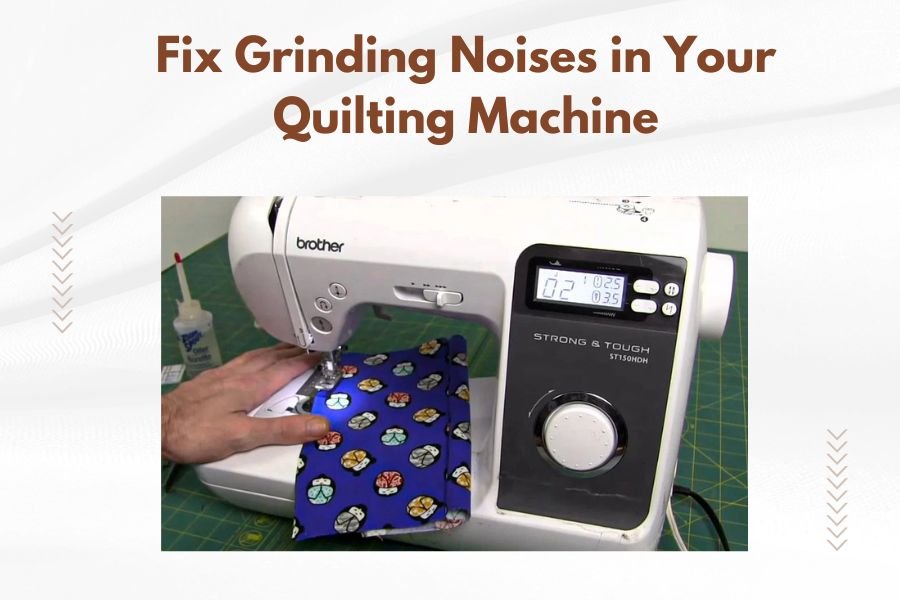
Grinding noises in your quilting machine usually mean worn needle bars, dry guide rods, or debris in the bobbin area that needs immediate attention.
You can fix most grinding sounds by cleaning lint buildup, oiling moving parts, and checking for bent needles or loose screws.
What Causes That Awful Grinding Sound
Your quilting machine sounds like a coffee grinder gone wrong. I get it. That grinding noise makes you want to stop mid-project and hide under your fabric stash.
The good news? Most grinding sounds come from fixable problems. Your machine isn’t broken beyond repair.
Top 3 Grinding Culprits
From what I found researching quilting machine repairs, these cause most grinding noises:
- Lint and thread bits stuck in moving parts
- Dry or missing oil on guide rods
- Worn needle bar bushings
Less Common but Still Possible
Sometimes the grinding comes from unexpected places:
- Bent or damaged needles
- Loose screws vibrating against metal
- Bobbin case problems
- Timing belt issues
Quick Diagnosis Before You Start Fixing
Don’t dive into repairs blindly. Smart troubleshooting saves time and prevents making things worse.
Listen to Your Machine
Turn on your quilting machine without threading it. Does the grinding happen right away? That points to mechanical issues, not thread problems.
Try hand-walking the machine slowly. Feel any resistance or hear scraping? You’re getting warmer.
Check the Obvious Stuff First
I found that many quilters skip basic checks and jump to complex solutions. Start simple:
- Is there a bent needle?
- Any visible lint or thread tangles?
- Are all covers and plates properly attached?
The Needle Test
Remove your needle completely. Run the machine again. If the grinding stops, you found your problem.
The Bobbin Area Check
Remove the bobbin case and bobbin. Look for thread wrapped around moving parts or lint packed into corners.
Step-by-Step Grinding Noise Fixes
Time to get your hands dirty. These fixes work from easiest to more involved.
Fix 1: Deep Clean Your Machine
Lint buildup causes more problems than most people realize. It acts like sandpaper on moving parts.
What You Need
- Small brush (old toothbrush works)
- Canned air
- Tweezers
- Cotton swabs
Cleaning Steps
Turn off and unplug your machine first. Safety matters more than speed.
Remove the throat plate and bobbin case. You’ll probably find lint everywhere. Brush it out gently.
Use canned air to blow out tight spaces. Hold the can upright so it doesn’t spray liquid.
Check around the needle bar area. Lint loves to hide there and cause grinding sounds.
Fix 2: Oil the Moving Parts
Dry metal parts grinding against each other sound terrible and cause damage. Your machine needs regular oiling.
Where to Oil
Check your manual for oil points. Most quilting machines need oil on:
- Guide rods (where the needle bar slides)
- Hook race area
- Any visible pivot points
Oiling Tips
Use only sewing machine oil. Other oils get sticky and attract more lint.
One drop goes a long way. Too much oil creates a mess and doesn’t help.
Run the machine slowly after oiling to distribute it evenly.
Fix 3: Check and Replace Worn Parts
Sometimes cleaning and oiling aren’t enough. Worn parts need replacement.
Needle Bar Bushings
These small parts guide your needle bar up and down. When they wear out, metal scrapes against metal.
You’ll feel rough movement when hand-walking the machine. The needle bar might feel loose or wobbly.
Bushing replacement usually needs a repair shop unless you’re handy with tools.
Timing Belt Problems
A loose or damaged timing belt can cause grinding sounds. The belt might slip or have worn teeth.
This fix definitely needs professional help. Timing adjustments affect how your machine stitches.
When DIY Isn’t Enough
Some grinding noises mean serious internal problems. Don’t feel bad about calling for help.
Red Flags for Professional Repair
Take your machine to a repair shop if you notice:
- Grinding continues after cleaning and oiling
- Metal shavings in the machine
- Needle hits something when sewing
- Stitches look wrong along with grinding sounds
Finding a Good Repair Shop
Not all sewing machine repair shops understand quilting machines. Look for shops that:
- Work on your machine brand regularly
- Have good reviews from other quilters
- Give realistic time estimates
Preventing Future Grinding Problems
An ounce of prevention beats a pound of repair bills. Regular maintenance keeps your machine running smoothly.
Daily Habits
After each quilting session:
- Brush out visible lint
- Check for loose threads wound around parts
- Cover your machine to prevent dust buildup
Weekly Maintenance
Once a week, give your machine more attention:
- Remove the throat plate and clean thoroughly
- Oil according to your manual’s schedule
- Check needle condition and replace if needed
Monthly Deep Checks
Every month, look deeper:
- Clean inside the bobbin case area
- Check all screws for tightness
- Test machine tension and timing
Common Mistakes That Make Grinding Worse
Good intentions sometimes lead to bigger problems. Avoid these common mistakes.
Over-Oiling
More oil doesn’t equal better performance. Excess oil attracts lint like a magnet.
It also can drip onto your fabric and ruin projects. Stick to the recommended amounts.
Using Wrong Oil Types
3-in-1 oil, WD-40, and household oils don’t belong in sewing machines. They get thick or sticky over time.
Sewing machine oil stays thin and doesn’t gum up moving parts.
Forcing Stuck Parts
If something won’t move smoothly, don’t force it. You might break small plastic parts or bend metal components.
Clean and oil first. If it still sticks, get professional help.
Troubleshooting Chart
| Grinding Sound Type | Most Likely Cause | Quick Fix |
|---|---|---|
| Continuous scraping | Dry guide rods | Oil needle bar area |
| Intermittent grinding | Lint in bobbin area | Deep clean and remove debris |
| Grinding when needle goes down | Bent needle or timing issue | Replace needle, check timing |
| Grinding from motor area | Belt or internal motor problem | Professional repair needed |
Conclusion
Grinding noises in your quilting machine don’t have to end your sewing session. Most of the time, a good cleaning and proper oiling solve the problem.
Start with the simple fixes first. Clean out lint, oil the moving parts, and check for obvious problems like bent needles. These steps fix most grinding sounds quickly.
When DIY solutions don’t work, don’t hesitate to seek professional help. A skilled repair person can spot problems you might miss and prevent small issues from becoming expensive repairs.
Regular maintenance prevents most grinding problems. A few minutes of care after each quilting session keeps your machine running smoothly for years.
What should I do if my quilting machine starts grinding suddenly during a project?
Stop sewing immediately and turn off the machine. Check for thread jams around the needle and bobbin areas first. Remove any tangled threads and test the machine slowly by hand before turning it back on.
How often should I oil my quilting machine to prevent grinding noises?
Oil your quilting machine every 8-10 hours of sewing time, or weekly if you quilt daily. Check your manual for specific oil points, but focus on the needle bar guides and hook race area where most grinding occurs.
Can I use WD-40 instead of sewing machine oil for grinding problems?
Never use WD-40 on your quilting machine. It attracts lint and can damage plastic parts over time. Only use oil specifically made for sewing machines, which stays clean and provides proper lubrication for delicate moving parts.
Why does my quilting machine grind only when quilting thick layers?
Thick layers put extra strain on your machine’s motor and moving parts. The grinding might indicate your needle is too small, your machine needs more frequent oiling, or the motor is working harder than normal. Try a larger needle and check your manual for heavy-duty quilting settings.
How do I know if grinding sounds mean I need professional repair?
Seek professional help if grinding continues after cleaning and oiling, if you see metal shavings in your machine, or if the grinding comes with poor stitch quality. Also get help if the needle hits something during normal sewing or if the sound comes from the motor area rather than the needle mechanism.