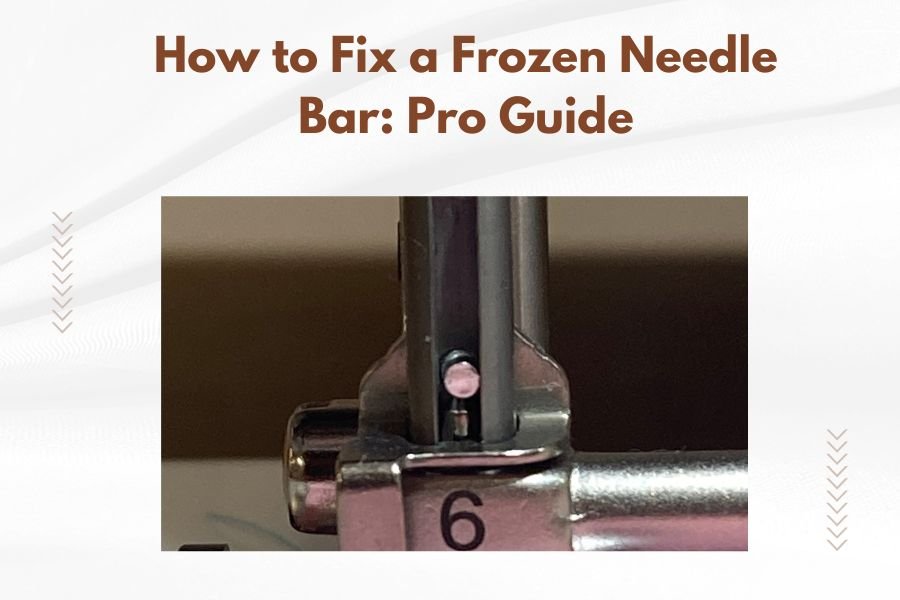
A frozen needle bar happens when the needle mechanism gets stuck due to lint buildup, bent parts, or lack of lubrication.
You can fix a frozen needle bar by cleaning the mechanism thoroughly, checking for bent needles, and applying proper sewing machine oil to moving parts.
What Makes Your Needle Bar Freeze Up
Your needle bar can freeze for several reasons. Most of the time, it’s something simple you can fix at home.
Lint and thread bits love to hide in tight spaces. They build up around your needle bar over time. This creates friction that stops the bar from moving smoothly.
Common Causes of Needle Bar Problems
I found that these issues cause most frozen needle bars:
- Lint packed around the needle bar area
- Bent or damaged needle
- Dried-out oil or no lubrication
- Thread caught in the mechanism
- Timing belt issues
- Motor problems
Safety First: Turn Everything Off
Before you touch anything, unplug your machine. This keeps you safe from accidental needle stabs or electrical issues.
Remove the presser foot and needle. Take out any thread from the machine too. You want a clear workspace.
Gather Your Tools
You’ll need these items for the repair:
- Small screwdriver set
- Tweezers
- Soft brush or old toothbrush
- Compressed air can
- Sewing machine oil
- Clean cloth
- Flashlight or good lamp
Step 1: Clean Out All the Lint
Start with the easy stuff first. Open your machine’s front panel if possible. Look for lint around the needle bar area.
Use your brush to gently sweep away visible lint. Don’t push it deeper into the machine. Pull it out toward you.
Deep Cleaning the Needle Bar Housing
Remove the needle plate if you can. This gives you better access to the needle bar mechanism.
Use tweezers to pull out stubborn thread pieces. Be gentle. You don’t want to bend any metal parts.
Using Compressed Air
Blow compressed air around the needle bar area. Hold the can upright and use short bursts. This pushes lint out of tight spots.
Don’t use too much pressure. You might blow lint deeper into your machine.
Step 2: Check for Bent or Damaged Parts
Look at the needle bar itself. It should be perfectly straight and smooth.
A bent needle bar won’t move properly through its guides. This creates that frozen feeling you’re experiencing.
Inspecting the Needle Bar
Shine your flashlight on the needle bar. Follow it from top to bottom. Look for:
- Bends or kinks
- Scratches or gouges
- Loose connections
- Missing parts
What to Do About Damage
Small scratches usually aren’t a problem. But bends need professional repair or replacement.
Don’t try to straighten a bent needle bar yourself. You’ll likely make it worse.
Step 3: Oil the Moving Parts
Dry oil causes more problems than you might think. It gets sticky and traps dirt.
Put one tiny drop of sewing machine oil on each moving part of the needle bar mechanism. Don’t flood it with oil.
Where to Apply Oil
Focus on these areas:
- Needle bar guides (where the bar slides)
- Connection points
- Any visible pivot points
- The needle bar clamp screw threads
The Right Type of Oil
Only use sewing machine oil. Regular household oils are too thick. They’ll attract more dirt and make your problem worse.
I found that most sewing machine brands recommend their own oil. But any quality sewing machine oil works fine.
Step 4: Test the Movement
Now try moving the needle bar by hand. Turn your handwheel slowly and see if the needle bar moves up and down.
It should move smoothly without binding or catching. If it still feels stuck, you need to dig deeper.
Manual Movement Check
Some machines let you move the needle bar directly with your fingers. Be very gentle if you try this.
Never force a frozen needle bar. You might break something expensive.
Step 5: Check the Timing System
If cleaning and oiling didn’t work, your timing might be off. This is more advanced but still doable.
The timing belt or gears might have slipped. This throws off the needle bar’s movement pattern.
Signs of Timing Problems
Look for these clues:
- Needle hits the bobbin case
- Uneven stitches
- Thread bunching under fabric
- Strange noises during operation
Basic Timing Check
Turn your handwheel and watch the needle bar and bobbin timing. They should work together smoothly.
If the timing looks off, you might need professional help. Timing adjustments require special tools and knowledge.
When to Call for Professional Help
Some problems are beyond home repair. Don’t feel bad about getting help.
Call a repair shop if you find:
- Bent needle bar
- Broken timing belt
- Damaged gears
- Motor problems
- Electronic control issues
Cost vs. Value Considerations
Repair costs vary widely. Get a quote before authorizing work.
For older machines, repair costs might exceed the machine’s value. That’s a tough decision only you can make.
Preventing Future Needle Bar Problems
Regular maintenance prevents most needle bar issues. It’s much easier than fixing problems after they happen.
Clean your machine after every few projects. Oil it monthly if you sew regularly.
Monthly Maintenance Routine
Set up a simple schedule:
- Remove lint from the needle area
- Oil moving parts lightly
- Check needle condition
- Test all functions
- Clean the exterior
Signs Your Machine Needs Attention
Watch for these warning signs:
- Unusual noises
- Rough needle movement
- Skipped stitches
- Thread tension problems
- Visible lint buildup
Troubleshooting Different Machine Types
Mechanical and computerized machines have different issues. Here’s what I found works for each type.
| Machine Type | Common Issues | Best Solution |
|---|---|---|
| Mechanical | Lint buildup, dry oil | Clean and lubricate |
| Electronic | Sensor problems, lint | Clean sensors, reset |
| Computerized | Software glitches, sensors | Reset, clean, update |
Electronic Machine Special Steps
Electronic machines sometimes need a reset after cleaning. Check your manual for the reset procedure.
Some models have error codes that help diagnose problems. Write down any codes you see.
Conclusion
Fixing a frozen needle bar usually comes down to cleaning and lubrication. Most of the time, you can solve this problem at home with basic tools and patience.
Start with the simple solutions first. Clean out lint, check for bent parts, and add fresh oil. These steps fix most frozen needle bar problems.
Remember that prevention beats repair every time. Keep your machine clean and oiled. Replace needles regularly and don’t ignore strange noises.
If home repairs don’t work, get professional help. It’s better to spend money on proper repair than to damage your machine further.
Why won’t my needle bar move even after cleaning?
The needle bar might be bent, or you could have timing issues. Check if the needle bar is perfectly straight and if the timing belt looks intact. These problems usually need professional repair.
How often should I oil my sewing machine’s needle bar area?
Oil the needle bar mechanism monthly if you sew regularly, or every 8-10 hours of use. Use only one small drop of sewing machine oil on each moving part to avoid attracting excess dirt.
Can I use WD-40 or household oil on my frozen needle bar?
No, never use household oils or WD-40 on sewing machines. These products are too thick and will attract lint and dirt, making your problem worse. Only use proper sewing machine oil.
What’s the difference between a stuck needle bar and timing problems?
A stuck needle bar won’t move at all or moves very roughly. Timing problems let the needle bar move but cause it to hit the bobbin case or create uneven stitches. Timing issues are more complex to fix.
Should I remove the needle bar to clean it better?
Don’t remove the needle bar unless you’re experienced with sewing machine repair. You can clean around it effectively without removal. Taking it out incorrectly can damage the timing and require professional reset.