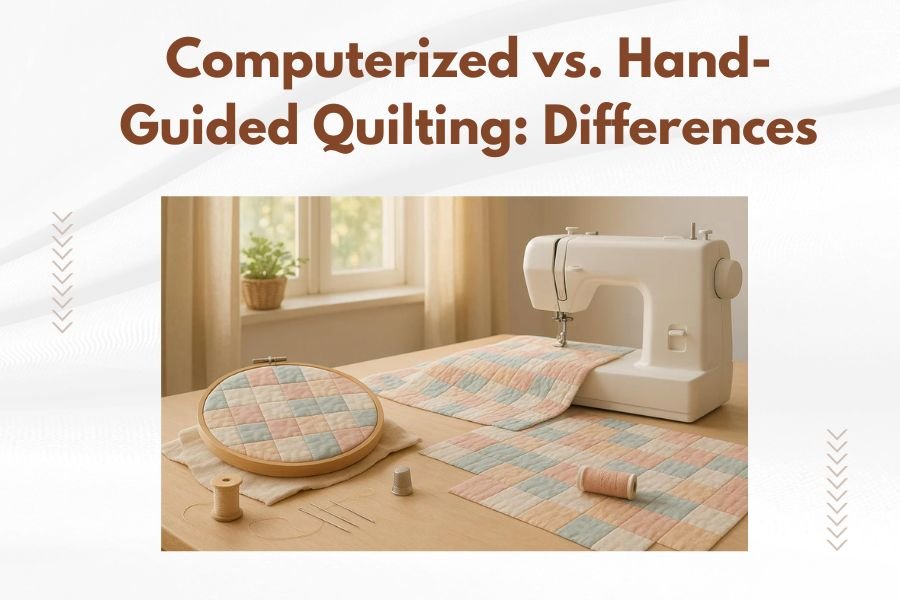
Computerized quilting machines use digital patterns and automatic stitching, while hand-guided quilting lets you control every stitch manually for creative freedom.
The main difference between computerized vs. hand-guided quilting lies in control: machines handle precision automatically, but hand-guiding gives you artistic flexibility.
What Is Computerized Quilting?
Computerized quilting uses machines that follow pre-programmed patterns. You load a design into the computer, and the machine does the rest.
Think of it like GPS for your quilting. The machine knows exactly where to go and how to get there. You just need to set it up and let it work.
These machines can create perfect circles, straight lines, and complex patterns without your hands shaking or making mistakes. Many quilters love this consistency.
How Computerized Machines Work
The computer controls both the needle and the fabric movement. You choose a pattern from the machine’s library or download new ones.
Some machines connect to your computer or tablet. Others have built-in screens where you can select and adjust designs.
The machine moves your quilt sandwich automatically while the needle follows the programmed path. It’s like watching a robot artist at work.
Popular Computerized Features
Most computerized quilting machines offer these features:
- Pattern libraries with hundreds of designs
- Automatic thread tension control
- Speed adjustment settings
- Pattern scaling and rotation
- Edge-to-edge quilting options
What Is Hand-Guided Quilting?
Hand-guided quilting means you control where the needle goes. Your hands move the fabric while the machine stitches at your pace.
It’s like driving a car with manual steering instead of autopilot. You make every turn and decide every direction.
This method gives you complete creative control. You can change directions instantly, add personal touches, or fix mistakes as you go.
Free-Motion Quilting Basics
Free-motion is the most common type of hand-guided quilting. You drop the feed dogs and move the fabric yourself.
Your hands become the machine’s guidance system. The needle moves up and down, but you control the horizontal movement.
This takes practice. New quilters often struggle with consistent stitch length and smooth curves at first.
Tools You Need for Hand-Guided Work
Hand-guided quilting requires specific tools:
- Quilting gloves for better fabric grip
- Free-motion quilting foot
- Large workspace or quilting frame
- Good lighting and comfortable seating
- Marking tools for guidelines
Speed and Efficiency Comparison
Computerized machines work faster for repetitive patterns. They can stitch continuously without breaks or hesitation.
Hand-guided quilting takes longer because you’re thinking and adjusting constantly. But you’re also creating something unique.
From what I found online, computerized machines can complete large quilts 2-3 times faster than hand-guided methods for simple patterns.
Time Investment Differences
Computerized quilting saves time during stitching but requires setup time. You need to load patterns, test settings, and position everything correctly.
Hand-guided quilting has minimal setup but takes longer during actual quilting. You’re making decisions with every stitch.
Think about your goals. Do you want to finish quilts quickly or enjoy the creative process?
Quality and Precision Analysis
Computerized machines produce incredibly consistent results. Every circle is perfectly round, every line is straight.
Hand-guided quilting has natural variation that many people find charming. Slight imperfections add character and prove it’s handmade.
Research from textile experts shows that computerized quilting produces more uniform tension and stitch length across large projects.
When Precision Matters Most
Some quilting situations demand precision:
- Commercial quilting businesses
- Geometric patterns with exact measurements
- Quilts for competitions or shows
- Large bed quilts with repetitive designs
When Character Beats Perfection
Other times, you want that handmade look:
- Art quilts and wall hangings
- Personal quilts for family
- Unique one-of-a-kind projects
- Quilts where the story matters more than perfection
Cost Considerations
Computerized quilting machines cost more upfront. Entry-level models start around $3,000, while professional versions can exceed $20,000.
Hand-guided quilting works on regular sewing machines with minimal upgrades. You might spend $100-300 on accessories and tools.
But think about long-term costs too. Computerized machines may need software updates, technical support, or specialized repairs.
Hidden Costs to Consider
Computerized machines often have ongoing expenses:
- Pattern purchases and downloads
- Software updates and subscriptions
- Technical support fees
- Specialized maintenance
Budget-Friendly Alternatives
You don’t need the fanciest equipment to start. Many quilters begin with basic machines and upgrade later.
Consider renting time on computerized machines at quilting shops. This lets you try before you buy.
Learning Curve Differences
Computerized machines are easier to learn for beginners. The machine handles the technical parts while you focus on loading and positioning.
Hand-guided quilting requires developing muscle memory and coordination. It’s like learning to play piano – your hands need to work independently.
I found that most people can create decent computerized quilts within a few hours of practice. Hand-guided skills take weeks or months to develop.
Skills You Develop with Each Method
Computerized quilting teaches you about design selection, machine operation, and project planning.
Hand-guided quilting develops artistic skills, problem-solving abilities, and deep understanding of how stitches affect fabric.
Both methods have value. Many experienced quilters use both depending on their current project needs.
Creative Freedom Comparison
Hand-guided quilting wins for creative freedom. You can change your mind mid-stitch, add unexpected elements, or create completely original designs.
Computerized machines limit you to available patterns. Yes, you can modify them, but you’re still working within the software’s capabilities.
Think of it like cooking. Computerized quilting is like following a recipe perfectly. Hand-guided is like being a chef who improvises.
Design Flexibility
With hand-guided quilting, you can:
- Adjust patterns on the fly
- Work around fabric imperfections
- Create custom designs for specific areas
- Combine multiple techniques in one quilt
Which Method Should You Choose?
Choose computerized quilting if you want consistent results, plan to make many similar quilts, or run a quilting business.
Pick hand-guided quilting if you enjoy the creative process, want to develop artistic skills, or prefer unique, personal touches.
Many quilters find that the best approach combines both methods. Use computerized for backgrounds and borders, then add hand-guided details.
| Factor | Computerized | Hand-Guided |
|---|---|---|
| Speed | Fast | Slow |
| Consistency | Perfect | Variable |
| Cost | High | Low |
| Creativity | Limited | Unlimited |
| Learning | Easy | Challenging |
Questions to Ask Yourself
Before deciding, consider these questions:
- How many quilts do you plan to make per year?
- Is consistency or creativity more important to you?
- What’s your budget for equipment and ongoing costs?
- Do you enjoy learning technical skills?
- Will you quilt for others or just yourself?
Getting Started with Either Method
Start small regardless of which method you choose. Practice on small samples before tackling full-sized quilts.
Join quilting groups or take classes. Learning from experienced quilters saves time and prevents frustrating mistakes.
Watch online tutorials, but remember that hands-on practice beats video watching every time.
First Steps for Computerized Quilting
Begin with simple edge-to-edge patterns. These are easier to set up and less likely to cause problems.
Read your machine manual thoroughly. Understanding your specific machine prevents costly mistakes.
Practice loading and positioning before working on important projects.
First Steps for Hand-Guided Quilting
Start with simple shapes like loops and swirls. Build muscle memory before attempting complex designs.
Use practice sandwiches made from scraps. Don’t risk ruining good fabric while learning.
Focus on consistent stitch length before worrying about perfect patterns.
Conclusion
Both computerized and hand-guided quilting have their place in modern quilting. Your choice depends on your goals, budget, and personal preferences.
Computerized machines offer speed, consistency, and professional results. They’re perfect for quilters who value efficiency and precision.
Hand-guided quilting provides creative freedom, personal expression, and the satisfaction of true handwork. It’s ideal for artistic quilters who enjoy the journey as much as the destination.
Don’t feel pressured to choose just one method. Many successful quilters use both techniques, selecting the best approach for each individual project.
Start with whichever method appeals to you most. You can always learn the other technique later as your skills and interests develop.
What’s the main advantage of computerized quilting over hand-guided?
Speed and consistency are computerized quilting’s biggest advantages. The machine can complete large quilts quickly with perfect precision, making it ideal for quilting businesses or quilters who want uniform results across multiple projects.
Can beginners learn hand-guided quilting easily?
Hand-guided quilting requires patience and practice to master. Most beginners need several weeks of regular practice to develop smooth, consistent stitching. Starting with simple patterns and using practice fabric helps build skills gradually.
Do computerized quilting machines work with all thread types?
Most computerized machines work with standard quilting threads, but some specialty threads may require tension adjustments. Always test thread compatibility on sample fabric before starting your actual project to avoid thread breaks or tension issues.
How much space do you need for each quilting method?
Computerized machines typically need more dedicated space due to their size and the need for proper setup. Hand-guided quilting can work in smaller spaces, though both methods benefit from having adequate room to maneuver large quilts comfortably.
Which method is better for quilting thick or multiple layers?
Computerized machines generally handle thick layers more consistently because they maintain steady speed and tension. Hand-guided quilting through thick layers requires more skill to maintain even stitches, but gives you better control when navigating challenging areas.