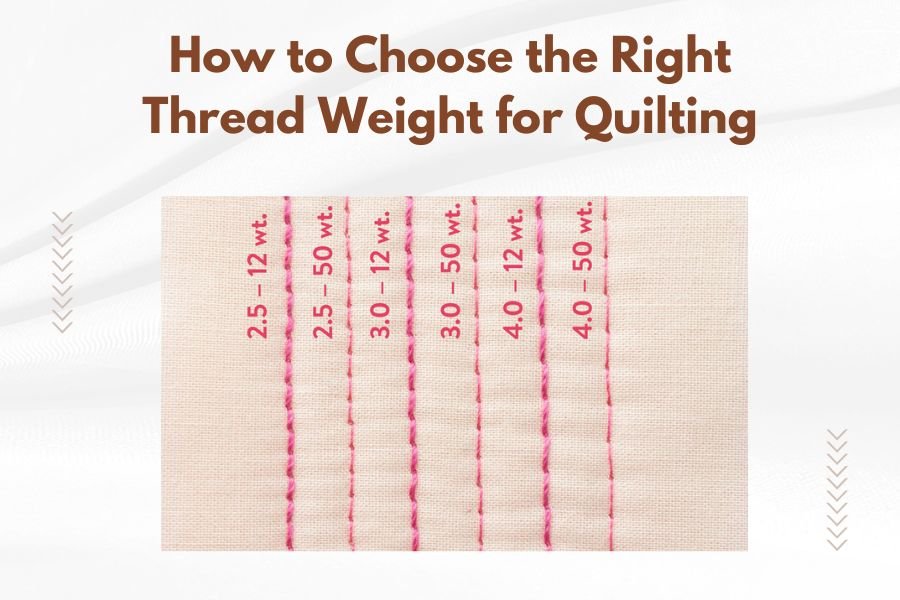
The right thread weight for quilting depends on your project type: use 50-weight thread for general piecing and quilting, 40-weight for decorative stitching, and 60-weight for delicate fabrics.
Thread weight numbers work backwards – higher numbers mean thinner thread, so 80-weight is much finer than 30-weight thread.
Understanding Thread Weight Numbers
Thread weight confuses many quilters at first. The system seems backwards because it actually is.
When you see “50-weight thread,” that number tells you how many kilometers of thread equal one kilogram. More thread per kilogram means thinner individual strands.
Think of it like this: if you can fit 50 kilometers of thread into one kilogram, each strand must be pretty thin. But if you only fit 30 kilometers, each strand is thicker.
Common Thread Weight Ranges
Most quilting threads fall between 30 and 80 weight. Here’s what you’ll find in stores:
- 30-40 weight: Thick, bold threads for decorative work
- 40-50 weight: Medium threads for general quilting
- 50-60 weight: Thin threads for piecing and detailed work
- 60-80 weight: Very fine threads for delicate projects
50-Weight Thread: Your Best Starting Point
I found that most quilting experts recommend 50-weight thread as the perfect beginner choice. It works well for almost everything.
This weight handles both piecing and quilting without problems. Your stitches look clean but not too bold. The thread slides through fabric easily without creating large holes.
When 50-Weight Works Best
Use 50-weight thread for these projects:
- Basic quilt piecing
- Straight-line quilting
- Simple free-motion designs
- Binding attachment
- Most cotton fabric projects
40-Weight Thread for Bold Statements
Want your quilting to show up more? 40-weight thread creates stronger visual lines.
This thicker thread fills in your quilting patterns nicely. You’ll see each stitch clearly, which looks great for decorative work.
Perfect Projects for 40-Weight
Choose 40-weight when you want quilting that pops:
- Echo quilting around applique
- Bold geometric patterns
- Stitch-in-the-ditch with contrast thread
- Large-scale free-motion designs
40-Weight Caution Points
Thicker thread needs bigger needles. Use size 90/14 or 100/16 needles with 40-weight thread.
Some delicate fabrics might pucker with thick thread. Test first on fabric scraps.
60-Weight Thread for Invisible Results
Sometimes you want quilting that barely shows. 60-weight thread almost disappears into your fabric.
This fine thread works perfectly when your fabric is the star. The quilting adds texture without competing visually.
Best Uses for 60-Weight Thread
Try 60-weight thread for these situations:
- Matching thread color to fabric exactly
- Dense quilting patterns
- Delicate vintage or silk fabrics
- Thread painting with multiple colors
60-Weight Handling Tips
Fine thread breaks more easily. Reduce your machine tension slightly. Use smaller needles like size 70/10 or 80/12.
30-Weight Thread for Maximum Impact
Want quilting that looks almost like embroidery? 30-weight thread creates bold, rope-like lines.
This thick thread works best for large-scale designs. Small details get lost because each stitch takes up so much space.
When to Choose 30-Weight
Use 30-weight thread for these eye-catching projects:
- Large flower or leaf motifs
- Wide meandering patterns
- Bold straight lines
- Art quilts where thread is the focus
Matching Thread Weight to Fabric Type
Your fabric choice affects which thread weight works best. Heavier fabrics handle thicker threads better.
Cotton Quilting Fabrics
Standard cotton quilting fabric works with any weight from 30 to 60. Start with 50-weight and experiment from there.
Lightweight Fabrics
Silk, voile, or thin cotton need lighter threads. Stick with 60-weight or finer to avoid puckering.
Heavyweight Fabrics
Denim, canvas, or home decor fabrics can handle 30-40 weight threads easily. Thin threads might break under the stress.
Thread Weight and Needle Size Chart
| Thread Weight | Needle Size | Best For |
|---|---|---|
| 30-weight | 100/16 | Bold decorative quilting |
| 40-weight | 90/14 | Visible quilting patterns |
| 50-weight | 80/12 | General piecing and quilting |
| 60-weight | 70/10 | Invisible or delicate work |
Common Thread Weight Mistakes
Many quilters make the same thread weight errors. Learning from these saves time and fabric.
Using Wrong Weight for Project Goals
Don’t use thin thread when you want bold quilting. Don’t use thick thread for subtle texture.
Match your thread choice to your vision. If you want quilting to show, go thicker. If you want texture without visibility, go thinner.
Ignoring Needle Size Changes
Each thread weight needs its own needle size. Using the wrong combination causes problems:
- Too small needle with thick thread: thread shreds and breaks
- Too large needle with thin thread: big holes in fabric
- Skipped stitches from poor thread-to-needle fit
Testing Thread Weight Before Starting
Always test your chosen thread weight on fabric scraps first. This simple step prevents major disappointments.
What to Check During Testing
Make a small quilting sample and look for these issues:
- Does the thread break frequently?
- Do your stitches look too bold or too invisible?
- Does the fabric pucker around stitching lines?
- Are you happy with the overall look?
Adjusting Based on Test Results
If your test sample looks wrong, try a different weight. Go thinner for less visible lines, thicker for more dramatic effects.
Thread Weight Shopping Tips
Not all thread manufacturers use the same weight systems. Some use different numbers or descriptions.
When shopping, compare actual thread thickness rather than just numbers. Hold spools side by side when possible.
Popular Thread Brands and Their Weights
Most major thread companies offer these common weights:
- Gutermann: 50-weight most common
- Aurifil: Wide range from 12 to 80-weight
- Madeira: 30, 40, and 60-weight options
- Superior Threads: Specialty weights including 30 and 60
Storing Different Thread Weights
Keep your thread collection organized by weight. This helps you grab the right thickness quickly during projects.
Label storage areas clearly. Group similar weights together so you can compare options easily.
Conclusion
Choosing the right thread weight transforms your quilting results. Start with 50-weight thread for most projects, then branch out based on your specific needs. Remember that higher numbers mean thinner threads, and always match your needle size to your thread choice. Test each combination on scraps before starting your actual project. With practice, selecting thread weight becomes second nature, and your quilting will show the difference.
What happens if I use the wrong needle size with my thread weight?
Using the wrong needle size causes thread breakage, skipped stitches, or large holes in your fabric. Too small needles make thick threads shred, while too large needles create visible holes that won’t close properly.
Can I mix different thread weights in the same quilt project?
Yes, you can mix thread weights strategically. Use thinner weights for piecing and thicker weights for decorative quilting. Just remember to change needle sizes when switching between different thread weights.
Why does my 40-weight thread keep breaking during quilting?
Thread breakage usually means your machine tension is too tight, your needle is too small, or you’re quilting too fast. Try loosening tension slightly, switching to a size 90/14 needle, and slowing your stitching speed.
Is expensive thread really better than budget options for different weights?
Higher quality threads typically have more consistent thickness, fewer weak spots, and less lint production. While budget threads work for practice, investing in good thread reduces frustration and improves your finished quilt appearance.
How do I know if my thread weight choice looks good with my fabric pattern?
The thread should complement your fabric, not compete with it. Busy prints often look better with matching thread colors in medium weights, while solid fabrics can handle contrasting colors and varied thread weights more easily.