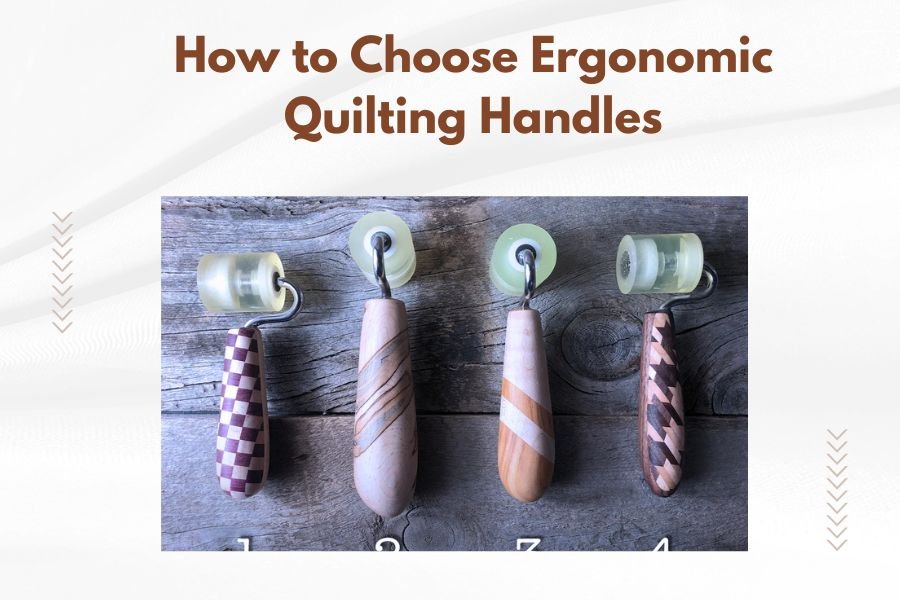
Ergonomic quilting handles reduce hand strain and wrist pain by maintaining natural hand positions during long quilting sessions. You should look for handles with soft grip materials, proper sizing for your hand, and angles that keep your wrist straight.
The best ergonomic quilting handles feature contoured shapes that fit your palm naturally and distribute pressure evenly across your fingers.
What Makes a Quilting Handle Ergonomic
An ergonomic quilting handle works with your body instead of against it. Think of it like a good pair of shoes – when they fit right, you forget you’re wearing them.
The handle should feel like an extension of your hand. Your fingers wrap around it without stretching or cramping. Your wrist stays in a neutral position, not bent up or down.
Key Design Features
Look for handles with these specific design elements:
- Contoured grip that matches your palm shape
- Non-slip surface texture
- Weight balanced to reduce fatigue
- Diameter that fits comfortably in your hand
Grip Diameter Matters
Your grip diameter should let your thumb and middle finger almost touch when wrapped around the handle. Too thick forces your hand open wide. Too thin makes you squeeze harder.
Surface Texture Benefits
A textured surface gives you control without gripping tight. Smooth handles slip, making you hold tighter and causing hand cramps.
Types of Ergonomic Handle Materials
Handle materials affect comfort more than you might think. Each material offers different benefits for your hands.
Rubber and Silicone Grips
Rubber grips absorb shock and provide excellent grip. They mold slightly to your hand shape over time. Silicone stays cleaner and resists oils from your skin.
These materials work well if you quilt for hours. They cushion your palm and reduce pressure points.
Foam Padding Options
Foam padding feels soft but maintains support. Memory foam adapts to your grip pattern. Regular foam provides consistent cushioning.
Foam works best for quilters with arthritis or joint sensitivity. It reduces impact on tender areas.
Durability Considerations
Foam wears out faster than rubber. Plan to replace foam grips every 6-12 months with heavy use.
Wooden Handle Benefits
Wood feels warm and natural in your hands. Quality wooden handles last decades with proper care. They work well in different temperatures.
Some quilters find wood too firm for long sessions. Others love the traditional feel and control wood provides.
How to Measure Your Hand for Handle Sizing
Getting the right size prevents most ergonomic problems. Here’s how to measure your hand properly.
Hand Circumference Method
Wrap a measuring tape around your dominant hand at the knuckles. Don’t include your thumb. This measurement helps you pick handle diameter.
- 6-7 inches: Small handles (1-1.25 inch diameter)
- 7-8 inches: Medium handles (1.25-1.5 inch diameter)
- 8+ inches: Large handles (1.5+ inch diameter)
Grip Span Test
Hold a ruler or dowel rod in your quilting grip. Note where your thumb and fingers meet. This shows your ideal grip circumference.
Comfort Zone Guidelines
Your fingers should overlap slightly but not strain to reach. Too much overlap means the handle is too small.
Handle Shape and Angle Options
Handle shape affects how your wrist and arm feel during quilting. Different shapes work better for different quilting styles.
Straight Handle Design
Straight handles work well for detailed quilting. They give you precise control over small movements. Your wrist stays in a neutral position.
These handles suit quilters who work close to their fabric. They’re ideal for hand quilting and detailed machine work.
Angled Handle Benefits
Angled handles keep your wrist straighter during long-arm quilting. The angle reduces strain on your forearm muscles.
Many quilters find angled handles more comfortable for large projects. The angle follows your natural hand position.
Optimal Angle Range
Most ergonomic handles angle between 15-30 degrees. This range accommodates different quilting positions without forcing wrist rotation.
Weight Distribution and Balance
A well-balanced handle reduces fatigue in your hand and arm. Weight distribution affects how long you can quilt comfortably.
Front-Heavy vs Back-Heavy
Front-heavy handles help with precision but tire your fingers faster. Back-heavy handles reduce finger strain but may feel unwieldy.
The best handles balance weight evenly. Your hand doesn’t work against gravity to control the tool.
Testing Balance Points
Hold a handle on one finger to find its balance point. The balance should fall near where you naturally grip the handle.
Special Features for Comfort
Modern ergonomic handles include features that make quilting more comfortable. These extras can make a big difference during long projects.
Finger Rest Areas
Built-in finger rests give your fingers a place to settle naturally. They reduce the need to grip tightly.
Finger rests work especially well for quilters with arthritis. They provide support without requiring muscle tension.
Vibration Dampening
Some handles include vibration dampening materials. These reduce the buzzing sensation from quilting machines.
Dampening helps prevent tingling and numbness in your fingers. It’s useful if you quilt with high-speed machines.
Shock Absorption Technology
Advanced handles use gel inserts or spring mechanisms to absorb shock. These features cost more but provide significant comfort benefits.
Common Handle Problems to Avoid
Some handle designs create more problems than they solve. Watch out for these common issues when shopping.
Too Much Cushioning
Overly soft handles feel nice at first but reduce control. You end up gripping harder to maintain precision.
Look for handles that balance comfort with firmness. You want cushioning without mushiness.
Poor Quality Materials
Cheap rubber gets sticky over time. Low-grade foam crumbles with use. These materials become uncomfortable quickly.
Quality materials cost more upfront but last longer and stay comfortable. They’re worth the investment for regular quilters.
Maintenance Requirements
Some materials need special cleaning or conditioning. Factor maintenance time into your decision.
Testing Handles Before Purchase
Always test handles in person when possible. Online photos don’t show how a handle feels in your specific hand.
In-Store Testing Tips
Hold the handle for at least 2-3 minutes. Mimic your quilting motions. Pay attention to pressure points or discomfort.
Test with your dominant hand in your normal quilting grip. Don’t just hold it like a pencil – use your actual quilting position.
Questions to Ask Yourself
- Does my wrist feel straight and relaxed?
- Can I maintain my grip without squeezing tight?
- Do my fingers fit naturally around the handle?
- Does the weight feel balanced in my hand?
| Handle Type | Best For | Comfort Level | Durability |
|---|---|---|---|
| Rubber Grip | Long sessions | High | Good |
| Foam Padded | Arthritis sufferers | Very High | Fair |
| Wooden | Traditional quilters | Medium | Excellent |
| Gel Insert | Professional use | Very High | Good |
Budget Considerations
Ergonomic handles range from $15 to $150. Your budget should match your quilting frequency and comfort needs.
Entry Level Options
Basic ergonomic handles cost $15-40. They provide better comfort than standard handles without breaking the budget.
These work well for occasional quilters or those trying ergonomic handles for the first time.
Professional Grade Handles
Professional handles cost $75-150 but offer advanced features. They include premium materials and specialized design elements.
Daily quilters and professionals benefit from investing in higher-quality handles. The comfort and durability justify the cost.
Maintenance and Care
Proper care keeps your ergonomic handles comfortable and functional. Different materials need different maintenance approaches.
Cleaning Guidelines
Clean handles after each long quilting session. Oils from your hands build up and affect grip quality.
Use mild soap and water for most materials. Avoid harsh chemicals that might break down rubber or foam.
Replacement Timing
Replace handles when they lose their grip texture or develop cracks. Worn handles provide less ergonomic benefit.
Conclusion
Choosing ergonomic quilting handles comes down to fit, comfort, and your specific needs. The right handle reduces strain and lets you quilt longer with less fatigue. Take time to test different options and consider your hand size, quilting style, and budget. Quality ergonomic handles are an investment in your quilting comfort and long-term hand health. Your hands will thank you during those marathon quilting sessions.
Can I use ergonomic handles on any quilting machine?
Most ergonomic handles attach to standard quilting machine pantographs and handles using universal mounting systems. Check compatibility with your specific machine model before purchasing.
How long do ergonomic quilting handles typically last?
Quality handles last 2-5 years with regular use. Foam grips may need replacement every 6-12 months, while wooden and rubber handles often last much longer with proper care.
Will ergonomic handles help with existing hand pain?
Ergonomic handles can reduce strain that worsens hand pain, but they’re not medical treatments. Consult your doctor about persistent hand pain and consider handles as part of a broader ergonomic approach.
Are expensive ergonomic handles worth the extra cost?
For daily quilters, premium handles often justify their cost through better materials, advanced features, and longer lifespan. Occasional quilters may find mid-range options provide sufficient comfort benefits.
Can I modify my existing handles to make them more ergonomic?
You can add grip tape, foam sleeves, or rubber grips to existing handles for modest ergonomic improvements. These modifications work as temporary solutions but don’t match purpose-built ergonomic designs.