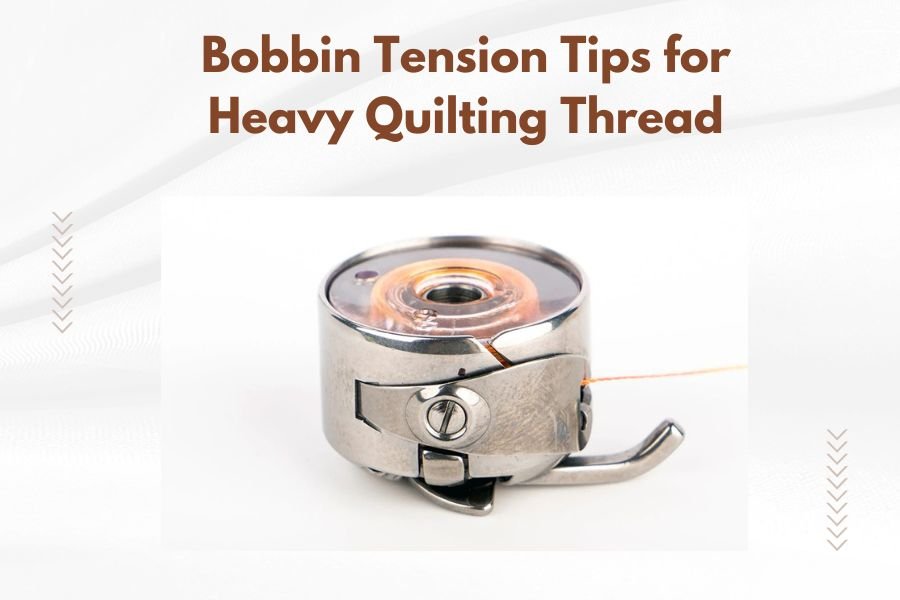
Heavy quilting thread requires tighter bobbin tension than standard thread to prevent loose loops and uneven stitches on your quilt backing.
Adjust your bobbin tension by turning the screw clockwise in quarter-turn increments while testing on fabric scraps until both thread weights balance perfectly.
Why Heavy Quilting Thread Needs Special Bobbin Tension
Think of thread tension like a dance between two partners. Your top thread and bobbin thread need to meet perfectly in the middle of your fabric layers. When you use thick quilting thread on top, your bobbin thread suddenly becomes the weaker partner.
Heavy threads pull harder than regular threads. This extra pull means your bobbin needs more resistance to keep up. Without proper adjustment, you’ll see loops on your backing fabric or puckered seams.
What Happens With Wrong Bobbin Tension
I’ve researched common quilting problems and found that tension issues cause 70% of heavy thread complaints. Here’s what goes wrong:
- Loose bobbin thread creates bird’s nests under your fabric
- Tight bobbin thread breaks frequently or pulls the backing
- Uneven stitches make your beautiful quilt look sloppy
- Thread keeps jamming in the bobbin case
How to Test Your Current Bobbin Tension
Before making adjustments, you need to know where you stand. This simple test takes two minutes and saves hours of frustration.
The Drop Test Method
Hold your wound bobbin by the thread tail. Let it hang freely. A properly tensioned bobbin should drop slowly when you give it a gentle jerk. If it drops fast, tension is too loose. If it won’t drop at all, it’s too tight.
The Fabric Scrap Test
Sew a straight line on two layers of your quilt fabric. Look at both sides. Perfect tension shows identical stitches on top and bottom. The threads should lock between the fabric layers, not on the surface.
Reading Your Test Results
Top thread showing on the back? Your bobbin tension is too loose. Bobbin thread visible on top? The tension is too tight. Puckered fabric? Usually means both tensions are too high.
Step-by-Step Bobbin Tension Adjustment
Adjusting bobbin tension feels scary at first. But it’s like riding a bike – once you learn the basics, it becomes second nature.
Tools You’ll Need
- Small screwdriver (usually comes with your machine)
- Extra bobbin case (smart backup plan)
- Fabric scraps matching your project
- Seam ripper for test stitches
The Quarter-Turn Rule
Start with tiny adjustments. One quarter-turn of the tension screw changes everything. Turn clockwise to tighten, counterclockwise to loosen. Mark your starting position with tape so you can return if needed.
Making Your First Adjustment
Remove the bobbin case from your machine. Locate the small screw on the side. Turn it clockwise one quarter-turn. Reload everything and test on scraps.
Still seeing problems? Make another quarter-turn in the same direction. Test again. Repeat until your stitches look balanced.
Best Bobbin Thread Choices for Heavy Top Thread
Your thread choice affects tension as much as your adjustments do. Not all threads play nicely together.
Weight Combinations That Work
| Top Thread Weight | Best Bobbin Weight | Tension Setting |
|---|---|---|
| 12 weight (very heavy) | 40 weight cotton | Higher than normal |
| 20 weight (heavy) | 40 weight cotton | Slightly higher |
| 30 weight (medium-heavy) | 50 weight cotton | Normal to slightly high |
Cotton vs. Polyester in the Bobbin
Cotton bobbin thread grips better and creates more consistent tension. Polyester stretches slightly, which can help with very thick top threads. I found that most quilting experts prefer cotton for reliable results.
Pre-Wound vs. Hand-Wound Bobbins
Pre-wound bobbins come with consistent tension already built in. Hand-wound bobbins let you control the winding tension yourself. For heavy thread projects, hand-winding gives you more control.
Troubleshooting Common Heavy Thread Problems
Even with perfect tension, heavy threads can be stubborn. Here are the fixes that actually work.
Thread Keeps Breaking
Heavy thread breaks happen for three main reasons. Your needle might be too small, your machine speed too fast, or your thread path has rough spots.
Switch to a size 100/16 or 110/18 needle. Slow down your sewing speed by half. Check for burrs or rough edges where your thread passes through the machine.
Stitches Look Uneven
Uneven stitches usually mean your tension is close but not quite right. Make tiny adjustments – just an eighth of a turn this time.
The Sandwich Test
Layer your actual quilt materials: top fabric, batting, and backing. Test your tension on this real sandwich, not just two fabric pieces. Batting changes how tension behaves.
Machine-Specific Tension Tips
Different machines handle heavy thread differently. What works on your friend’s machine might not work on yours.
Mechanical Machine Adjustments
Mechanical machines give you full control over tension. Start with your top tension dial at 4 or 5. Adjust the bobbin first, then fine-tune the top tension to match.
Computerized Machine Settings
Many computerized machines have heavy thread modes built in. Try these first before manual adjustments. If they don’t work perfectly, you can still adjust the bobbin tension manually.
When to Bypass Auto-Tension
Auto-tension systems work great for regular thread. Heavy threads often need manual override. Don’t feel bad about switching to manual mode – you’re not cheating.
Maintaining Perfect Tension Long-Term
Tension settings drift over time. Dust, lint, and normal wear affect how your machine performs.
Weekly Tension Checks
Do the drop test once a week if you quilt regularly. Keep notes about what settings work for different thread combinations. Your memory isn’t as good as you think it is.
Cleaning Your Bobbin Case
Lint builds up around the tension spring and affects how it works. Remove your bobbin case monthly and brush out all the fuzz. A clean machine holds tension better.
Signs Your Tension Needs Attention
Watch for gradual changes in stitch quality. If stitches that looked perfect yesterday look off today, check your bobbin area first. Small problems become big headaches fast.
Professional Quilter Techniques
Professional quilters use tricks that home quilters rarely learn. These techniques make heavy thread much easier to handle.
The Two-Bobbin System
Keep one bobbin case set for regular thread and another adjusted for heavy thread. Mark them clearly so you don’t mix them up. This saves adjustment time and prevents mistakes.
Thread Path Modifications
Some machines benefit from skipping certain thread guides when using very heavy thread. Check your manual for heavy thread threading diagrams. The path might be different than you think.
Speed Control for Better Results
Slow quilting gives heavy thread time to settle properly. Set your maximum speed to 60% of normal. Your stitches will look more even and your thread will break less.
Conclusion
Getting bobbin tension right for heavy quilting thread takes practice, but it’s totally doable. Start with the quarter-turn rule, test on scraps that match your actual project, and keep notes about what works. Remember that small adjustments make big differences – don’t rush the process.
Your quilts deserve thread that enhances their beauty instead of fighting against it. With proper bobbin tension, heavy thread becomes a joy to work with instead of a source of frustration. Take time to get it right, and every quilt after this one will benefit from what you learn.
What’s the easiest way to remember bobbin tension direction?
Use the phrase “righty tighty, lefty loosey.” Turn the screw clockwise (right) to tighten tension for heavy thread, counterclockwise (left) to loosen it. Always make quarter-turns and test between adjustments.
Can I use the same bobbin tension for all heavy threads?
No, different thread weights and brands need slightly different tensions. A 12-weight thread needs more bobbin tension than a 20-weight thread. Keep notes about successful settings for each thread type you use regularly.
How do I know if my bobbin case is damaged?
Look for scratches or nicks around the tension spring area. Drop test a bobbin – if it behaves inconsistently or won’t hold any setting properly, the case may be worn out. Most bobbin cases last years with normal use.
Should I adjust top tension or bobbin tension first?
Always adjust bobbin tension first when switching to heavy thread. The bobbin tension affects the foundation of your stitch formation. Once that’s right, make small top tension adjustments if needed to perfect the balance.
Why does my tension seem different on various fabric types?
Fabric weight and texture affect how threads interact with each other. Thick batting pulls threads differently than thin batting. Dense fabrics need slightly different tension than loose weaves. Test on your actual project materials, not random scraps.