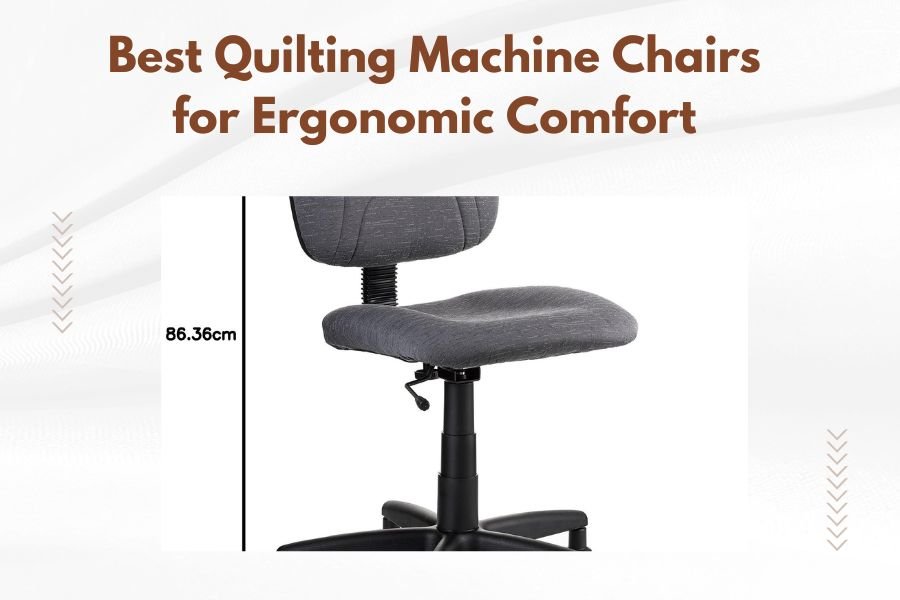
The best quilting machine chairs for ergonomic comfort include adjustable-height task chairs with lumbar support, saddle-style sewing chairs, and pneumatic rolling chairs designed for crafting.
Your chair choice directly affects your posture, comfort, and quilting quality during long sewing sessions.
Why Your Chair Matters More Than You Think
You might think any chair works for quilting. But after hours bent over your machine, your back tells a different story. The wrong chair leads to neck pain, shoulder tension, and lower back aches.
I found that quilters often focus on expensive machines but ignore their seating. That’s like buying a sports car and sitting on a wooden stool to drive it.
The Hidden Cost of Poor Seating
Bad chairs create problems you might not connect to your seating choice. Your stitches become uneven when you’re uncomfortable. You take more breaks, slowing your progress.
Research shows that proper ergonomic seating reduces fatigue by up to 40% during detailed tasks. For quilters, this means longer, more productive sessions.
Essential Features in Quilting Chairs
Not every chair works for quilting. You need specific features that support your unique working position and movements.
Height Adjustability
Your quilting machine sits at a fixed height. You need to adjust your chair to match, not the other way around. Pneumatic height adjustment gives you the flexibility to find your perfect position.
The right height lets your elbows bend at 90 degrees when your hands rest on the machine. This prevents shoulder strain and arm fatigue.
Back Support That Actually Supports
Lumbar support isn’t just a fancy feature. It maintains your spine’s natural curve during long quilting sessions. Look for adjustable lumbar support that you can move up, down, and in or out.
Some quilters prefer minimal back support for freedom of movement. Others need full back contact. Know which type you are before buying.
Seat Depth and Width
Your seat should support your thighs without hitting the back of your knees. Too deep, and you can’t use the backrest. Too shallow, and your legs hang uncomfortably.
Width matters too. You should sit comfortably without feeling squeezed or lost in the chair.
Top Chair Types for Quilters
I researched various chair styles and found three main categories that work well for quilting.
Adjustable Task Chairs
These office-style chairs offer the most features. You get height adjustment, lumbar support, and armrest options. They roll easily, letting you move between your cutting table and machine.
The downside? Armrests can hit your sewing table. Look for chairs with removable or flip-up arms.
Best Features to Look For
- Pneumatic height adjustment
- Adjustable lumbar support
- Removable or adjustable armrests
- Smooth-rolling casters
- Breathable fabric or mesh back
Saddle-Style Sewing Chairs
These chairs look different but work wonderfully for quilting. The saddle seat tilts your pelvis forward, naturally aligning your spine. You sit higher, improving your view of your work.
Many quilters love the active sitting position. It engages your core muscles and reduces pressure on your tailbone.
Who Should Consider Saddle Chairs
Saddle chairs work well if you move around a lot while quilting. They’re perfect for quilters who frequently lean forward to guide fabric or check seams.
They’re not ideal if you prefer traditional sitting or have hip mobility issues.
Specialized Sewing Chairs
Companies make chairs specifically for sewers and quilters. These often have features like built-in storage, adjustable footrests, and wide seats for comfort.
The trade-off is usually higher cost and fewer adjustment options compared to office chairs.
Setting Up Your Chair Correctly
Even the best chair won’t help if you set it up wrong. Proper adjustment makes a huge difference in your comfort and health.
Height Adjustment Step by Step
Start by adjusting your chair height. Sit with your feet flat on the floor. Your knees should bend at about 90 degrees. If your feet don’t reach the floor comfortably, use a footrest.
Next, check your arm position at your quilting machine. Your elbows should bend at 90 degrees or slightly more when your hands rest on the machine bed.
Back Support Positioning
Adjust your lumbar support to fit the curve of your lower back. It should feel supportive but not pushy. You should be able to sit back comfortably without feeling forced into an unnatural position.
If your chair has a tilt function, a slight backward tilt often feels more comfortable than sitting straight upright.
Common Setup Mistakes
- Setting the chair too high or too low
- Ignoring lumbar support adjustment
- Keeping armrests that interfere with sewing
- Using a footrest when your feet reach the floor
Budget Considerations
Good quilting chairs range from $100 to $800. You don’t need the most expensive option, but extremely cheap chairs often lack durability and adjustability.
What You Get at Different Price Points
| Price Range | Features | Best For |
|---|---|---|
| $100-200 | Basic height adjustment, simple lumbar support | Occasional quilters |
| $200-400 | Multiple adjustments, better build quality | Regular quilters |
| $400-800 | Premium materials, extensive adjustability | Daily quilters, professionals |
When to Invest More
Spend more if you quilt several hours daily. Your health is worth the investment. Also consider higher-end chairs if you’re tall, short, or have specific back issues.
Don’t overspend on features you won’t use. Some chairs have 15 adjustment points, but you might only need five.
Alternatives to Traditional Chairs
Some quilters find creative solutions beyond standard chairs.
Exercise Ball Chairs
These combine an exercise ball with a chair frame. They promote active sitting and core engagement. Some quilters love the movement; others find them distracting.
Try before you buy. Exercise balls aren’t for everyone, especially during detailed work.
Standing Desk Converters
Some quilters alternate between sitting and standing. Adjustable-height tables or desk converters let you change positions throughout the day.
This works well for cutting and pressing. It’s harder for detailed machine quilting.
Maintaining Your Investment
A good chair lasts years with proper care. Clean fabric chairs regularly with upholstery cleaner. Wipe down vinyl and leather with appropriate cleaners.
When to Replace Key Components
Gas cylinders eventually lose pressure. Most can be replaced for $30-50. Casters wear out, especially on carpeted floors. Replace them when they stop rolling smoothly.
If your lumbar support breaks or stops adjusting, check if replacement parts are available before buying a new chair.
Special Considerations for Different Body Types
One size doesn’t fit all when it comes to quilting chairs.
For Taller Quilters
Look for chairs with extended height ranges and taller backs. Your feet should still reach the floor at the lowest comfortable setting.
For Shorter Quilters
Petite or small-frame chairs often work better than standard sizes. They provide proper support without excess bulk. A good footrest is often necessary.
For Plus-Size Quilters
Check weight ratings carefully. Look for chairs rated at least 50 pounds over your weight. Wider seats and sturdy construction are important for comfort and durability.
Conclusion
Your quilting chair affects every aspect of your craft. The right chair reduces fatigue, improves your posture, and lets you focus on creating beautiful quilts instead of managing discomfort.
Don’t settle for whatever chair you have lying around. Invest in proper seating that matches your quilting frequency, body type, and workspace setup. Your back, neck, and quilting quality will thank you.
Start with the essential features: height adjustability, lumbar support, and the right seat size. From there, add features that match your specific needs and budget. Remember, the best chair is the one that keeps you comfortable through your longest quilting sessions.
What’s the ideal height for a quilting chair?
Your quilting chair height is correct when your elbows bend at 90 degrees while your hands rest on your machine bed, and your feet sit flat on the floor with your knees at roughly 90 degrees.
Do I really need lumbar support for quilting?
Yes, lumbar support helps maintain your spine’s natural curve during long quilting sessions, reducing lower back pain and fatigue that commonly affect quilters who sit for hours.
Are expensive quilting chairs worth the cost?
Higher-priced chairs typically offer better adjustability, durability, and comfort features, making them worthwhile if you quilt daily or for several hours at a time.
Can I use a regular office chair for quilting?
Yes, many office chairs work well for quilting, especially task chairs with adjustable height and removable armrests that won’t interfere with your sewing table.
How do I know if my current chair is causing quilting problems?
Signs include back or neck pain after quilting, uneven stitching due to uncomfortable positioning, frequent breaks due to discomfort, or difficulty maintaining good posture while sewing.