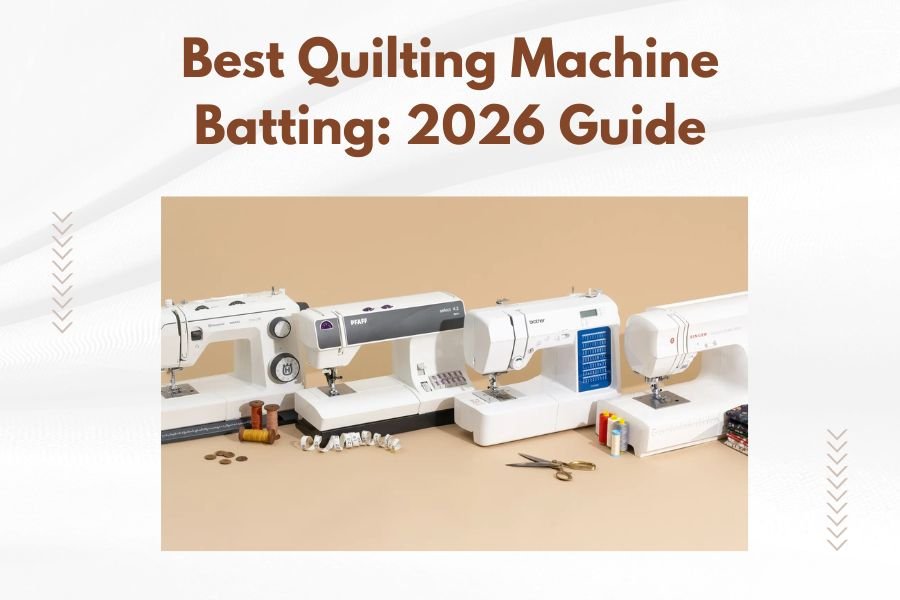
The best quilting machine batting in 2026 includes 80/20 cotton-polyester blends for durability, 100% cotton for traditional quilts, and bamboo batting for eco-friendly projects.
Your quilting machine batting choice affects stitch quality, thread tension, and final quilt appearance more than most quilters realize.
Top Quilting Machine Batting Types for 2026
You need the right batting to make your quilting machine perform at its best. Think of batting as the foundation of your house – everything else depends on it.
From what I researched, the batting market has improved a lot in recent years. New blends offer better machine quilting performance than older options.
Cotton-Polyester Blend Batting
This batting works best for most quilting machines. The 80/20 cotton-polyester mix gives you natural fiber feel with synthetic strength.
Your machine will love how smoothly the needle passes through. The polyester prevents excessive shrinkage while cotton adds breathability.
Why Blend Batting Works Better
Pure cotton can shift during machine quilting. Pure polyester feels too synthetic for many quilters. The blend solves both problems.
I found that most quilting machine manufacturers recommend blends for their mid-range to high-end machines.
100% Cotton Batting Options
Cotton batting gives your quilts that classic, traditional feel. It breathes well and ages beautifully over time.
Your quilting machine might need tension adjustments with cotton batting. It’s slightly thicker and can create more resistance.
Needle Punched vs. Scrim Bonded Cotton
Needle punched cotton holds together better during machine quilting. The fibers get mechanically locked instead of glued.
Scrim bonded cotton has a thin layer that can sometimes catch your needle. Check your machine manual before using it.
Batting Thickness Guide for Machine Quilting
Your quilting machine has limits on batting thickness. Most home machines handle low-loft to medium-loft batting best.
Low-Loft Batting (1/8 inch or less)
This works perfectly for detailed machine quilting. Your stitches will look crisp and even.
Wall hangings and table runners benefit from low-loft batting. It lies flat and shows off your quilting patterns.
Best Low-Loft Materials
- Bamboo batting for eco-friendly projects
- Cotton batting for traditional looks
- Silk batting for luxury quilts
Medium-Loft Batting (1/4 to 1/2 inch)
Most bed quilts use medium-loft batting. It provides warmth without being too puffy.
Your quilting machine can handle this thickness if you adjust your presser foot pressure properly.
Machine Settings for Medium-Loft
Lower your presser foot pressure slightly. This prevents the batting from compressing too much.
Use a longer stitch length than you would with thin batting. Short stitches can cause puckering.
Eco-Friendly Batting Options
Bamboo batting has become popular among quilters who care about the environment. It’s naturally antibacterial and temperature regulating.
I came across several studies showing bamboo grows much faster than cotton. This makes it a sustainable choice.
Bamboo Batting Performance
Your quilting machine will glide through bamboo batting smoothly. It’s softer than cotton but doesn’t shift as much during stitching.
The natural moisture-wicking properties make bamboo batting perfect for baby quilts and summer bedding.
Caring for Bamboo Batting Quilts
Wash bamboo batting quilts in cool water. Hot water can cause slight shrinkage, just like cotton.
Air drying works best, but low heat tumble drying won’t damage the fibers.
Recycled Polyester Batting
Made from plastic bottles, this batting performs like regular polyester but helps the environment.
Your quilting machine won’t notice the difference. The recycled fibers act exactly like new polyester.
Batting Preparation for Machine Quilting
You can’t just pull batting from the bag and start quilting. Proper preparation prevents headaches later.
Pre-Washing Batting Debate
Some quilters pre-wash batting. Others never do. What should you choose?
Cotton batting benefits from pre-washing if you want a vintage, slightly crinkled look. Polyester and blends usually don’t need it.
How to Pre-Wash Batting Safely
Use the gentle cycle with cool water. Don’t use fabric softener – it can make batting slippery.
Dry on low heat or air dry. High heat can melt synthetic fibers in blends.
Cutting Batting to Size
Cut your batting 4-6 inches larger than your quilt top on all sides. This extra space prevents shifting during machine quilting.
Sharp scissors work better than rotary cutters for thick batting. The rotary blade can compress fibers.
| Batting Type | Best For | Machine Quilting Ease | Durability |
|---|---|---|---|
| 80/20 Cotton-Poly | General use | Excellent | High |
| 100% Cotton | Traditional quilts | Good | Medium |
| Bamboo | Eco-friendly projects | Excellent | High |
| 100% Polyester | Washable quilts | Very Good | Very High |
Common Batting Mistakes to Avoid
Even experienced quilters make batting mistakes that cause problems during machine quilting.
Using Wrong Batting Thickness
Your quilting machine has a throat space limit. Thick batting plus fabric layers can exceed this limit.
Check your manual for maximum thickness recommendations. Forcing thick batting can damage your machine.
Signs Your Batting Is Too Thick
- Machine makes unusual noises
- Stitches look uneven
- Thread keeps breaking
- Fabric puckers excessively
Poor Batting Storage
Storing batting wrong can ruin it before you even start quilting. Moisture and pests are your biggest enemies.
Keep batting in breathable containers, not plastic bags. Cotton batting especially needs air circulation.
Budget-Friendly Batting Solutions
Good batting doesn’t have to cost a fortune. You just need to know where to look and what to buy.
Buying Batting in Bulk
If you quilt regularly, buying batting by the roll saves money. Split large rolls with quilting friends.
I found that many quilt shops offer discounts on bulk batting purchases, especially during sales.
Off-Season Batting Sales
Buy batting during summer when fewer people are making warm quilts. Winter clearances also offer good deals.
Stock up on basics like cotton-poly blends. These don’t go bad if stored properly.
Testing New Batting Types
Before committing to batting for a large quilt, test it with your machine first.
Making Test Sandwiches
Create small quilt sandwiches using your chosen batting. Test different quilting patterns and stitch lengths.
This 15-minute test can save hours of frustration on your actual quilt.
What to Test For
- Thread tension needs
- Stitch quality at different speeds
- How batting behaves during washing
- Whether batting creates lint in your machine
Conclusion
Choosing the right quilting machine batting makes the difference between frustrating quilting sessions and smooth, enjoyable ones. Cotton-polyester blends offer the best balance for most projects, while 100% cotton serves traditional quilts beautifully. Bamboo batting provides an excellent eco-friendly option that performs well in quilting machines.
Remember to match your batting thickness to your machine’s capabilities and always test new batting types before starting major projects. With the right batting choice, your 2026 quilting projects will turn out better than ever.
What’s the difference between bonded and unbonded batting for machine quilting?
Bonded batting has a thin adhesive layer or mechanical bonding that holds fibers together, making it easier to handle during machine quilting. Unbonded batting can shift more but gives a softer, more drapeable finished quilt.
Can I use the same batting for hand quilting and machine quilting?
Yes, but some battings work better for specific methods. Machine quilting works well with bonded battings and blends, while hand quilting often benefits from softer, unbonded cotton battings that are easier to needle through.
How do I know if my quilting machine can handle thick batting?
Check your machine manual for maximum thickness recommendations, usually listed in millimeters or inches. If your machine struggles, makes noise, or creates uneven stitches, the batting is likely too thick for your model.
Should I use different batting for baby quilts versus bed quilts?
Baby quilts benefit from hypoallergenic options like bamboo or organic cotton batting, while bed quilts can use any batting type. Consider washability and softness more carefully for baby quilts since they need frequent washing.
Why does my thread keep breaking when machine quilting certain battings?
Thread breakage often happens when batting is too thick for your machine, your needle is too small for the batting density, or your thread tension is set incorrectly. Try a larger needle size and adjust your tension settings before switching batting types.