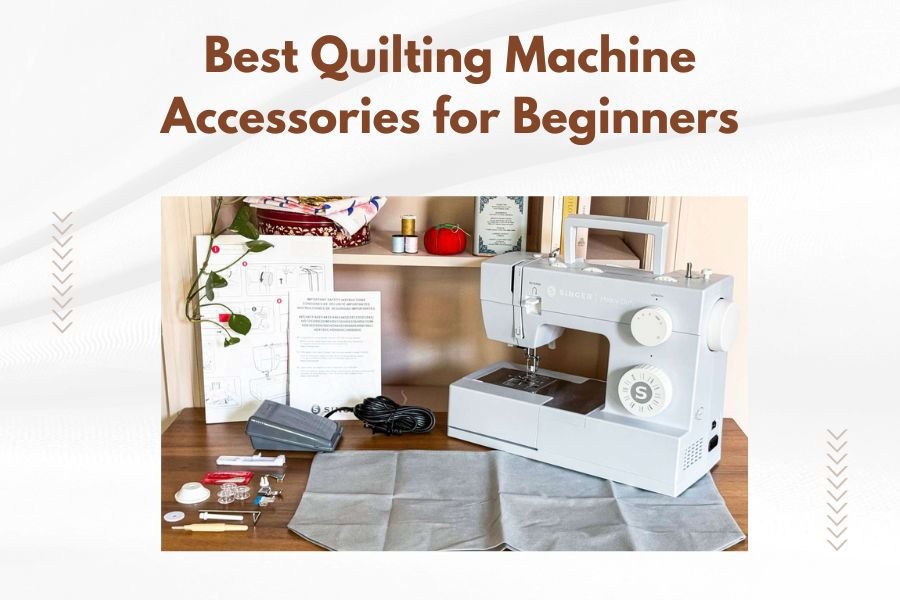
The best quilting machine accessories for beginners include a walking foot, quilting extension table, and rotary cutter with cutting mat.
These essential quilting machine accessories help new quilters achieve professional results while making the learning process easier and more enjoyable.
Essential Feet for Your Quilting Machine
Your quilting machine needs the right feet to handle different tasks. Think of them as specialized shoes for different activities.
Walking Foot
A walking foot is your best friend when quilting layers together. It feeds the top and bottom fabric at the same rate.
This prevents puckering and shifting that frustrates many new quilters. You’ll wonder how you ever quilted without one.
When to Use a Walking Foot
Use your walking foot for straight-line quilting and binding attachment. It works great for quilting in the ditch too.
Many quilting experts recommend starting with a walking foot before trying free-motion quilting techniques.
Quarter Inch Foot
Accurate seam allowances make or break your quilt blocks. A quarter-inch foot takes the guesswork out of this step.
This foot has a guide that keeps your fabric edge perfectly aligned. Your blocks will fit together like puzzle pieces.
Why Accuracy Matters
Even small measurement errors add up across a whole quilt. A quarter-inch foot prevents these problems from the start.
I found that beginners who use this foot right away develop better habits faster.
Cutting and Measuring Tools
Good cutting tools make prep work faster and more accurate. Poor cuts lead to frustrating sewing sessions.
Rotary Cutter and Mat
A sharp rotary cutter slices through multiple fabric layers like butter. Pair it with a self-healing cutting mat for best results.
Choose a 45mm rotary cutter for most quilting tasks. The blade size handles curves and straight cuts equally well.
Safety Tips for Rotary Cutters
Always close the blade guard after each cut. These tools are razor-sharp and can cause serious injuries.
Replace dull blades immediately. They require more pressure and can slip unexpectedly.
Quilting Rulers
Clear acrylic rulers help you measure and cut accurately. Get a 6″ x 24″ ruler to start.
Look for rulers with clear markings every quarter inch. Some have non-slip grips on the bottom.
Workspace Enhancement Accessories
Your workspace setup affects your quilting enjoyment and results. Small improvements make big differences.
Extension Table
An extension table gives you more surface area around your machine. Large quilts won’t drag and pull while you sew.
Many quilters say this accessory transformed their experience completely. It reduces fatigue and improves stitch quality.
Choosing the Right Size
Measure your space before buying an extension table. You need room to move around comfortably while quilting.
Most tables adjust to match your machine’s height exactly. This creates one smooth work surface.
Good Lighting
Poor lighting strains your eyes and makes color matching difficult. Add a bright LED lamp to your quilting area.
Position lighting to eliminate shadows on your work. You should see fabric colors accurately.
Thread and Needle Essentials
The right thread and needles prevent many common beginner problems. Quality materials make quilting more pleasant.
Thread Types for Beginners
Start with cotton thread for piecing quilt blocks. It’s forgiving and works well with cotton fabrics.
Polyester thread works great for quilting the layers together. It’s stronger and has slight stretch.
| Thread Type | Best Use | Beginner Friendly |
|---|---|---|
| Cotton | Piecing blocks | Yes |
| Polyester | Machine quilting | Yes |
| Variegated | Decorative quilting | Maybe |
Thread Weight Explained
Thread weight numbers seem backwards at first. Higher numbers mean thinner thread.
Use 50-weight thread for most quilting tasks. It’s strong enough but won’t add bulk to seams.
Machine Needles
Universal needles work for most cotton fabrics. Size 80/12 handles medium-weight quilting cottons perfectly.
Change needles after every project or 8 hours of sewing. Dull needles cause skipped stitches and thread breaks.
Organization and Storage
Staying organized saves time and reduces frustration. You’ll spend more time quilting and less time searching.
Thread Storage
Keep threads organized by color or project. Thread racks or boxes with compartments work well.
Store thread away from direct sunlight. UV rays can weaken fibers over time.
Portable Thread Solutions
Small thread organizers let you take projects anywhere. Look for cases with secure closures.
Some quilters use tackle boxes or craft organizers. The key is keeping threads from tangling.
Pattern and Template Storage
File folders or binders keep patterns flat and organized. Sheet protectors prevent wear and tears.
Label everything clearly. You’ll thank yourself when looking for that perfect pattern months later.
Budget-Friendly Options
You don’t need every accessory right away. Start with basics and add tools as your skills grow.
Must-Have vs Nice-to-Have
Focus your budget on cutting tools, basic feet, and good thread first. These affect every project you make.
Specialty rulers and decorative threads can wait until you’re more experienced.
- Must-have: Rotary cutter, mat, quarter-inch foot
- Nice-to-have: Extension table, specialty rulers
- Can wait: Decorative threads, multiple cutting tools
Finding Deals
Many quilting stores offer beginner packages with discounted accessories. These bundles often save money.
Online retailers frequently have sales on quilting tools. Sign up for newsletters to catch good deals.
Maintenance and Care
Taking care of your accessories extends their life and maintains performance. A little attention goes a long way.
Cleaning Your Tools
Wipe cutting mats clean after each use. Fabric fibers and lint build up over time.
Oil your rotary cutters occasionally. This keeps the blade turning smoothly.
When to Replace Items
Replace rotary blades when they skip or require extra pressure. Sharp blades are safer blades.
Cutting mats last years with proper care. Replace them when deep cuts don’t heal properly.
Conclusion
Starting your quilting journey with the right accessories sets you up for success and enjoyment. A walking foot, quarter-inch foot, rotary cutter with mat, and good lighting form your essential foundation.
Build your collection gradually based on your actual needs and interests. Quality tools that you use regularly beat expensive gadgets that collect dust. Most quilters find that these basic accessories serve them well for years, making every project more enjoyable and successful.
What’s the most important quilting accessory for absolute beginners?
A rotary cutter with cutting mat is the most game-changing accessory for new quilters. It makes cutting fabric faster, more accurate, and less tedious than scissors, which directly improves your finished quilt quality.
Can I use regular sewing machine feet for quilting?
While regular feet work for basic piecing, a walking foot makes quilting layers much easier and prevents puckering. The investment pays off quickly in better results and less frustration during the quilting process.
How much should I budget for beginner quilting accessories?
Plan to spend $100-150 on essential accessories including rotary cutter, mat, rulers, walking foot, and quarter-inch foot. This covers everything needed to start quilting successfully without breaking the bank.
Do I need an extension table right away?
An extension table isn’t essential for small projects, but becomes helpful when making lap-sized or larger quilts. Start without one and add it later when you’re ready for bigger projects or notice your quilts dragging.
What thread weight should beginners use?
Stick with 50-weight cotton thread for piecing and 40-weight polyester for quilting. These weights are forgiving, widely available, and work well with most fabrics and techniques that beginners typically use.