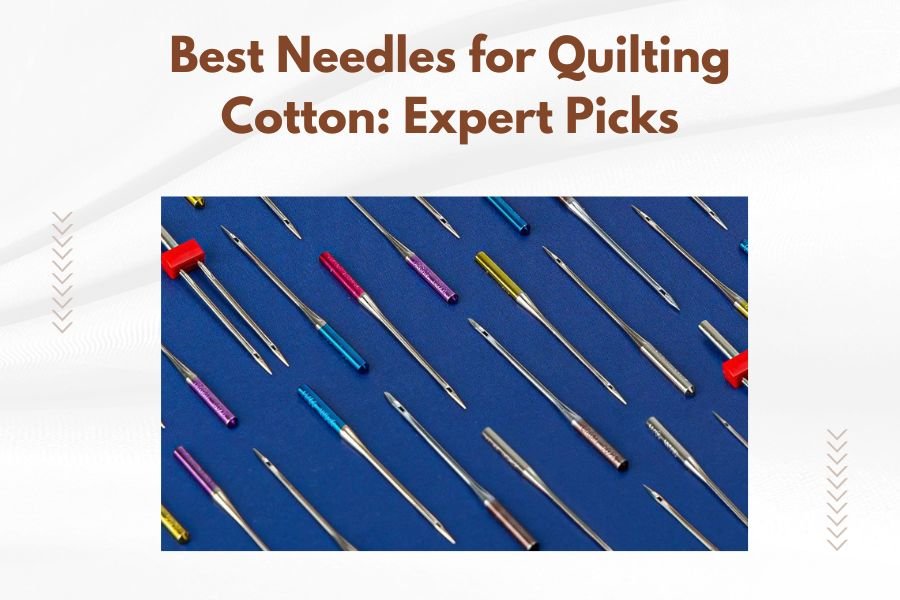
The best needles for quilting cotton are Universal needles size 80/12 for most projects, with Microtex Sharp needles size 70/10 for precision work and size 90/14 for thicker cotton fabrics.
Your needle choice affects stitch quality, thread tension, and how smoothly your quilting cotton feeds through your machine, making the right selection key for professional-looking results.
Quick Guide to Cotton Quilting Needles
You need different needles for different cotton weights and quilting techniques. Think of needles like shoes – you wouldn’t wear hiking boots to a wedding, right?
Most quilters keep three main types on hand. Universal needles handle everyday cotton piecing. Sharp needles give you clean lines through tightly woven cotton. Quilting needles work best for the actual quilting process.
Universal Needles: Your Go-To Choice
Universal needles size 80/12 work for about 80% of your cotton quilting projects. The slightly rounded point slides through cotton fibers without causing runs or pulls.
These needles have a medium ball point that works well with most cotton weights. You can piece blocks, sew borders, and do basic construction with confidence.
When to Use Universal Needles
- Quilting cotton fabrics (standard weight)
- Piecing quilt blocks together
- Sewing binding to quilt edges
- Basic construction and seaming
Microtex Sharp Needles: For Precision Work
Microtex Sharp needles have a very fine, sharp point that creates perfect entry holes. Research shows these needles reduce skipped stitches when working with tightly woven cotton fabrics.
The sharp point cuts through fibers cleanly instead of pushing them aside. This gives you straighter seams and better stitch formation.
Best Uses for Sharp Needles
- Topstitching and edgestitching
- Applique work on cotton
- Precision piecing with small pieces
- Working with high thread count cotton
Needle Size Chart for Cotton Quilting
Choosing the right size matters as much as needle type. Too small and your needle might bend or break. Too large and you’ll leave visible holes in your fabric.
| Cotton Weight | Needle Type | Size Range | Best For |
|---|---|---|---|
| Lightweight cotton | Universal | 70/10 – 75/11 | Voile, lawn, thin batiks |
| Standard quilting cotton | Universal | 80/12 | Most quilting fabrics |
| Heavy cotton | Universal | 90/14 | Canvas, denim, thick cotton |
| Precision work | Microtex Sharp | 70/10 – 80/12 | Applique, topstitching |
Understanding Needle Size Numbers
Needle packages show two numbers, like 80/12. The first number is European sizing, the second is American. Both tell you the same thing – needle thickness.
Smaller numbers mean thinner needles. Larger numbers mean thicker needles. Simple, right?
Quilting Needles vs Regular Needles
Quilting needles have a special tapered design that helps them glide through multiple layers. The point is slightly more rounded than sharp needles but not as much as universal needles.
These needles work best when you’re actually quilting – sewing through the quilt top, batting, and backing all at once.
Features of Quilting Needles
- Tapered point reduces drag through layers
- Stronger shaft resists bending
- Larger eye accommodates quilting thread
- Special coating reduces heat buildup
When to Switch to Quilting Needles
You should switch from Universal to Quilting needles when you start the actual quilting process. This means after you’ve made your quilt sandwich and you’re ready to stitch through all layers.
Many quilters forget this step and wonder why their machine struggles with thick areas or creates uneven stitches.
Thread and Needle Combinations
Your thread choice affects which needle works best. Cotton thread pairs well with most needle types, but specialty threads need specific needles.
I found that many quilting problems come from mismatched thread and needle combinations. Getting this right saves hours of frustration.
Cotton Thread Guidelines
50-weight cotton thread works with size 80/12 Universal needles for most projects. This combination gives you strong seams without visible holes.
40-weight cotton thread needs size 90/14 needles because the thread is thicker. Using too small a needle causes thread shredding and tension problems.
Specialty Thread Considerations
- Metallic thread: Use Metallic needles with larger eyes
- Rayon thread: Sharp needles prevent snags
- Heavy cotton thread: Size 90/14 or 100/16 needles
- Invisible thread: Size 70/10 needles work best
Signs You Need a New Needle
Needles don’t last forever. A dull or damaged needle creates more problems than you might realize.
Watch for these warning signs during your quilting sessions.
Visual Signs of Needle Problems
Look at your needle under good light. A sharp needle should have a clean, straight point. Any bends, chips, or rounded edges mean it’s time to change.
Burrs on the needle shaft can snag your thread and cotton fabric. Even tiny imperfections cause big stitching problems.
Performance Signs
- Skipped stitches in your quilting
- Thread keeps breaking or shredding
- Fabric puckering along seam lines
- Unusual noise from your sewing machine
- Visible holes in your cotton fabric
How Often to Change Needles
Change your needle after 8-10 hours of sewing time. Some quilters change needles with every new project, which isn’t a bad habit.
Cotton fabrics are easier on needles than synthetic materials, but batting and multiple layers cause wear.
Common Needle Mistakes
Even experienced quilters make needle selection errors. These mistakes cause poor stitch quality and can damage your cotton fabrics.
Using the Wrong Size
Too large a needle leaves permanent holes in fine cotton. Too small a needle causes thread breakage and skipped stitches.
When in doubt, start with a smaller needle and size up if needed. It’s easier to go bigger than to fix visible holes.
Ignoring Fabric Changes
Switch needle sizes when your cotton fabric changes weight. Moving from lightweight cotton to heavy cotton without changing needles causes problems.
Keep different needle sizes handy during quilting sessions. Quick changes save time and improve results.
Mixing Needle Types
Don’t use Sharp needles for heavy cotton or Universal needles for precision work. Each needle type has its strengths.
I found online that many quilting frustrations disappear when quilters match needle type to their specific task.
Storage and Organization Tips
Keep your quilting needles organized and easily accessible. Good storage prevents bent needles and helps you grab the right type quickly.
Best Storage Methods
Magnetic needle cases keep needles secure and visible. Label each section with needle type and size for quick identification.
Original packaging works well too. Cut the top off needle packages and store them in a small box or drawer organizer.
Essential Needle Inventory
- Universal 80/12 (main workhorse)
- Universal 70/10 (lightweight cotton)
- Universal 90/14 (heavy cotton)
- Microtex Sharp 80/12 (precision work)
- Quilting 90/14 (quilting process)
Budget-Friendly Options
You don’t need expensive needles for good results. Quality brand names like Schmetz and Organ offer reliable performance at reasonable prices.
Buy needle variety packs when starting out. These give you different sizes and types to experiment with.
When to Invest More
Specialty needles cost more but solve specific problems. If you do lots of applique work, invest in high-quality Sharp needles.
Professional quilters often prefer premium needles for important projects. The extra cost pays off in better results and fewer problems.
Conclusion
Choosing the right needles for quilting cotton doesn’t have to be complicated. Start with Universal 80/12 needles for most projects, keep Sharp needles handy for precision work, and switch to Quilting needles for the final quilting process.
Remember to match needle size to your cotton fabric weight and change needles regularly. These simple steps will improve your stitch quality and make quilting more enjoyable.
Keep a variety of needle types and sizes in your sewing space. When you have the right tools ready, you can focus on creating beautiful quilts instead of fighting with equipment problems.
What happens if I use the wrong needle size for my cotton fabric?
Using too large a needle creates visible holes in your cotton that won’t close up, especially with fine fabrics. Too small a needle causes thread breakage, skipped stitches, and can bend or break from the strain of pushing through fabric.
How do I know when my quilting needle is too dull to use?
Listen for unusual popping or punching sounds when the needle enters your cotton fabric. Dull needles also cause puckering, uneven stitches, and may leave pulled threads or small tears in your fabric surface.
Can I use regular sewing needles for quilting cotton projects?
Regular sewing needles work fine for piecing cotton blocks together, but quilting needles perform better when sewing through multiple layers during the actual quilting process. Quilting needles have a tapered point and stronger shaft designed for thick layers.
Should I change needle types between different quilting steps?
Yes, many quilters switch from Universal needles during piecing to Quilting needles for the quilting process, then back to Sharp needles for binding or detail work. Each needle type excels at different tasks.
Do expensive needles really make a difference for cotton quilting?
Quality needles from reputable brands last longer and maintain their sharpness better than cheap alternatives. While you don’t need the most expensive options, investing in mid-range needles from known manufacturers typically improves your quilting experience and results.