Are More Built-In Stitches Better in a Sewing Machine?
More built-in stitches are better only when they match projects you plan to sew. A useful set of straight, zigzag, stretch, blind hem and decorative options can matter more than a large count you rarely use.
On this page (7 sections)
- Are more built-in stitches better in machines?
- Which stitches are useful for quilting and everyday sewing?
- How should you compare stitch count with stitch quality?
- Do built-in stitches replace free-motion quilting?
- What should you check before choosing a stitch count?
- Three machines and one accessory to consider
- When is a higher stitch count worth choosing?
More built-in stitches are useful when they include options you'll use for your quilts, garments or mending. A higher count alone doesn't tell you whether the machine has the stitch you need or whether you'll reach for it.
Start with your project list. If you mainly piece quilt tops, a dependable straight stitch may matter more than a long menu of decorative patterns.
Are more built-in stitches better in machines?
More stitches help when they add functions your projects require. A machine with fewer stitches can suit you well if its core options cover the work you do.
For quilting, focus on how the machine handles straight stitching and whether its available stitches fit the tasks around the quilt, such as piecing, appliqué or finishing edges. For general sewing, consider stretch stitches for knits, zigzag for edges and a blind hem option if you shorten garments.
Decorative stitches can be useful for visible accents, but they are optional for many projects. Check the named stitch types rather than assuming that a large count means more practical choices.
If you’re comparing a wider set of machine features, see How to Choose the Best Quilting Machine for Your Needs. It can help you weigh stitch options alongside the other features your projects call for.
Which stitches are useful for quilting and everyday sewing?
Straight, zigzag, stretch and blind hem stitches cover several common tasks. Decorative stitches add choices for visible detail, while an automatic buttonhole can help if you sew garments.
A basic quilting plan may call for straight stitches for piecing and quilting, plus zigzag or another edge stitch for finishing raw edges. Some projects may use decorative stitches for appliqué or surface detail, but the exact need depends on your pattern and fabric.
| Stitch type | Where it may help |
|---|---|
| Straight | Piecing quilt blocks and sewing seams |
| Zigzag | Finishing edges or stitching around shapes |
| Stretch | Sewing seams in stretchy fabric |
| Blind hem | Shortening garments with a less visible hem |
| Decorative | Adding visible accents |
| Buttonhole | Making buttonholes for garments or home projects |
Names and options vary between machines, so confirm the stitches you want are included. Also look at how you select them: if you expect to switch often, controls that are easy for you to understand may matter more than extra patterns.
How should you compare stitch count with stitch quality?
Treat stitch count as a list of options, not a measure of precision. Compare the machine’s stated stitch types and the details relevant to your project.
For quilting, you may want to check straight-stitch settings, needle position options, feed control and the machine’s ability to accommodate your quilt setup. Those features answer different questions from how many built-in patterns it has.
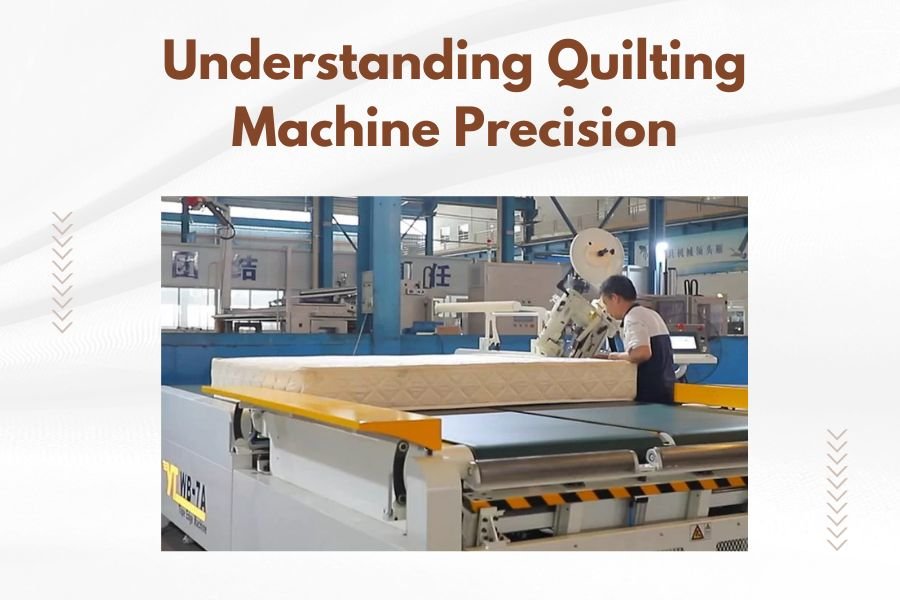
The stitch count does not tell you how smoothly a machine sews your chosen fabric or how consistent a stitch will be in your setup. Our guide to Understanding Quilting Machine Precision explains what precision refers to when comparing machines.
If you want a decorative path that changes direction as it sews, compare the options in best serpentine stitch sewing machine. A named stitch is more useful to compare than an overall count when you have a specific pattern in mind.
Do built-in stitches replace free-motion quilting?
No, built-in stitches and free-motion quilting serve different purposes. Built-in stitches follow patterns selected on the machine, while free-motion work depends on how you move the quilt under the needle.
A broader built-in stitch menu can offer ready-made decorative choices. Free-motion quilting can give you more control over the path you draw, but the method and setup are different.
Choose based on how you want the quilting to look and how much control you want over the path. For a closer comparison, read [Built-In Stitches vs.
Free Motion: Which is Better?](/built-in-vs-free-motion-stitches/).
What should you check before choosing a stitch count?
Match the stitch menu to a short list of real projects. Write down the tasks you expect to do and mark which stitch types would support each one.
Use this quick check:
- List the projects you sew most often, such as quilt piecing, garment repairs or hems.
- Identify the stitch types those projects need.
- Confirm each candidate machine includes those types.
- Consider how often you expect to use decorative options.
- Check whether you can select and adjust stitches comfortably.
Beginners may prefer a smaller set of clear, useful options while learning how the machine behaves. If you're new to sewing and quilting, Best Sewing And Quilting Machine For Beginners covers features to consider alongside stitch variety.
Are more built-in stitches better for beginner quilters?
Not automatically; a beginner can start with the stitches their first projects need. Straight stitching, plus suitable options for edge finishing or decorative work, may be enough to learn with.
A larger selection can be helpful if you already know you want to try more stitch styles. Otherwise, focus on clear controls and whether the machine includes the stitch types your planned projects call for.
Three machines and one accessory to consider
These examples show why stitch count should be weighed against the job. The Brother models include different numbers of built-in stitches, while the rotary encoder module is an electronic component rather than a sewing machine and does not provide sewing stitches.
The XM2701’s listed stitch types cover several everyday sewing tasks as well as decorative options. It also includes an automatic needle threader, a drop-in top bobbin and a free arm.
This module is unrelated to choosing a sewing machine by built-in stitch count. Consider it only if you are sourcing an encoder for an electronics project.
The GX37 offers a larger stated stitch count than the XM2701 and includes an automatic needle threader, drop-in top bobbin and six sewing feet. Compare the actual stitch types against your planned projects before treating the higher count as an advantage.
When is a higher stitch count worth choosing?
Choose a higher count if the added stitch types serve work you expect to do. The difference matters less when both machines cover your regular tasks.
The GX37’s 37 built-in stitches may appeal if you want a wider range of utility and decorative choices. The XM2701’s 27 stitches may be enough if its listed options already match your sewing plans.
A larger count by itself does not guarantee better quilting results. Pick the machine whose available stitches and other features fit the projects you’ll make; if you rarely use decorative options, prioritize the essentials instead.