
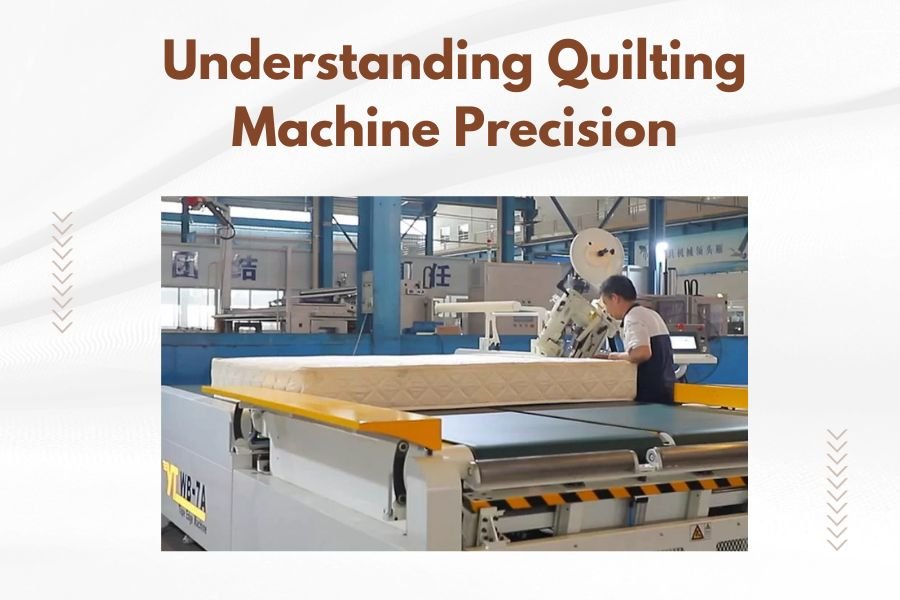
Quilting machine precision refers to how accurately and consistently your machine creates stitches, maintains straight lines, and executes complex patterns without deviation or error.
Understanding quilting machine precision helps you choose the right equipment and achieve professional-quality results with clean, even stitching across all your quilting projects.
What Makes a Quilting Machine Precise
You might wonder what separates a wobbly, frustrating quilting experience from smooth, professional results. The answer lies in several key components working together like a well-tuned orchestra.
Think of precision as your machine’s ability to do exactly what you tell it to do, every single time. When you guide fabric through, does it follow your intended path? When you set stitch length, does every stitch match perfectly?
Frame Stability and Construction
A rock-solid frame forms the foundation of precise quilting. I found that machines with heavier, more robust frames tend to minimize vibration and movement during operation.
Steel frames typically outperform lighter aluminum ones for stability. The frame acts like the foundation of a house – without it being solid, everything else shifts and wobbles.
Weight Distribution Matters
Heavier machines (usually 15+ pounds) stay put during intensive quilting sessions. Lighter machines may skip or shift, especially when you’re working on dense fabrics or thick batting.
Motor Quality and Control
Your motor determines how smoothly and consistently your machine moves. High-quality servo motors provide better speed control and torque than basic universal motors.
Variable speed control lets you slow down for detailed work or speed up for long straight lines. This flexibility becomes essential when you’re learning or tackling complex patterns.
Torque and Power Consistency
Strong motors maintain consistent power even through multiple fabric layers. Weak motors slow down or struggle, causing uneven stitches and tension problems.
Key Precision Features to Look For
When shopping for a quilting machine, certain features directly impact precision. I researched what professional quilters prioritize most.
Stitch Regulation Systems
Stitch regulation keeps your stitches the same length regardless of how fast you move the machine. It’s like cruise control for quilting.
Without regulation, slow movements create tiny stitches while fast movements make long ones. This inconsistency shows up clearly in finished quilts.
Precision Mode vs Speed Mode
Many machines offer different regulation modes. Precision mode prioritizes stitch consistency over speed, while speed mode allows faster quilting with slightly less regulation.
Needle Position and Timing
Perfect timing means the needle reaches exactly the right position when the hook catches the thread. Even slight timing issues cause skipped stitches or thread breaks.
Professional machines maintain precise timing longer than entry-level models. Better bearings and tighter manufacturing tolerances make the difference.
Adjustable Needle Position
Some machines let you fine-tune needle position for different thread types or techniques. This adjustment capability helps maintain precision across various projects.
Measuring and Testing Machine Precision
How can you tell if a machine delivers true precision? Simple tests reveal performance quickly and clearly.
The Straight Line Test
Draw a straight line on practice fabric. Quilt along it without looking at the needle – just follow the line. Check how closely your stitching matches the drawn line.
Precise machines let you follow lines accurately with minimal concentration. Imprecise machines require constant correction and attention.
Stitch Length Consistency Check
Quilt a 12-inch straight line at medium speed. Measure several stitch lengths along the line. Variations greater than 1-2mm indicate regulation problems.
Circle and Curve Accuracy
Practice quilting smooth circles and curves. Jerky, uneven curves often indicate mechanical issues or poor speed control rather than operator error.
Common Precision Problems and Solutions
Even good machines can lose precision over time. I found these issues come up most frequently in quilting communities.
Inconsistent Stitch Length
When stitches vary wildly in length, check your stitch regulator settings first. Dirty encoders or worn cables also cause regulation failures.
Regular cleaning and calibration solve most stitch regulation problems. Think of it like tuning up your car – routine maintenance prevents bigger issues.
Encoder Wheel Maintenance
Clean encoder wheels weekly during heavy use. Lint, thread bits, and oil residue interfere with precise movement sensing.
Tension Irregularities
Uneven tension creates loose or tight areas that distort your quilting patterns. This problem often stems from inconsistent thread path or dirty tension discs.
Check thread path carefully and clean all thread guides regularly. Sometimes the solution is as simple as re-threading the entire machine.
| Problem | Likely Cause | Quick Fix |
|---|---|---|
| Skipped stitches | Dull needle or timing | Replace needle, check timing |
| Uneven stitches | Dirty regulator | Clean encoders, recalibrate |
| Thread breaks | Rough thread path | Check all guides and tension |
| Wavy lines | Loose frame/table | Tighten all connections |
Factors That Affect Your Machine’s Precision
External factors can make even the most precise machine perform poorly. Your setup and environment matter more than you might think.
Table and Frame Setup
A wobbly quilting table undermines machine precision instantly. Your entire setup must be rock-solid and level for best results.
I found that many precision problems disappear when quilters upgrade to heavier, more stable tables. It’s like trying to write neatly while someone shakes your desk.
Height and Ergonomics
Wrong table height forces awkward arm positions that reduce control and precision. Your elbows should bend at roughly 90 degrees when quilting.
Fabric and Batting Choices
Dense, heavy fabrics challenge even precise machines. Slippery fabrics like satin can cause accuracy problems regardless of your machine’s capabilities.
Batting thickness affects how smoothly fabric moves. Thick batting requires more power and can slow down stitch regulation response.
Thread Quality Impact
Cheap thread breaks unpredictably and creates lint that clogs precision mechanisms. Quality thread improves both appearance and machine performance.
Improving Your Quilting Precision
You can enhance any machine’s precision through proper technique and regular maintenance. Small changes often produce dramatic improvements.
Developing Smooth Movement
Practice moving the machine smoothly and consistently. Jerky, stop-start movements challenge even the best stitch regulation systems.
Think of quilting like dancing – smooth, flowing movements create better results than choppy, rushed motions.
Speed Control Mastery
Learn to vary speed appropriately for different sections. Slow down for detailed work, maintain steady speed for long lines, and pause briefly at direction changes.
Regular Calibration and Maintenance
Calibrate stitch regulation monthly or after every large project. This process teaches the machine about your specific setup and movement patterns.
Clean and oil according to manufacturer schedules. Dirty machines lose precision as lint and residue interfere with moving parts.
Professional Servicing Schedule
Schedule professional tune-ups annually for heavy use or every 18 months for occasional quilting. Technicians can spot precision issues before they become problems.
Choosing Between Machine Types
Different quilting machine styles offer varying levels of precision and ease of use. Your choice depends on projects, space, and budget.
Long-arm vs Mid-arm Precision
Long-arm machines typically offer superior precision due to larger frames and more stable construction. Mid-arm machines balance precision with space requirements and cost.
Both can produce excellent results when properly set up and maintained. The key difference lies in working area and stability rather than fundamental precision capabilities.
Sit-down vs Stand-up Operation
Stand-up quilting often provides better visibility and control, potentially improving precision. Sit-down machines work well for detailed work but may limit movement flow.
Budget Considerations for Precision
Higher-priced machines generally offer better precision, but smart shopping can find good precision at lower price points.
Essential vs Nice-to-Have Features
Prioritize solid construction, good stitch regulation, and reliable motors over fancy computerized features. Basic precision beats complex features that don’t work well.
A simple machine that stitches consistently outperforms a feature-rich machine with precision problems.
Conclusion
Understanding quilting machine precision helps you make informed decisions and achieve better results with whatever equipment you choose. The most important factors are solid construction, reliable stitch regulation, and proper setup and maintenance.
Remember that even the most precise machine requires good technique and regular care to perform at its best. Focus on developing smooth quilting movements while keeping your machine clean and properly adjusted. With these fundamentals in place, you’ll create beautiful, professional-looking quilts that showcase true precision in every stitch.
What is the most important factor for quilting machine precision?
Frame stability and construction form the foundation of precision. A solid, heavy frame minimizes vibration and movement that can throw off stitch accuracy, making it more important than any electronic feature.
How often should I calibrate my quilting machine’s stitch regulation?
Calibrate monthly during regular use or after completing large projects. Changes in thread, batting, or technique can affect regulation accuracy, so frequent calibration maintains optimal precision.
Can I improve precision on an entry-level quilting machine?
Yes, through proper setup, regular maintenance, and technique improvement. A stable table, clean machine, quality thread, and smooth movements can significantly enhance any machine’s precision performance.
Why do my straight lines come out wavy even with stitch regulation?
Wavy lines usually indicate setup problems like loose table connections, improper machine height, or inconsistent movement speed. Check your entire quilting setup for stability issues before blaming the machine.
What thread weight works best for precise quilting?
40-weight thread provides the best balance of visibility and precision for most quilting projects. Heavier threads may challenge stitch regulation while lighter threads can break more easily, both affecting precision.
