
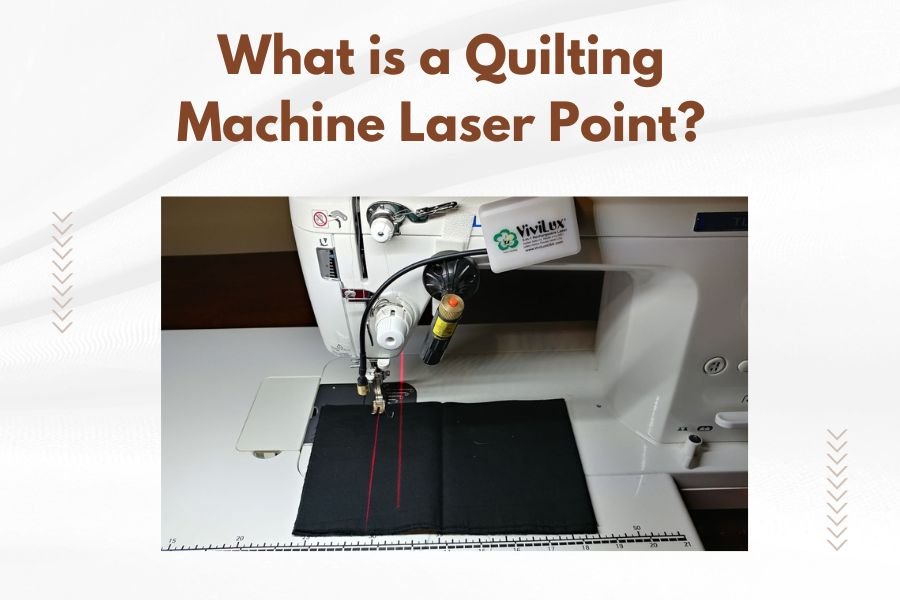
A quilting machine laser point is a precise LED or laser beam that projects onto your fabric to show exactly where your needle will stitch. This guidance system helps you align patterns, follow templates, and create straight lines with professional accuracy.
The laser point feature eliminates guesswork by giving you a clear visual reference point, making it easier to quilt complex designs and maintain consistent spacing throughout your project.
How Does a Quilting Machine Laser Point Work?
Think of the laser point as your quilting GPS. It beams a small red dot directly onto your fabric surface. This dot sits exactly where your needle will pierce the material on the next stitch.
The laser connects to your machine’s internal mechanics. As you move your fabric or adjust settings, the laser point moves with perfect timing. You get real-time feedback about your stitching path.
The Technology Behind Laser Guidance
Most quilting machines use low-power LED lights rather than true lasers. These create the same pinpoint accuracy without safety concerns. The light source mounts near your needle area and projects downward.
Some high-end machines offer multiple laser points. You might see three or five dots forming a pattern. These show your stitching direction and help with spacing.
Safety Features Built In
Modern quilting machine laser points are completely safe for your eyes. The light intensity stays well below harmful levels. Many systems automatically shut off when you’re not actively quilting.
You can usually turn the laser point on or off with a simple button press. This gives you control over when you need the guidance.
Benefits of Using a Laser Point System
From what I’ve researched, quilters who use laser point systems report significant improvements in their work quality. The benefits go beyond just accuracy.
Perfect Pattern Alignment
You can follow printed templates with ease. Place your pattern under the fabric and watch the laser dot track along the lines. No more squinting or second-guessing your placement.
Complex geometric designs become much simpler. The laser point helps you maintain consistent angles and spacing between elements.
Consistent Stitch Spacing
Even spacing makes your quilts look professional. The laser point acts as your measuring guide. You can keep uniform distances between parallel lines or decorative elements.
This is especially helpful for stippling and free-motion quilting. You’ll avoid crowded areas or gaps that throw off your design balance.
Reduced Eye Strain
Long quilting sessions can tire your eyes. The bright laser dot gives you a clear focal point. You don’t need to strain to see where you’re stitching.
Many quilters find they can work longer with less fatigue. The laser point removes the mental effort of constantly estimating needle position.
Types of Laser Point Systems
Not all laser point systems work the same way. Understanding the differences helps you choose the right machine for your needs.
Single Point Systems
The most common setup uses one laser dot. This dot shows your exact needle position. Simple and effective for most quilting tasks.
Single point systems work great for following templates, creating straight lines, and general guidance. They’re found on both entry-level and professional machines.
Multi-Point Systems
Advanced machines may offer three, five, or more laser points. These create patterns that show your stitching direction and spacing.
A three-point system might show your current position plus two reference points ahead. This helps you plan your path and maintain consistent curves.
Crosshair Systems
Some machines project intersecting lines instead of dots. This creates a crosshair pattern centered on your needle position.
Crosshairs work well for precise positioning and right-angle work. You get both horizontal and vertical reference lines.
Who Should Use Laser Point Features?
I found that laser points benefit quilters at every skill level. However, certain situations make them especially valuable.
Beginning Quilters
If you’re just starting out, laser points build confidence. You can see exactly where you’re going before you stitch. This reduces mistakes and wasted fabric.
The visual feedback helps you learn proper quilting techniques faster. You’ll develop better spatial awareness and control.
Precision Work Enthusiasts
Do you love detailed geometric patterns? Laser points make complex designs achievable. You can execute intricate quilting that would be nearly impossible by eye alone.
Art quilters often rely on laser guidance for detailed work. The precision lets you focus on creativity rather than technical accuracy.
Production Quilters
If you quilt for business, laser points increase your speed and consistency. You can complete projects faster while maintaining high quality standards.
Consistent results mean satisfied customers and fewer do-overs. The laser point pays for itself through improved efficiency.
Common Applications for Laser Points
Laser points shine in specific quilting situations. Here are the most popular uses I came across in my research.
Straight Line Quilting
Creating parallel lines becomes effortless. Use the laser dot to maintain consistent spacing between rows. You can quilt perfect grids and geometric patterns.
The laser eliminates the need for marking tools on many projects. Simply use rulers or templates as guides and follow with the laser dot.
Template Following
Paper or plastic templates work perfectly with laser points. Place your template under the fabric and trace with the laser dot as your guide.
You can reuse templates multiple times without marking your fabric. This keeps your quilt surface clean and reduces preparation time.
Echo Quilting
Echo quilting creates concentric shapes around appliqué or design elements. The laser point helps you maintain consistent spacing as you work outward.
Traditional echo quilting requires careful measuring. With a laser point, you can estimate spacing visually and adjust as needed.
Free-Motion Quilting
Even in free-motion mode, laser points provide valuable feedback. You can see your needle position clearly and plan your path ahead.
This is especially helpful when working around obstacles or creating detailed fill patterns.
Choosing a Machine with Laser Points
When shopping for a quilting machine, laser points are just one feature to consider. Here’s what to look for.
Brightness and Visibility
Test the laser point in your typical lighting conditions. Some dots disappear under bright lights or on light-colored fabrics.
Look for adjustable brightness settings. This lets you optimize visibility for different fabric colors and room lighting.
Accuracy and Calibration
The laser point should align perfectly with your needle position. Some machines allow you to calibrate this alignment.
Check if the alignment stays consistent as you adjust stitch length or use different needle positions.
Durability and Replacement
Laser points can eventually dim or fail. Find out if the component is replaceable and what replacement costs look like.
Some systems integrate the laser into larger assemblies, making replacement more expensive.
Tips for Using Laser Points Effectively
Getting the most from your laser point system requires some technique. These tips will help you maximize its benefits.
Room Lighting Considerations
Dim your overhead lights slightly when using laser points. Too much ambient light can wash out the dot.
Position your work light to avoid shining directly on your stitching area. Side lighting often works better than overhead illumination.
Fabric Color Challenges
Red laser dots disappear on red fabric. Similarly, very light fabrics can make dots hard to see.
Some quilters place a small piece of contrasting paper under challenging areas. This gives the laser dot something to show up against.
Calibration and Maintenance
Check your laser alignment periodically. Make a few test stitches on scrap fabric to verify accuracy.
Keep the laser lens clean with a soft cloth. Dust and lint can dim the projection or create fuzzy dots.
Alternatives to Laser Point Systems
Laser points aren’t the only way to improve quilting accuracy. Consider these alternatives if laser systems don’t fit your needs.
LED Needle Lights
Bright LED lights around the needle area improve visibility without projecting dots. These help you see your work clearly but don’t provide positioning guidance.
LED lighting costs less than laser systems and works well for general quilting tasks.
Traditional Marking Methods
Water-soluble markers, templates, and quilting rulers still work great. These methods require more preparation but offer unlimited pattern options.
Many professional quilters combine traditional marking with laser points for different situations.
Computer-Guided Systems
High-end quilting machines offer computer guidance that moves your quilt automatically. These systems provide ultimate precision but cost significantly more.
Computerized systems work best for production quilting or highly repetitive patterns.
| Feature | Laser Points | LED Lights | Traditional Marking |
|---|---|---|---|
| Cost | Moderate | Low | Very Low |
| Precision | High | Medium | High |
| Flexibility | Medium | High | Very High |
| Setup Time | None | None | High |
Cost Considerations
Laser point systems add to your machine’s purchase price. Understanding the cost impact helps you make smart buying decisions.
Initial Investment
Entry-level machines with laser points typically cost $200-500 more than similar models without. Professional machines may include laser points as standard equipment.
Consider whether the precision benefits justify the extra cost for your quilting style and projects.
Operating Costs
Laser points use minimal electricity and don’t significantly impact your power bill. Replacement costs vary by manufacturer and design.
Factor potential replacement costs into your long-term budget, especially for heavy-use situations.
Troubleshooting Common Issues
Even well-designed laser point systems can develop problems. Here are solutions for the most common issues.
Dim or Invisible Laser Dot
Clean the laser lens with a soft, dry cloth. Check your room lighting and consider dimming overhead lights.
If the dot remains dim, the LED may need replacement. Contact your dealer for service options.
Misaligned Laser Point
Some machines allow user calibration of laser alignment. Check your manual for adjustment procedures.
Misalignment can also result from machine vibration or impacts. Professional calibration may be needed.
Intermittent Operation
Loose connections cause intermittent laser operation. This usually requires professional repair to access internal wiring.
Check if your machine warranty covers laser point repairs before seeking service.
Conclusion
A quilting machine laser point transforms your stitching accuracy and confidence. This simple technology projects a precise dot showing exactly where your needle will stitch, eliminating guesswork and improving consistency.
Whether you’re a beginner learning basic techniques or an experienced quilter tackling complex designs, laser points offer valuable guidance. They work especially well for straight-line quilting, template following, and maintaining consistent spacing.
The investment in laser point technology pays off through improved work quality, reduced mistakes, and faster project completion. While not essential for all quilting styles, laser points provide a professional edge that many quilters find indispensable once they experience the precision and confidence it brings to their craft.
What’s the difference between LED and laser quilting points?
Most quilting machines actually use LED lights rather than true lasers for safety reasons. Both create the same precise dot projection, but LEDs are safer for your eyes and don’t require special precautions. The terms are often used interchangeably in quilting machine marketing.
Can I add a laser point to my existing quilting machine?
Aftermarket laser point attachments are available for some quilting machines, but compatibility varies by model. These add-on systems typically clamp to your machine and require separate power sources. Check with your machine manufacturer or dealer about compatible options before purchasing.
Do laser points work on all fabric colors?
Red laser dots can be difficult to see on red, burgundy, or very dark fabrics. They also fade on very light or white materials under bright lighting. Some quilters place contrasting paper underneath problem areas or adjust their lighting to improve visibility.
How long do quilting machine laser points typically last?
LED-based laser points typically last 10,000 to 50,000 hours of use, which represents many years of normal quilting. The actual lifespan depends on usage frequency and the quality of the LED component. Most quilters never need to replace their laser point system.
Are laser points safe to use around children and pets?
Quilting machine laser points use low-power LEDs that are safe for normal use around family and pets. The light intensity is well below levels that could cause eye damage, and most systems automatically shut off when not actively quilting. However, you shouldn’t stare directly into any light source intentionally.
