
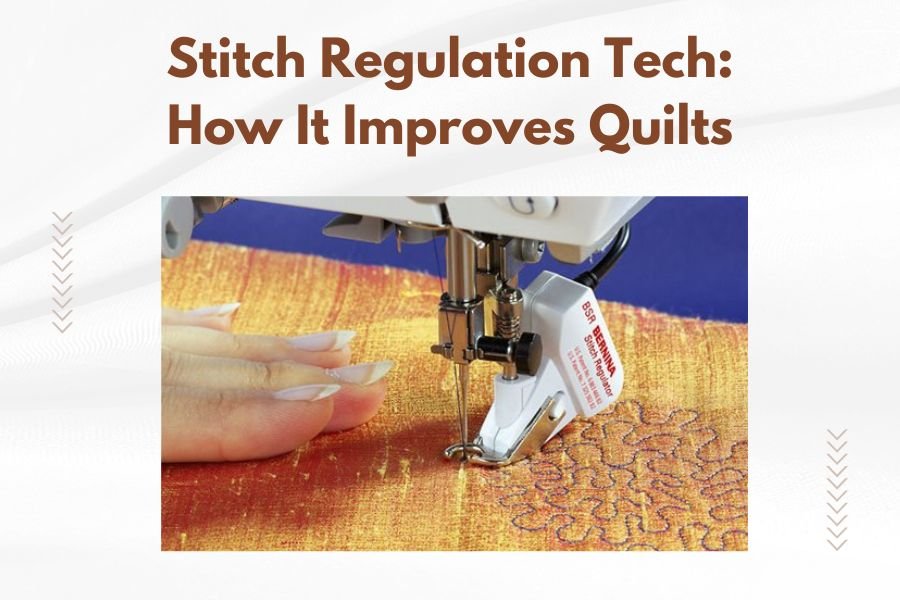
Stitch regulation technology automatically controls needle speed to match your quilting movement, creating perfectly even stitches regardless of how fast or slow you move the fabric.
This smart system transforms uneven, frustrating quilting into smooth, professional-looking results by maintaining consistent stitch length throughout your entire project.
What Is Stitch Regulation Technology
Think of stitch regulation like cruise control for your car, but for quilting. You set your desired stitch length, and the machine does the rest.
The system uses sensors to track your hand movements. When you move the fabric quickly, the machine speeds up. When you slow down, it slows down too.
This creates uniform stitches whether you’re moving at lightning speed or taking your sweet time around tricky corners.
How the Sensors Work
Most systems use optical sensors that “see” your fabric movement. Some machines use magnetic sensors instead.
These sensors send signals to the machine’s computer hundreds of times per second. The computer adjusts needle speed instantly to match your pace.
You’ll barely notice this happening. It feels natural, like the machine is reading your mind.
Types of Stitch Regulation Systems
You’ll find two main types on the market today.
Precision Mode
This mode maintains exact stitch length no matter what. If you stop moving, the needle stops too.
Perfect for detailed work where every stitch must be identical. Many quilters love this for intricate patterns.
Cruise Mode
This mode keeps stitching even when you pause briefly. Great for continuous quilting patterns.
You get consistent results without worrying about tiny stops affecting your rhythm.
Why Your Quilts Look Better With Stitch Regulation
Manual quilting often creates a mess of different stitch lengths. Long stitches here, tiny ones there.
Stitch regulation fixes this problem completely. Every stitch becomes uniform, creating that professional finish you see in high-end quilts.
Professional Appearance
Even stitches make your quilting patterns pop. The eye follows clean, consistent lines much better than erratic ones.
Your friends will ask where you learned to quilt so well. The secret? Your machine is doing the hard work.
Better Thread Tension
Consistent stitch length means consistent thread tension. This prevents puckering and thread breaks that ruin your work.
You’ll spend less time fixing mistakes and more time enjoying the creative process.
Reduced Thread Waste
Fewer thread breaks mean less waste. You’ll save money on thread and finish projects faster.
Some quilters report 30% fewer thread issues after switching to stitch regulation.
Learning Curve and Skill Development
Don’t worry about losing your quilting skills. Stitch regulation actually helps you improve faster.
You can focus on design and movement instead of worrying about stitch consistency. This builds better muscle memory.
Confidence Building
New quilters often feel overwhelmed by free-motion quilting. Stitch regulation removes that fear.
You can experiment with complex patterns knowing your stitches will look great. This builds confidence quickly.
Advanced Technique Practice
Even experienced quilters benefit. You can practice challenging techniques without stitch quality suffering.
Want to try ruler work or complex feathers? Stitch regulation gives you the safety net to experiment.
Muscle Memory Development
Your hands learn proper quilting motions faster when you’re not stressed about stitch length.
Many quilting teachers recommend stitch regulation for this reason. Students progress much quicker.
Machine Types That Offer Stitch Regulation
Not every quilting machine includes this technology. Here’s what to look for.
| Machine Type | Stitch Regulation Available | Best For |
|---|---|---|
| Longarm Quilting Machines | Most models include it | Large quilts, professional work |
| Sit-Down Quilting Machines | Mid to high-end models | Home quilters, smaller projects |
| Regular Sewing Machines | Rarely available | Basic quilting only |
Longarm Machines
These large machines almost always include stitch regulation as standard equipment.
Longarm quilting would be nearly impossible without it. The large quilting surface makes manual speed control extremely difficult.
Sit-Down Quilting Machines
Mid-range and high-end sit-down machines often include this feature. Entry-level models usually don’t.
Check the specifications carefully before buying. Some brands offer it as an optional add-on.
Retrofit Options
Some companies make aftermarket stitch regulation systems. These can add the feature to older machines.
Installation varies by machine type. Professional installation is often recommended.
Cost Considerations
Stitch regulation adds to machine cost, but many quilters find it worth every penny.
Entry-level machines with this feature start around $3,000. Professional longarms can cost $15,000 or more.
Value for Money
Consider how much time you’ll save on rework and thread replacement. These costs add up quickly.
Many quilters report finishing projects 25% faster with stitch regulation. That’s significant time savings.
Resale Value
Machines with stitch regulation hold their value better. It’s become an expected feature for serious quilters.
When you’re ready to upgrade, you’ll get more money for a machine with this technology.
Financing Options
Many dealers offer financing for quilting machines. Monthly payments can make the technology more accessible.
Some quilters start side businesses to help pay for their machines. Quality quilts command higher prices.
Maintenance and Troubleshooting
Stitch regulation systems need occasional attention to work properly.
Keep sensors clean and calibrate regularly. Most problems come from dirty or misaligned sensors.
Common Issues
Sensor problems cause most stitch regulation issues. Dust, lint, or poor lighting can interfere with optical sensors.
Clean your sensors after every few quilts. Use compressed air or a soft brush.
Calibration Process
Most machines need periodic recalibration. This usually involves quilting a test pattern while the machine learns your movements.
Follow your manual’s instructions carefully. Poor calibration ruins the system’s effectiveness.
Professional Servicing
Annual professional maintenance keeps everything running smoothly. Technicians can spot problems before they become serious.
Many dealers include free first-year service with new machine purchases.
Choosing the Right System
Not all stitch regulation systems work the same way. Research before buying.
Try different machines if possible. Each brand has its own feel and responsiveness.
Key Features to Consider
Look for adjustable sensitivity settings. You want control over how the system responds to your movements.
Some systems offer multiple stitch length options. This flexibility helps with different quilting styles.
Brand Reliability
Stick with established quilting machine manufacturers. They have more experience with stitch regulation technology.
Read reviews from actual quilters. Online forums provide honest feedback about different systems.
Dealer Support
Choose dealers who understand the technology. You’ll need training and occasional troubleshooting help.
Good dealers offer classes on using stitch regulation effectively. Take advantage of these opportunities.
Conclusion
Stitch regulation technology transforms quilting from a frustrating battle with inconsistent stitches into a smooth, enjoyable creative process. Your quilts will look more professional, and you’ll finish projects faster with less thread waste and fewer mistakes.
Whether you’re a beginner building confidence or an experienced quilter tackling advanced techniques, stitch regulation removes the technical barriers that hold back your creativity. The investment pays off through better results, saved time, and increased quilting enjoyment.
Can I add stitch regulation to my existing quilting machine?
Some aftermarket systems can retrofit older machines, but compatibility varies widely by model. Contact your dealer to discuss options for your specific machine before purchasing any add-on system.
Does stitch regulation work with all thread types and weights?
Most systems work well with standard quilting threads, but very thick or specialty threads may require sensitivity adjustments. Test different thread weights to find optimal settings for each type you use.
How often should I clean the stitch regulation sensors?
Clean sensors after every 2-3 quilts or whenever you notice inconsistent performance. Use compressed air or a soft brush to remove lint and dust that can interfere with sensor accuracy.
Will stitch regulation make me lazy as a quilter?
Stitch regulation actually improves your quilting skills by letting you focus on design and movement patterns rather than speed control. You’ll develop better muscle memory and technique more quickly.
Can I turn off stitch regulation when I don’t need it?
Yes, most machines allow you to disable stitch regulation and quilt manually when desired. This gives you flexibility to use traditional techniques alongside regulated stitching as your projects require.
