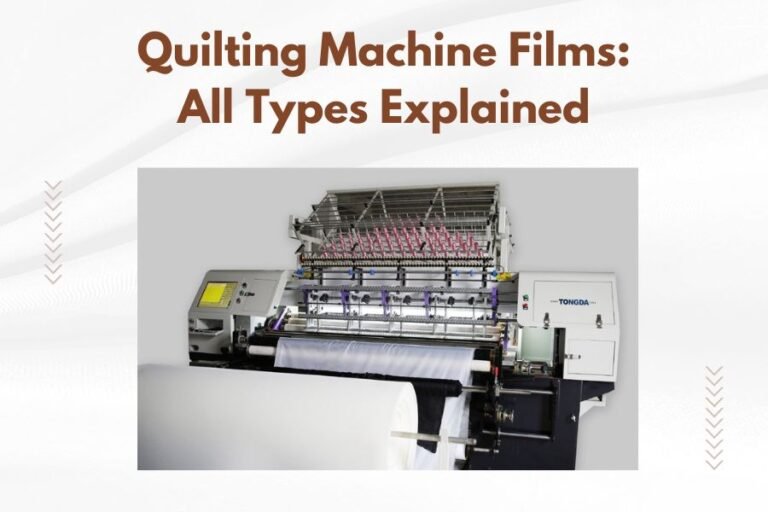
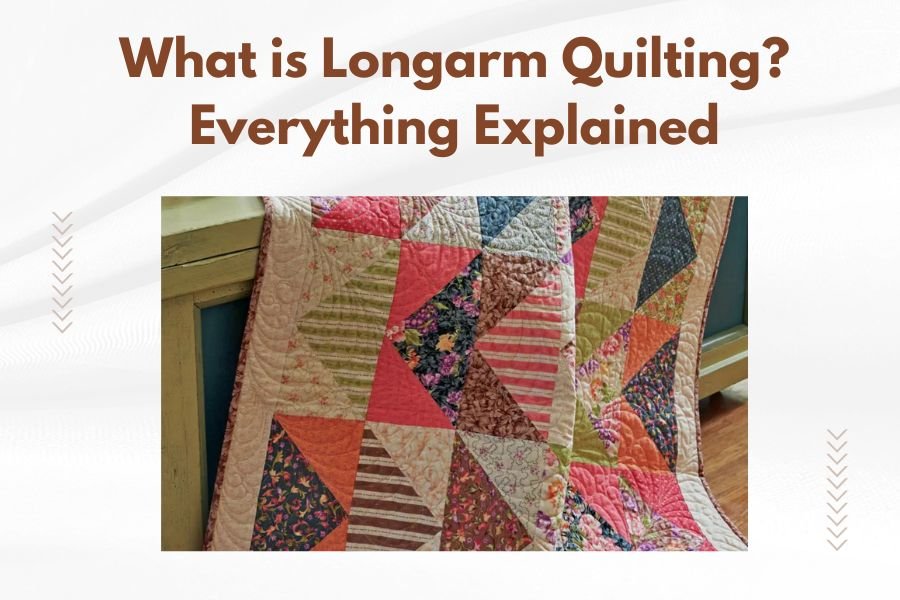
Longarm quilting is a method of quilting that uses a specialized sewing machine with an extended arm to quilt large fabric pieces together. The longarm machine sits on a frame system that allows you to move the machine across the quilt top, batting, and backing to create decorative stitching patterns.
This quilting technique lets you work on quilts much larger than what fits under a regular sewing machine, making it perfect for bed-sized quilts and wall hangings.
How Does Longarm Quilting Work?
Think of longarm quilting like painting on a huge canvas. Instead of moving fabric under a small machine, you guide the machine over the fabric.
The quilt layers get stretched tight on a frame. You stand behind the machine and move it around to create your stitching pattern. Your hands control where the needle goes.
The extended arm gives you about 18 to 30 inches of throat space. Compare that to your home machine’s 6-8 inches, and you’ll see why it’s called “longarm.”
The Basic Setup Process
You load your quilt sandwich onto the frame system. This includes your quilt top, batting, and backing fabric.
Everything gets stretched and pinned or clamped into place. You want it tight but not stretched out of shape.
Then you’re ready to start quilting from one end to the other.
Types of Longarm Quilting Machines
I found that longarm machines come in several styles. Each one works differently and fits different needs.
Manual Longarm Machines
These are the most hands-on option. You control every stitch by moving the machine with your hands.
Manual machines give you complete creative freedom. Want to quilt a flower here and some swirls there? You decide in real time.
They’re also the most affordable longarm option, though still a big investment.
Computer-Guided Longarm Machines
These machines follow pre-programmed patterns. You load a design, and the machine stitches it automatically.
Computer-guided systems work great for repeated patterns or when you want perfect precision. They’re faster for large areas too.
You can still switch to manual mode when you want to add personal touches.
Hybrid Systems
Some machines let you switch between manual and computer modes easily. You get the best of both worlds.
Start with a computer pattern for the main quilting, then switch to manual for custom details.
Longarm vs Regular Sewing Machine Quilting
Ever tried quilting a king-size quilt on your home machine? It’s like trying to wash an elephant in your kitchen sink.
| Feature | Longarm Machine | Regular Sewing Machine |
|---|---|---|
| Quilt Size | Any size, even king quilts | Limited by throat space |
| Speed | Much faster for large quilts | Slow on big projects |
| Physical Effort | Less wrestling with fabric | Heavy lifting and manipulation |
| Stitch Quality | Consistent tension | Can vary with fabric bunching |
| Cost | $15,000-$40,000+ | $200-$3,000 |
When to Choose Longarm Quilting
If you make lots of large quilts, longarm makes sense. Your back will thank you for not wrestling king-size quilts through a small machine.
Professional quilters almost always use longarm machines. The speed and quality difference is huge when you’re quilting for customers.
When to Stick with Your Home Machine
For small quilts, table runners, or occasional projects, your regular machine works fine. No need to spend the money or dedicate the space.
Some quilters love the intimate connection of guiding fabric by hand. That’s totally valid too.
Learning Longarm Quilting
I came across many quilters who thought longarm quilting looked scary at first. The machines are big, and the technique feels different.
But here’s the thing: if you can draw or doodle, you can learn longarm quilting.
Basic Skills You’ll Need
Hand-eye coordination is your biggest asset. You’re essentially drawing with a sewing machine.
Start with simple straight lines and gentle curves. Work up to more complex patterns as you get comfortable.
Consistent speed helps too. Fast movements make loose stitches. Slow movements can cause thread breakage.
Practice Techniques
Many experts suggest starting with paper and pencil. Draw the patterns you want to quilt.
Then practice those same motions on practice fabric. Use cheap muslin or old sheets while you learn.
Focus on smooth, flowing movements. Jerky motions show up as wonky stitches.
Common Beginner Patterns
Start with these forgiving patterns:
- Meandering or stippling (random curvy lines that don’t cross)
- Echo quilting (following the shape of appliques or borders)
- Simple geometric grids
- Large feather designs
Longarm Quilting Patterns and Designs
The pattern possibilities are endless with longarm quilting. You’re not limited by the size of your machine’s hoop or throat space.
Edge-to-Edge Patterns
These patterns cover the entire quilt in one repeating design. Think of wallpaper, but made of thread.
Edge-to-edge quilting is fast and gives a cohesive look. Popular options include swirls, loops, and geometric designs.
Custom Quilting
This is where longarm quilting really shines. You can quilt different patterns in different areas of your quilt.
Borders might get feathers. Blocks could have custom motifs. Background areas often get subtle texture patterns.
Planning Custom Designs
I found that successful custom quilting starts with a plan. Look at your quilt top and imagine what quilting would enhance it.
Dense quilting makes areas recede. Sparse quilting makes areas puff up more. Use this to create visual depth.
Longarm Quilting Services
Don’t own a longarm machine? No problem. Lots of quilters offer longarm services.
You bring them your quilt top, batting, and backing. They load it on their machine and quilt it for you.
Finding a Good Longarm Quilter
Ask to see samples of their work first. Every quilter has a different style and skill level.
Check their turnaround time too. Some quilters book months in advance, especially during busy seasons.
Discuss thread choices, batting preferences, and any special requests upfront.
Typical Service Pricing
Most longarm quilters charge by the square inch. Prices typically range from $0.01 to $0.05 per square inch.
Complex custom work costs more than simple edge-to-edge patterns. Rush jobs usually cost extra too.
Longarm Machine Maintenance
These machines need regular care to keep running smoothly. Think of it like maintaining a car.
Daily Maintenance Tasks
Clean out lint after every project. Longarm machines create lots of thread debris.
Check your needle regularly. Dull or damaged needles cause all sorts of problems.
Oil the machine according to your manual’s schedule. Different brands have different requirements.
Professional Servicing
Most longarm machines need professional service once or twice a year. The timing depends on how much you use them.
Find a technician who knows your machine brand. These machines are specialized equipment.
Setting Up a Longarm Quilting Space
Longarm machines need space – lots of it. The frame usually measures about 12 feet long by 4 feet wide.
You also need walking space around all sides. Plan on dedicating a whole room or large basement area.
Space Requirements
A typical setup needs at least 14 feet by 10 feet of floor space. More is better.
Ceiling height matters too. You need room to load long quilts without them dragging on the floor.
Lighting and Ergonomics
Good lighting prevents eye strain during long quilting sessions. LED lights work well and don’t create heat.
Consider anti-fatigue mats where you stand. Your feet and legs will appreciate the cushioning.
Is Longarm Quilting Right for You?
Longarm quilting isn’t for everyone. The machines cost serious money and take up serious space.
But if you quilt regularly and want to tackle larger projects, it might be worth considering.
Questions to Ask Yourself
How many large quilts do you make per year? If it’s just one or two, longarm services might make more sense.
Do you have the space for a longarm setup? Be realistic about your available room.
Are you interested in the business side? Many longarm owners quilt for others to help pay for their equipment.
Alternatives to Consider
Rental time on longarm machines is available in many areas. You get the experience without the full investment.
Some quilt shops offer classes on their longarm machines. Great way to try before you buy.
Conclusion
Longarm quilting opens up a whole new world of quilting possibilities. The ability to work on large projects with ease and speed is game-changing for serious quilters.
Whether you invest in your own machine, rent time on one, or hire longarm services, this technique can take your quilting to the next level. The learning curve exists, but the results speak for themselves in beautiful, professionally finished quilts.
Remember that longarm quilting is just another tool in your quilting toolbox. Some projects call for the intimacy of hand quilting or the convenience of your home machine. Others practically beg for the flowing artistry that only longarm quilting can provide.
How long does it take to learn longarm quilting?
Most quilters pick up basic longarm skills within a few weeks of regular practice. Getting comfortable with complex custom designs usually takes several months. The key is consistent practice and starting with simple patterns before moving to advanced techniques.
Can you quilt small projects on a longarm machine?
Yes, you can quilt smaller projects like table runners, wall hangings, and baby quilts on longarm machines. However, there’s usually a minimum loading size based on your frame system, typically around 40 inches square.
What’s the difference between mid-arm and longarm quilting machines?
Mid-arm machines have shorter arms, usually 17-20 inches of throat space compared to longarm’s 20-30+ inches. Mid-arm machines cost less and take up less space, but they’re still much larger than regular sewing machines and work similarly to longarms.
Do you need special thread for longarm quilting?
While you can use regular quilting thread, longarm machines work best with high-quality threads designed for machine quilting. These threads have less lint, stronger construction, and better tension consistency at higher sewing speeds.
How much does it cost to have a quilt longarm quilted professionally?
Professional longarm quilting typically costs between $75-$300 for a full-size quilt, depending on the pattern complexity and your location. Simple edge-to-edge patterns cost less than custom work, and king-size quilts cost more than smaller sizes.