
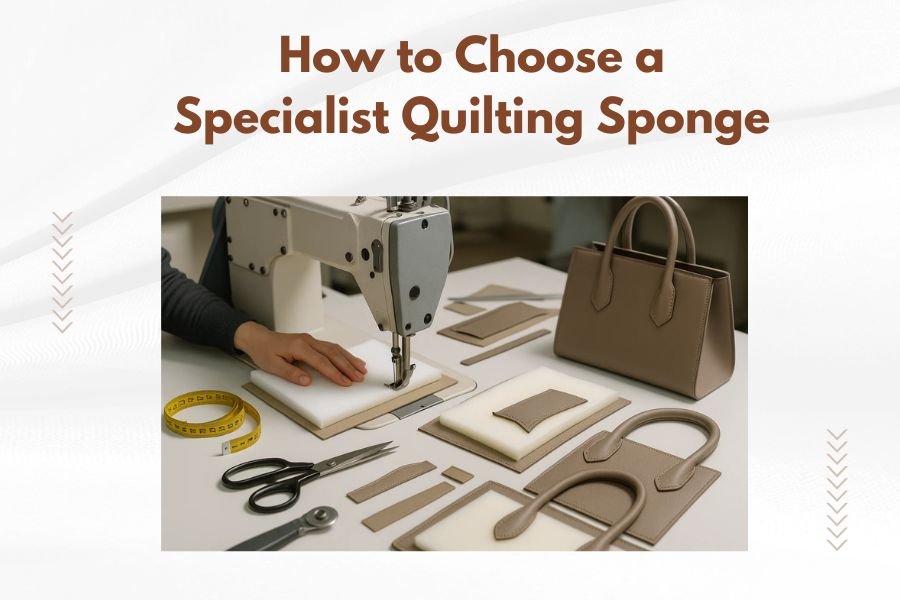
A quilting sponge is a specialized dense foam tool used to distribute batting evenly and smooth fabric layers during quilt assembly.
Choose a specialist quilting sponge based on density, size, and edge design – firmer sponges work better for heavy batting while softer ones suit delicate fabrics.
What Makes a Quilting Sponge Different From Regular Sponges
You might wonder why you can’t just grab any old sponge from your kitchen. Here’s the thing – quilting sponges are built completely different.
Regular household sponges are too soft and absorb moisture. They’ll compress under pressure and won’t give you the firm, even distribution you need. Quilting sponges use closed-cell foam that stays firm and won’t absorb oils from your hands or fabric treatments.
The surface texture matters too. Quilting sponges have a smooth, consistent surface that glides over fabric without catching threads or leaving marks.
Key Features to Look For in Your Quilting Sponge
Density and Firmness Levels
Density is your most important factor. You want enough firmness to push batting around without damaging delicate fabrics.
Medium-firm sponges work for most projects. They give you control without being too aggressive. Super-firm sponges are great for thick batting or wool, but they can be too much for cotton or silk.
Testing Firmness Before You Buy
If you’re shopping in person, press the sponge with your thumb. It should compress slightly but spring back quickly. You don’t want it to leave a permanent dent.
Online shopping makes this trickier. Look for product descriptions that mention “medium density” or “quilting grade foam.” Avoid anything labeled as “soft” or “kitchen grade.”
Size and Shape Options
Standard quilting sponges come in 4×6 inch rectangles. This size fits most hands comfortably and covers enough area to work efficiently.
Smaller 3×4 inch versions work well if you have smaller hands or do detailed work. Larger sponges can be harder to control and may create uneven pressure.
Round vs Rectangle Shapes
Most quilters prefer rectangular sponges because they cover more area in straight lines. Round sponges are nice for curved quilting patterns but aren’t necessary for most projects.
The corners on rectangular sponges help you get into tight spots around seams and borders.
Edge Design and Surface Texture
Sharp edges can catch on fabric and create pulls. Look for sponges with slightly rounded or beveled edges. They’ll glide smoothly across your quilt surface.
The surface should be completely smooth. Any texture or roughness will show up as marks on light-colored fabrics.
Thickness Considerations
Standard thickness is about 1 to 1.5 inches. Thicker sponges give you more leverage but can be harder to control. Thinner ones don’t provide enough pressure for heavy batting.
I found that most quilters stick with the standard thickness because it works for 90% of projects.
Material Types and Their Benefits
Closed-Cell Foam Sponges
This is what most quality quilting sponges are made from. The foam cells don’t connect, so the sponge won’t absorb moisture or oils. They maintain their shape over time and clean easily.
Closed-cell foam gives you consistent pressure across the entire surface. You won’t get soft spots that make your quilting uneven.
Open-Cell Foam to Avoid
Open-cell foam connects all the air pockets together. These sponges feel softer but they’ll absorb everything – moisture, oils, fabric dyes, and dust. They break down faster and can leave residue on your quilts.
If you accidentally buy one, you’ll notice it feels squishy and leaves your hands feeling dry after use.
Synthetic vs Natural Materials
Synthetic foam dominates the quilting sponge market because it’s consistent and durable. Natural sponges vary too much in texture and density to work reliably.
Synthetic materials also resist mold and bacteria better than natural options. When you’re working on quilts that might take months to finish, this matters.
How to Match Sponge Type to Your Batting
Different batting materials need different sponge approaches. Getting this match right makes your quilting process much smoother.
| Batting Type | Best Sponge Firmness | Why It Works |
|---|---|---|
| Cotton batting | Medium | Gentle enough to avoid tearing, firm enough to distribute evenly |
| Polyester batting | Medium-firm | Polyester is resilient and needs more pressure to stay in place |
| Wool batting | Firm | Wool is thick and springy, requires firm pressure to compress |
| Silk batting | Soft-medium | Delicate fibers can be damaged by too much pressure |
Working with Thick vs Thin Batting
Thick batting (over 1/4 inch) needs a firmer sponge to push through all those layers. Thin batting (1/8 inch or less) works better with softer sponges that won’t compress it too much.
When you compress batting too much, it loses its loft and won’t spring back properly. Your finished quilt will look flat in those areas.
Budget Considerations and Value
Price Ranges to Expect
Quality quilting sponges typically cost $8 to $15. You can find cheaper options for $3 to $5, but they’re usually made from lower-grade foam that won’t last as long.
Premium sponges in the $15 to $25 range often have special features like antimicrobial coatings or extra-dense foam. These features are nice but not necessary for most quilters.
When to Invest in Higher-End Options
If you quilt regularly (several projects per year), spending more upfront makes sense. Better sponges maintain their shape longer and give more consistent results.
Professional quilters or those working with expensive fabrics should definitely invest in premium sponges. The risk of damaging costly materials makes the extra expense worthwhile.
Signs of a Good Value Sponge
Look for sponges that feel uniform when you squeeze different areas. Cheap sponges often have soft spots or inconsistent density.
The edges should be cleanly cut without rough spots or tears. Poor manufacturing shows up immediately in the edge quality.
Common Mistakes When Choosing Quilting Sponges
Going Too Soft or Too Firm
Many beginners think softer is always better because it seems safer. But soft sponges don’t give you enough control, and you’ll end up pressing harder to get results.
On the flip side, choosing the firmest sponge available can damage delicate fabrics and create uneven pressure patterns.
Ignoring Your Hand Size
A sponge that’s too big for your hands will tire you out quickly and reduce your control. Too small, and you’ll spend forever trying to cover large areas.
Hold potential sponges like you would during quilting. Your fingers should wrap around comfortably without straining.
Not Considering Your Workspace
If you work on smaller surfaces or portable quilting frames, a large sponge might not fit properly in tight spaces. Think about where you actually do your quilting.
Some quilters have multiple sponges for different situations – one for large areas and a smaller one for detail work.
Testing and Breaking In Your New Sponge
Don’t jump straight into your good fabric with a new sponge. Test it on scraps first to get a feel for the pressure and movement.
New sponges sometimes need a few uses to reach their optimal performance. The foam settles slightly, and you get used to how much pressure to apply.
What to Look for During Testing
Watch for any pulling or catching on the fabric surface. The sponge should glide smoothly without leaving marks or disturbing the weave.
Check that it distributes batting evenly without creating lumps or thin spots. Run your hand over the area after sponging to feel for consistency.
Maintenance Tips for Longevity
Proper Cleaning Methods
Clean your quilting sponge regularly with mild soap and warm water. Avoid harsh chemicals that can break down the foam structure.
Let it air dry completely before storing. Trapped moisture can create mold or cause the foam to deteriorate faster.
Storage Best Practices
Store sponges in a cool, dry place away from direct sunlight. UV light can make foam brittle over time.
Don’t stack heavy items on top of your sponges. Constant compression can create permanent flat spots that affect performance.
When to Replace Your Sponge
Replace sponges when they develop permanent indentations or soft spots. These irregularities will show up in your quilting as uneven areas.
If the surface becomes rough or starts shedding bits of foam, it’s time for a new one. Rough surfaces can damage fabric, and foam bits can get embedded in your quilt.
Conclusion
Choosing the right quilting sponge makes a real difference in your finished projects. Focus on getting the density right for your typical batting type, pick a size that fits your hands comfortably, and invest in quality foam that will last.
Remember that medium-firm sponges work for most situations, so start there if you’re unsure. You can always get specialized sponges later as your quilting skills and project variety expand. The key is having a reliable tool that helps you create smooth, even quilts every time.
What’s the difference between a quilting sponge and a regular craft sponge?
Quilting sponges use closed-cell foam that won’t absorb moisture or oils, while craft sponges are typically open-cell and will absorb everything they touch. Quilting sponges also have smoother surfaces and more consistent density for even pressure distribution.
Can I use the same sponge for different types of batting?
Yes, a medium-firm quilting sponge works well for most batting types including cotton and polyester. You might need a firmer sponge for thick wool batting or a softer one for delicate silk, but one good sponge handles 80% of quilting projects.
How long should a quality quilting sponge last?
With regular use (a few quilts per year), a good quilting sponge should last 2-3 years. Heavy users might need to replace theirs annually. Signs it’s time to replace include permanent dents, rough surfaces, or foam pieces breaking off.
Do I need different sized sponges for different quilt sizes?
Not necessarily. A standard 4×6 inch sponge works efficiently on quilts of all sizes. Some quilters like having a smaller 3×4 inch sponge for detailed areas around borders and seams, but it’s not required for good results.
Should I clean my quilting sponge after every use?
Clean your sponge when it picks up visible lint, oils, or if you’ve been working with darker fabrics before switching to light ones. For normal use, cleaning every few projects is sufficient. Always clean with mild soap and let it dry completely before storing.
