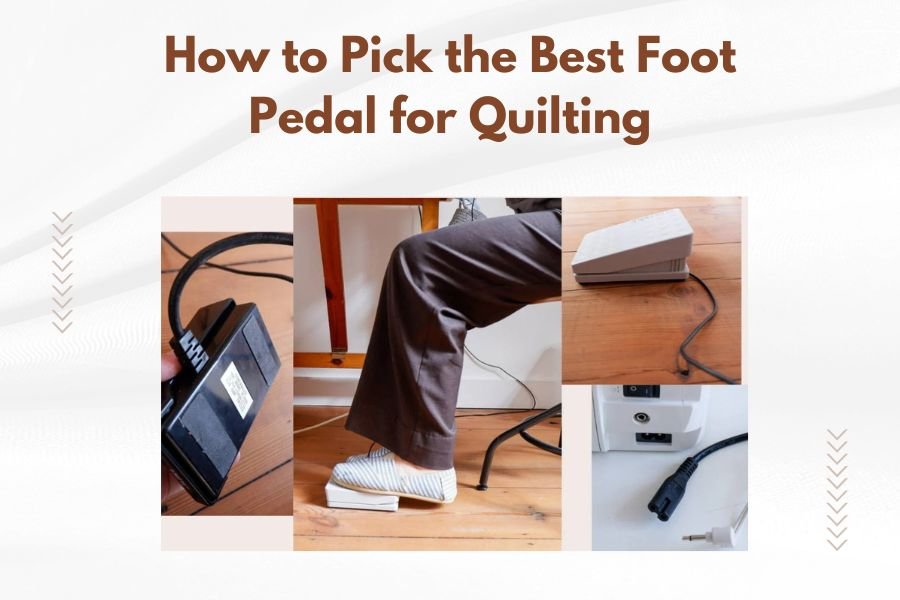
The best foot pedal for quilting should have variable speed control, comfortable positioning, and responsive action that matches your quilting style and machine type.
Electronic foot pedals work best for modern quilting machines, while mechanical pedals suit older models – your choice depends on precision needs and budget.
Understanding Foot Pedal Types for Quilting
When I researched foot pedals for quilting, I found two main types dominate the market. Each serves different quilting needs and machine compatibility.
Electronic Foot Pedals
Electronic pedals give you the smoothest speed control. They respond to light pressure changes instantly. Your quilting becomes more precise because you can make tiny speed adjustments.
These pedals work with computerized sewing machines and modern quilting machines. They send electronic signals to control motor speed. The result? Better stitch quality and less hand fatigue during long quilting sessions.
Mechanical Foot Pedals
Mechanical pedals use physical pressure to control machine speed. They’re simpler and often more affordable. These pedals connect directly to your machine’s motor through a rheostat system.
Many quilters prefer mechanical pedals for their reliability. They rarely break down and need minimal maintenance. If you quilt on vintage machines, mechanical pedals might be your only option.
Key Features to Look for in Quilting Foot Pedals
Your perfect foot pedal needs specific features that support quilting work. I found these features make the biggest difference in quilting comfort and results.
Variable Speed Control
Speed control separates good pedals from great ones. Look for pedals that respond smoothly across the entire pressure range. You want to start slow for precise work and speed up for straight seams.
The best pedals give you control from nearly stopped to full speed. This range helps when you’re navigating tight curves or working on detailed applique work.
Pedal Size and Shape
Larger pedals give you more foot placement options. Your foot stays comfortable during long quilting sessions. Small pedals can cause cramping and limit your control.
Look for pedals with slight curves or textured surfaces. These features help your foot stay in position without sliding around. Some quilters prefer wider pedals that accommodate both feet for stability.
Non-Slip Base
A pedal that slides around disrupts your quilting rhythm. Quality pedals have rubber bases or suction cups that grip your floor. This stability lets you focus on your quilting instead of chasing your pedal.
Compatibility Considerations
Not every foot pedal works with every quilting machine. Machine compatibility affects both performance and safety. Let me share what I learned about matching pedals to machines.
Machine Type Compatibility
Check your machine manual for pedal specifications. Voltage, amperage, and connector types must match exactly. Using wrong pedals can damage your machine’s electronics.
Most modern quilting machines use standard electronic pedals. Older machines might need specific mechanical pedals. When in doubt, contact your machine manufacturer for guidance.
Voltage Requirements
Foot pedals come in different voltage ratings. Common ratings include 110V, 220V, and variable voltage models. Match your pedal voltage to your machine’s requirements.
Universal pedals work with multiple voltage systems. These cost more but offer flexibility if you own multiple machines or travel with your quilting setup.
Ergonomic Factors for Quilting Comfort
Long quilting sessions demand comfortable equipment. Your foot pedal affects your posture and comfort more than you might think.
Pedal Height and Angle
The right pedal height keeps your leg in a natural position. Too high creates strain in your hip and back. Too low makes your foot work harder to maintain pressure.
Some pedals offer adjustable angles. This feature helps you find your most comfortable foot position. Slight upward angles work well for many quilters.
Pressure Sensitivity
Sensitive pedals respond to light pressure. This reduces foot fatigue during long quilting projects. Heavy pedals make your leg muscles work harder than necessary.
Test pedal sensitivity if possible. Press lightly and see how the machine responds. Good pedals start moving with minimal pressure and increase speed smoothly.
Popular Foot Pedal Brands and Models
Several brands make quality foot pedals for quilting. Research shows these brands consistently receive positive reviews from quilting communities.
Singer Foot Pedals
Singer makes reliable pedals for their quilting machines. Their electronic pedals offer smooth speed control and durability. Many quilters report using Singer pedals for years without problems.
Singer pedals often work with other machine brands. Check compatibility before purchasing. Their universal models fit multiple machine types.
Brother Foot Pedals
Brother pedals excel in precision control. Their electronic models respond quickly to pressure changes. This responsiveness helps with detailed quilting work.
Brother makes both machine-specific and universal pedals. Universal models cost more but work with multiple machine brands.
Janome Foot Pedals
Janome pedals are built for heavy use. They handle continuous operation well. Many professional quilters choose Janome pedals for their reliability.
These pedals often feature larger sizes and comfortable angles. The extra size helps during long quilting sessions.
Budget Considerations
Foot pedal prices range from budget to premium. Your quilting frequency and needs help determine the right investment level.
Entry-Level Pedals
Basic pedals cost between $20-50. They provide essential speed control without extra features. These work well for occasional quilters or beginners.
Entry-level pedals may lack fine speed control. They’re adequate for simple quilting projects but might limit precision work.
Mid-Range Pedals
Mid-range pedals cost $50-100. They offer better speed control and comfort features. Many include non-slip bases and improved ergonomics.
These pedals balance cost with performance. They suit regular quilters who want good control without premium prices.
Premium Pedals
Premium pedals cost $100 and up. They provide the best speed control and comfort features. Professional quilters often choose these models.
Premium features include adjustable angles, superior sensitivity, and enhanced durability. The extra cost pays off for frequent quilting use.
Installation and Setup Tips
Proper pedal installation ensures safe operation and best performance. Follow these steps for correct setup.
Safety First
Always unplug your machine before connecting a new pedal. Check all connections for tight fits. Loose connections can cause erratic speed control or electrical problems.
Never force connectors that don’t fit easily. Wrong connections can damage both pedal and machine. When in doubt, consult your machine manual or dealer.
Testing Your New Pedal
Test pedal response with your machine threaded but no fabric. Press lightly and observe machine speed. Good pedals start smoothly and increase speed gradually.
Check for any unusual noises or jerky movements. These signs might indicate compatibility problems or defective pedals.
Maintenance and Care
Regular maintenance extends pedal life and maintains performance. Simple care steps prevent most pedal problems.
Cleaning Your Foot Pedal
Clean pedal surfaces regularly with damp cloths. Avoid getting moisture in electrical connections. Remove lint and debris from around the pedal mechanism.
Don’t use harsh chemicals on pedal surfaces. Mild soap solutions work fine for most cleaning needs.
Storage Tips
Store pedals in dry locations away from extreme temperatures. Wrap cords loosely to prevent wire damage. Avoid placing heavy objects on stored pedals.
Troubleshooting Common Pedal Issues
Pedal problems can disrupt your quilting. Here are solutions for common issues I found quilters face.
Pedal Won’t Respond
Check all connections first. Loose plugs cause most response problems. Try plugging the pedal firmly into the machine socket.
If connections look good, test the pedal with another compatible machine. This helps identify whether the problem is with the pedal or your machine.
Speed Control Problems
Erratic speed control often comes from worn pedal mechanisms. Electronic pedals may need professional repair. Mechanical pedals might need cleaning or adjustment.
Don’t attempt electrical repairs yourself. Contact qualified repair services for internal pedal problems.
Making Your Final Decision
Choose your foot pedal based on your specific quilting needs. Consider these factors for your best choice.
Quilting Frequency
Daily quilters need premium pedals with comfort features. Occasional quilters can succeed with basic models. Match your pedal investment to your quilting habits.
Project Types
Detailed quilting requires precise speed control. Choose electronic pedals for intricate work. Simple projects work fine with basic mechanical pedals.
Physical Comfort
Consider any foot or leg issues when choosing pedals. Larger, more sensitive pedals reduce strain. Adjustable features help customize comfort.
Conclusion
Picking the best foot pedal for quilting comes down to matching features with your needs. Electronic pedals offer superior control for detailed work, while mechanical pedals provide reliable basics for simple projects. Consider your quilting frequency, project complexity, and comfort needs when making your choice. Remember that compatibility with your machine is essential – always verify voltage and connector requirements before purchasing. A quality foot pedal improves your quilting experience and helps you create better results with less fatigue.
Can I use any foot pedal with my quilting machine?
No, foot pedals must match your machine’s voltage and connector requirements. Using incompatible pedals can damage your machine’s electronics. Always check your manual or contact the manufacturer for compatible pedal specifications.
How do I know if my foot pedal needs replacement?
Replace your pedal if you notice erratic speed control, failure to start the machine, unusual noises, or physical damage to the cord or housing. These problems can affect quilting quality and safety.
What’s the difference between knee lifters and foot pedals?
Knee lifters raise and lower the presser foot using knee pressure, while foot pedals control machine speed. Many quilters use both – the knee lifter for presser foot control and the foot pedal for speed control.
Are expensive foot pedals worth the extra cost?
Premium pedals offer better speed control, comfort features, and durability. They’re worth the cost if you quilt frequently or do detailed work requiring precise speed control. Casual quilters often do well with mid-range models.
How can I make my foot pedal more comfortable during long quilting sessions?
Position the pedal at a comfortable angle for your leg, use a small rug or mat to prevent sliding, and take regular breaks to stretch. Some quilters place a small cushion under their foot for added comfort during extended use.