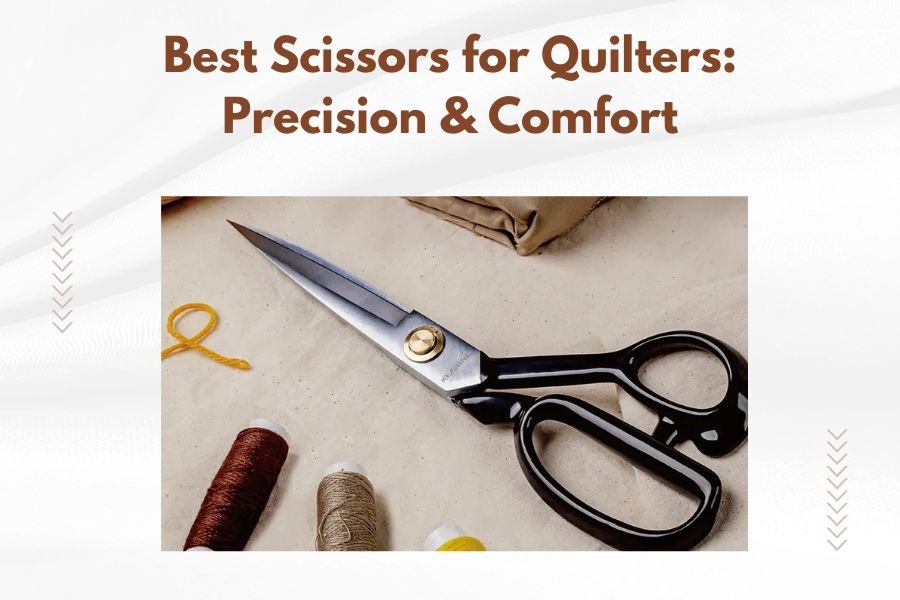
The best scissors for quilters combine sharp, precise blades with comfortable handles designed for extended cutting sessions.
Quality quilting scissors should feature high-carbon steel blades, ergonomic grips, and sizes ranging from 4-inch detail scissors to 8-inch fabric shears.
Why Your Scissors Matter More Than You Think
Ever tried cutting fabric with dull scissors? It’s like trying to slice tomatoes with a butter knife. Your cuts turn jagged, your fabric frays, and your beautiful quilt blocks look wonky before you even start sewing.
Good quilting scissors make the difference between clean, accurate cuts and frustrating fabric disasters. They save time, reduce hand fatigue, and keep your quilting projects looking professional.
What Makes Quilting Scissors Special
Regular household scissors won’t cut it for quilting. Here’s what sets quilting scissors apart:
Blade Design and Material
Quilting scissors use high-carbon steel or titanium-coated blades. These materials stay sharp longer and cut through multiple fabric layers without dulling.
The blades meet perfectly along their entire length. This precision prevents fabric from sliding between the blades during cutting.
Handle Comfort
You’ll spend hours cutting fabric pieces. Comfortable handles prevent hand cramps and finger soreness.
Look for padded finger holes and thumb rests. Some scissors include soft-grip coatings that reduce pressure on your fingers.
Types of Scissors Every Quilter Needs
Fabric Shears (8-10 inches)
These are your workhorses for cutting large pieces of fabric. The long blades create smooth, continuous cuts across wide fabric sections.
I found that many quilters prefer 8-inch shears as the best balance between cutting power and maneuverability.
General Purpose Scissors (6-7 inches)
Perfect for medium-sized cutting tasks. These handle most daily quilting cuts without being too bulky or too small.
Detail Scissors (4-5 inches)
Small, precise scissors for trimming threads, cutting curves, and working in tight spaces. The pointed tips help you get into corners and small areas.
Rotary Cutter Alternative
While not technically scissors, rotary cutters work alongside your scissors collection. They excel at straight cuts through multiple fabric layers.
Key Features to Look For
Sharp, Durable Blades
High-carbon steel blades hold their edge longest. Stainless steel resists corrosion but may need sharpening more often.
Micro-serrated edges grip fabric better and reduce slipping during cuts.
Comfortable Grip
Try before you buy when possible. Your fingers should fit comfortably in the holes without stretching or cramping.
Consider your hand size and cutting style. Some people prefer larger finger holes, while others like snug-fitting openings for better control.
Weight Balance
Well-balanced scissors feel natural in your hand. The weight should distribute evenly between the handles and blades.
Heavy scissors cut through thick fabrics easily but can tire your hand. Light scissors move quickly but might struggle with dense materials.
Top Scissor Brands Quilters Trust
Gingher
Known for precision and durability. Their scissors often last decades with proper care. The classic silver finish and comfortable handles make them popular among serious quilters.
Fiskars
Offers good quality at reasonable prices. Their ergonomic handles and lifetime warranties appeal to budget-conscious quilters.
Kai
Japanese-made scissors with extremely sharp blades. They’re lightweight yet powerful, perfect for detailed work.
Mundial
Professional-grade scissors with excellent edge retention. They’re favored by quilting instructors and shop owners.
Size Guide: Which Scissors When
| Size | Best Use | Fabric Types |
|---|---|---|
| 4-5 inches | Thread trimming, small details | All weights |
| 6-7 inches | General cutting, templates | Light to medium |
| 8-9 inches | Large pieces, long straight cuts | Medium to heavy |
| 10+ inches | Cutting multiple layers | Heavy fabrics, batting |
Left-Handed Quilter Options
Left-handed quilters need specially designed scissors. Regular scissors force left-handed users to push fabric apart rather than cutting cleanly through it.
True left-handed scissors have reversed blade positions. The top blade sits on the left side, giving left-handed users clear sight lines and proper cutting action.
Where to Find Left-Handed Scissors
Most major brands offer left-handed versions. Fiskars and Gingher both make quality left-handed quilting scissors.
Specialty sewing stores often stock left-handed options. Online retailers typically offer wider selections than physical stores.
Caring for Your Quilting Scissors
Daily Maintenance
Wipe blades clean after each use. Fabric fibers and lint can dull the cutting edge over time.
Store scissors in protective cases or magnetic holders. Dropping scissors can damage the blade alignment.
Long-Term Care
Never cut paper, cardboard, or anything other than fabric with your quilting scissors. These materials dull fabric scissors quickly.
Have scissors professionally sharpened when they start pulling or catching fabric. Most sewing machine dealers offer sharpening services.
Oil and Adjustment
Apply a tiny drop of sewing machine oil to the pivot screw occasionally. This keeps the action smooth and prevents rust.
Some scissors have adjustable tension screws. Tighten if the blades feel loose, but don’t overtighten or the scissors will bind.
Budget-Friendly vs Premium Options
Starting Out
New quilters can start with mid-range scissors around $30-50. This gets you decent quality without a huge investment.
Look for scissors with good reviews and comfortable handles. You can always upgrade later as your skills develop.
Professional Investment
Serious quilters often invest $100-200 in premium scissors. These scissors last decades and provide consistently excellent performance.
Consider your quilting frequency. If you quilt daily, premium scissors pay for themselves in comfort and durability.
Common Scissor Problems and Solutions
Fabric Gets Caught Between Blades
This usually means the blades need alignment or sharpening. Professional adjustment can fix most blade gap issues.
Scissors Pull Instead of Cut
Dull blades cause pulling. Either sharpen your scissors or replace them if sharpening isn’t cost-effective.
Hand Fatigue During Use
Your scissors might be too heavy or poorly balanced for your hand. Try different handle styles or sizes.
Take breaks every 15-20 minutes during heavy cutting sessions. Stretch your fingers and rotate your wrists.
Special Scissor Features Worth Considering
Bent Handle Design
Some scissors have angled handles that keep your hand above the cutting surface. This design reduces wrist strain and improves cutting accuracy.
Titanium Coating
Titanium-coated blades stay sharp longer and resist adhesive buildup. They’re especially useful if you work with fusible interfacing or appliqué materials.
Spring Action
Built-in springs automatically open the scissors after each cut. This reduces hand fatigue during repetitive cutting tasks.
When to Replace Your Scissors
Even quality scissors eventually wear out. Replace your scissors when:
- Sharpening no longer improves cutting performance
- Blades show visible chips or nicks
- Handle joints become loose and wobbly
- The scissors no longer cut cleanly through single fabric layers
Quality scissors often last 10-20 years with proper care. Budget scissors might need replacement every 2-5 years depending on use.
Building Your Scissor Collection
Start with one good pair of 6-7 inch scissors for general use. Add specialized scissors as your quilting skills develop:
- Small detail scissors for precision work
- Large shears for cutting yardage
- Thread snips for quick trimming
- Specialty scissors for specific techniques
Buy the best quality you can afford for your most-used scissors. You can economize on specialized scissors that see less frequent use.
Conclusion
The right scissors transform your quilting experience from frustrating struggles to smooth, precise cuts. Invest in quality blades that fit your hands comfortably and match your cutting needs.
Start with one excellent pair of general-purpose scissors, then build your collection based on your quilting style. Remember that good scissors, properly maintained, last for decades and make every quilting project more enjoyable.
Your scissors are tools that directly impact your finished quilts. Choose wisely, care for them properly, and they’ll serve you faithfully through countless beautiful projects.
What’s the difference between right-handed and left-handed quilting scissors?
Left-handed scissors have the blade positions reversed, with the top blade on the left side. This gives left-handed users a clear view of their cutting line and proper cutting action, while regular scissors force lefties to push fabric apart rather than cutting cleanly.
How often should I sharpen my quilting scissors?
Sharpen your scissors when they start pulling fabric or leaving rough edges, typically every 6-12 months for frequent quilters. Professional sharpening costs $10-20 but extends scissor life significantly compared to replacement.
Can I use my quilting scissors for other crafts?
Keep quilting scissors exclusively for fabric to maintain their sharp edge. Paper, cardboard, and other materials quickly dull fabric scissors. Designate separate scissors for general household use and other craft projects.
What size scissors work best for cutting batting?
Use 8-10 inch scissors or larger for cutting batting. The long blades create smooth, continuous cuts through the thick material. Shorter scissors require multiple cuts that can create uneven edges in batting layers.
Why do some quilting scissors cost over $100?
Premium scissors use superior steel, precise manufacturing, and ergonomic design. They stay sharp longer, cut more smoothly, and often last decades. The higher cost reflects better materials, craftsmanship, and long-term value for serious quilters.