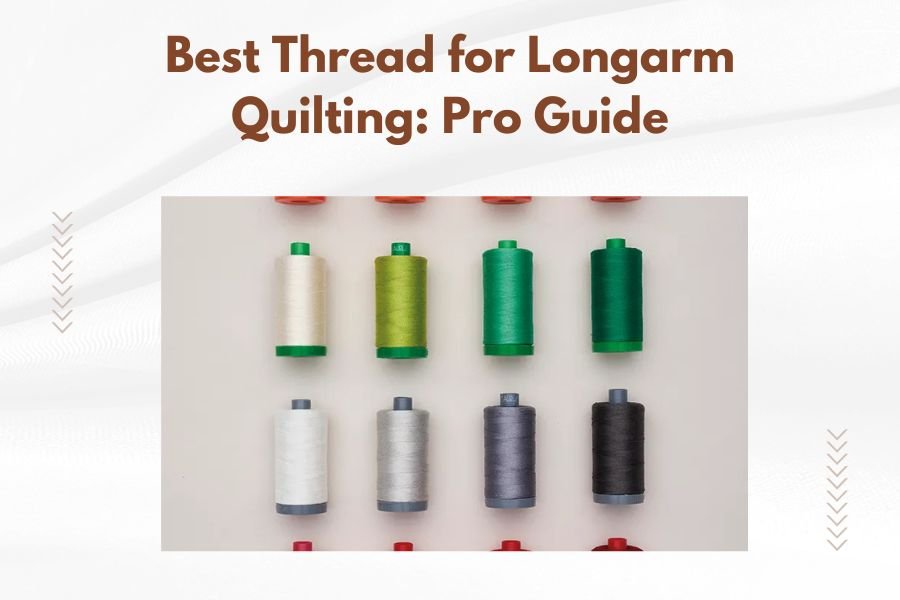
The best thread for longarm quilting is high-quality polyester or cotton thread in 40-50 weight, with brands like Glide, So Fine, and Aurifil leading the pack.
Your thread choice affects stitch quality, tension, and how long your longarm quilting project will last, so picking the right one saves you time and headaches.
What Makes Thread Perfect for Longarm Quilting
You need thread that won’t break every five minutes. Longarm quilting puts serious stress on thread as it moves fast through multiple fabric layers.
Strong thread keeps your stitches even. Weak thread creates bird nests, skipped stitches, and those annoying moments when you have to stop and rethread.
Thread Weight That Works Best
Weight numbers work backwards – higher numbers mean thinner thread. For longarm quilting, you want 40 to 50 weight thread.
50 weight gives you fine, neat stitches that don’t overpower your fabric. 40 weight works great when you want slightly more visible quilting lines.
Why Thread Strength Matters More Than You Think
Your longarm machine runs fast. That speed creates friction and heat. Cheap thread snaps under this pressure like a rubber band in winter.
Quality thread handles the stress. You’ll spend more time quilting and less time fixing problems.
Top Thread Types for Longarm Quilting
Polyester Thread: The Reliable Workhorse
Polyester thread dominates longarm quilting for good reasons. It’s strong, colorfast, and handles machine speed without breaking.
This thread type resists shrinking. Your quilt won’t pucker after the first wash like it might with lower-quality options.
Best Polyester Options
Glide thread by Fil-Tec gets rave reviews from quilters I’ve talked to online. The trilobal polyester construction makes it incredibly smooth through your machine.
So Fine by Superior Threads also performs well. Many longarm quilters say it feels almost like silk but costs much less.
Cotton Thread: Traditional Choice with Modern Quality
Cotton thread gives your quilts that classic look. Modern mercerized cotton performs much better than the cotton thread your grandmother used.
Aurifil 50 weight cotton leads this category. From what I’ve read in quilting forums, it rarely breaks and comes in hundreds of colors.
When to Choose Cotton Over Polyester
Pick cotton for traditional quilts or when you want that authentic vintage appearance. Cotton ages beautifully and gets softer over time.
Cotton works best on natural fabrics. If you’re quilting cotton batting with cotton fabric, cotton thread completes the natural fiber trio.
Rayon Thread: For Special Projects
Rayon thread shines – literally. It has a beautiful luster that makes decorative quilting pop.
But rayon needs more care. It’s less forgiving than polyester and breaks more easily if your tension isn’t perfect.
Thread Brands That Longarm Quilters Trust
| Brand | Type | Best For | Price Range |
|---|---|---|---|
| Glide | Polyester | High-speed quilting | Mid-range |
| Aurifil | Cotton | Traditional quilts | Premium |
| So Fine | Polyester | Detailed work | Mid-range |
| King Tut | Cotton | Variegated effects | Premium |
Glide Thread: Speed Champion
Glide handles high speeds without missing a beat. The trilobal construction reflects light, giving your quilting a subtle shine.
I found that many professional longarm quilters stock up on Glide because it rarely causes thread breaks or tension issues.
Aurifil: Cotton Perfection
Aurifil’s 50 weight cotton feels incredibly smooth. The long-staple Egyptian cotton construction means fewer weak spots that could break.
Color selection beats almost everyone else. You’ll find the perfect shade for any project.
Superior Threads: Multiple Winners
Superior makes several excellent threads for longarm quilting. So Fine polyester and Bottom Line both get high marks from quilters.
Bottom Line works great in the bobbin. It’s thin enough that you won’t run out of bobbin thread constantly.
How to Pick Colors That Work
Matching vs. Contrasting Thread Colors
Matching thread colors blend into your fabric. This approach highlights the quilting texture rather than the thread itself.
Contrasting colors make your quilting pattern the star. Bold contrast works great on solid fabrics or simple prints.
The Gray Thread Secret
Medium gray thread works on almost any fabric. It’s the universal donor of thread colors.
When you can’t decide, gray disappears into most color schemes while still showing your beautiful quilting work.
Variegated Thread: Use with Care
Variegated thread changes colors along its length. This creates interesting effects but can look busy on complex fabrics.
Save variegated thread for solid fabrics or simple patterns where the color changes can shine.
Thread Storage and Care Tips
Keeping Thread in Top Shape
Store thread away from direct sunlight. UV rays weaken thread fibers over time, making them more likely to break.
Keep thread in a cool, dry place. Heat and humidity can affect thread quality and cause color bleeding.
How Long Does Thread Last
Quality thread lasts for years when stored properly. But old thread gets brittle and breaks more often.
If your thread snaps frequently, it might be time to replace it even if the spool looks full.
Testing Thread Before Big Projects
Always test new thread on fabric scraps first. Check how it looks, feels, and behaves with your specific fabric combination.
Test different tensions too. Some threads need slight tension adjustments to perform their best.
Troubleshooting Common Thread Problems
Why Thread Keeps Breaking
Thread breaks usually mean tension problems, not bad thread. Check your upper tension first – it might be too tight.
Old or cheap thread also breaks more often. Sometimes spending a few extra dollars on quality thread saves hours of frustration.
Thread Path Issues
Make sure thread flows smoothly through all guides. One rough spot can cause enough friction to break even strong thread.
Check for burrs or rough edges on your machine. Even tiny imperfections can catch and break thread.
Fixing Tension Problems
Start with your bobbin tension. It should be just tight enough that the bobbin doesn’t fall when you hold the thread.
Adjust upper tension gradually. Small changes make big differences in stitch quality.
When Stitches Look Uneven
Uneven stitches often come from inconsistent thread quality rather than machine problems. Cheap thread has thick and thin spots that create irregular stitches.
Switch to higher-quality thread and see if the problem disappears.
Budget-Friendly Thread Options
Finding Good Thread Without Breaking the Bank
You don’t need the most expensive thread for good results. Focus on consistent quality rather than premium price tags.
Buy thread on sale and stock up on colors you use most often. Many quilt shops offer bulk discounts.
When to Splurge vs. Save
Splurge on thread for heirloom quilts or gifts. These projects deserve the extra investment in quality materials.
Save money on practice pieces or utility quilts. Mid-range thread works fine for everyday projects.
Thread Buying Strategies
Join thread clubs or subscription services for better prices. Many offer 20-30% savings over retail prices.
Buy thread cones instead of small spools when possible. Cones cost less per yard and reduce the number of thread changes.
Special Considerations for Different Quilting Styles
Dense Quilting Needs Different Thread
Heavy quilting creates thick areas that can be hard to bind and finish. Use thinner thread (higher weight numbers) for dense patterns.
50 weight thread works better than 40 weight when you’re doing lots of quilting in small areas.
Modern Quilts vs. Traditional Styles
Modern quilts often feature bold, contrasting thread colors. This trend works well with high-quality polyester threads that come in bright, saturated colors.
Traditional quilts look best with cotton thread in matching or slightly contrasting colors.
Conclusion
Choosing the best thread for longarm quilting doesn’t have to be complicated. Start with quality 50 weight polyester like Glide or So Fine for most projects. Add some Aurifil cotton for traditional quilts and you’ll be set for almost anything.
Remember that good thread is an investment, not an expense. Quality thread prevents problems, saves time, and makes your finished quilts look professional. Your longarm machine will run smoother, your quilts will look better, and you’ll enjoy the process more when you’re not constantly dealing with thread breaks and tension issues.
What’s the difference between 40 weight and 50 weight thread for longarm quilting?
50 weight thread is thinner and creates more delicate, less visible stitching lines. 40 weight is slightly thicker and shows up more prominently in your quilting design. For most longarm work, 50 weight gives cleaner results without adding bulk to your quilt.
Can you use regular sewing thread on a longarm quilting machine?
Regular sewing thread often breaks under the speed and stress of longarm quilting. Longarm threads are manufactured specifically to handle high speeds, multiple fabric layers, and constant tension. Using proper longarm thread prevents most threading problems and gives much better results.
How much thread do you need for a queen-size quilt?
A queen-size quilt typically uses 3,000-5,000 yards of thread, depending on how dense your quilting pattern is. Simple all-over patterns use less thread, while detailed custom quilting can use significantly more. It’s better to have extra thread than to run out mid-project.
Should your top thread and bobbin thread match exactly?
Top and bobbin threads don’t need to match exactly, but they should be similar weights and qualities. Many quilters use a lighter weight thread in the bobbin, like Bottom Line, to reduce bulk. The bobbin thread rarely shows on the quilt top anyway.
Why does expensive thread matter more for longarm quilting than regular sewing?
Longarm machines run at much higher speeds than regular sewing machines, creating more friction and heat. Quality threads are engineered to handle this stress without breaking or creating lint buildup. Cheap thread that works fine for piecing often fails under longarm quilting conditions.