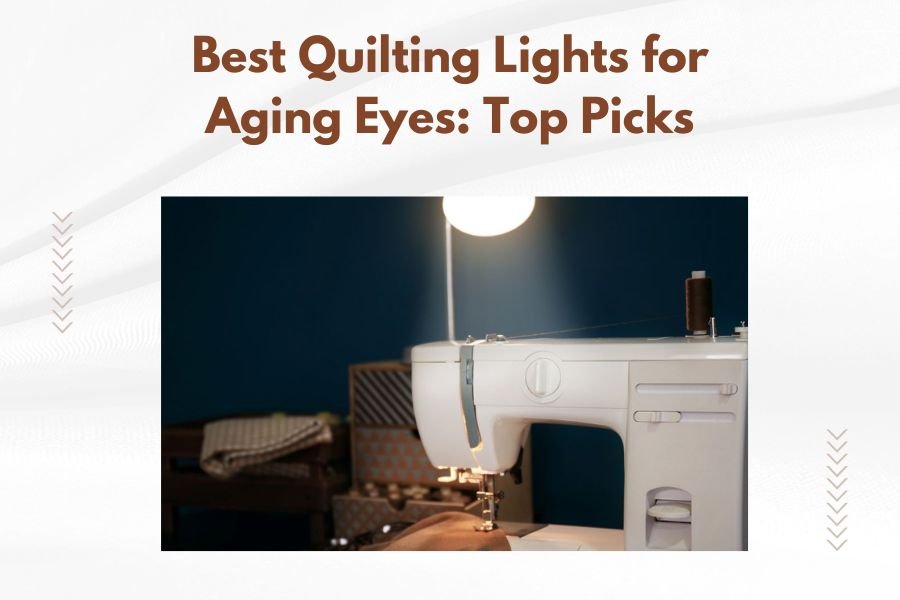
The best quilting lights for aging eyes include adjustable LED lights with at least 3000K color temperature, magnifying floor lamps with flexible arms, and bright daylight bulbs that reduce eye strain and improve visibility on detailed fabric work.
Your quilting light should provide 1000-2000 lumens of brightness, offer multiple adjustment angles, and minimize shadows across your workspace to help compensate for age-related vision changes.
Why Your Eyes Need Better Lighting as You Age
Your eyes change as you get older. It’s not your imagination that threading a needle feels harder than it used to be.
After age 40, your pupils get smaller and let in less light. Your eye’s natural lens also becomes less flexible. This makes close-up work like quilting more challenging.
Research shows that by age 60, you need about three times more light than a 20-year-old to see the same details clearly (American Optometric Association). That’s where the right quilting light makes all the difference.
Key Features to Look for in Quilting Lights
Brightness Levels That Actually Help
You need at least 1000 lumens for basic quilting. For detailed work like hand quilting or applique, aim for 1500-2000 lumens.
Many quilting lights offer adjustable brightness. This lets you dial up the light when working on dark fabrics or intricate patterns.
Color Temperature Makes a Difference
Look for lights between 3000K and 5000K. This range gives you natural-looking colors without the harsh blue light that can cause headaches.
Daylight bulbs (around 5000K) work great for color matching. Warmer lights (3000K) feel easier on your eyes during long quilting sessions.
Adjustability Is Your Friend
Your quilting light should move where you need it. Look for flexible arms, rotating heads, and height adjustment options.
You’ll be moving around your quilt as you work. A fixed light creates shadows and blind spots that strain your eyes even more.
Top Types of Quilting Lights for Aging Eyes
LED Floor Lamps with Magnification
These combine bright LED lighting with a built-in magnifying lens. They’re perfect if you’re dealing with both dim vision and difficulty seeing small details.
The magnification usually ranges from 2x to 5x. Start with lower magnification – higher levels can actually make you dizzy or cause eye fatigue.
Benefits of Magnifying Floor Lamps
- Hands-free magnification while you work
- Adjustable height and angle
- Often include multiple brightness settings
- Good for both piecing and hand quilting
Potential Drawbacks
- Limited coverage area
- Can create a hot spot of light
- Takes up floor space in your sewing room
Clamp-On Task Lights
These attach directly to your quilting table or machine. They put light exactly where you’re working without taking up extra space.
Look for models with long, flexible necks. You want to position the light to eliminate shadows cast by your hands or quilting tools.
Why Clamp-On Lights Work Well
- Direct, focused lighting on your work area
- Easy to reposition as you move around large quilts
- Usually more affordable than floor lamps
- Don’t take up valuable workspace
Overhead Track Lighting Systems
If you’re serious about quilting and have a dedicated space, track lighting gives you the most even coverage.
Multiple LED spotlights on a track can light your entire cutting table or quilting frame without shadows.
When Track Lighting Makes Sense
- You have a permanent quilting setup
- You work on large quilts regularly
- You want professional-level lighting
- You can install ceiling-mounted fixtures
Specific Light Recommendations for Common Quilting Tasks
Best Lighting for Cutting Fabric
Fabric cutting needs broad, even light across your cutting mat. Shadows make it hard to cut straight lines and can hide fabric flaws.
A combination of overhead lighting plus a bright task lamp works best. Position the task lamp to shine across your cutting area from the side.
Ideal Setup for Machine Quilting
Your sewing machine probably has a built-in light, but it’s rarely enough. Add a clamp-on LED light positioned to shine on the needle area from the left side.
This setup eliminates the shadow your hands create and helps you see your quilting lines clearly.
Hand Quilting Light Requirements
Hand quilting demands the most precise lighting. You’re looking for tiny, even stitches and need to see exactly where your needle enters the fabric.
A magnifying floor lamp with good side lighting works best here. The magnification helps with stitch placement, and the bright light shows thread tension clearly.
Common Lighting Mistakes That Hurt Your Eyes
Using Only Overhead Room Lighting
Regular ceiling lights create shadows when you lean over your work. Your head blocks the light just where you need it most.
Always add task lighting that comes from the side or behind your work area.
Choosing Lights That Are Too Dim
That cute little sewing lamp might look perfect in your quilting room, but if it doesn’t provide enough light, it’s making your eyes work harder.
Don’t be afraid of bright lights. Your aging eyes need more light, not less.
Creating Glare and Hot Spots
Too much light in one small area can be just as bad as too little light overall. Glare causes eye strain and headaches.
Use lampshades or diffusers to spread light evenly. Position lights to avoid reflections off your fabric or cutting tools.
Budget-Friendly Lighting Solutions
Daylight LED Bulbs in Existing Fixtures
Start simple. Replace the bulbs in your current lamps with bright daylight LEDs. Look for bulbs rated at least 1600 lumens.
This won’t solve all your lighting problems, but it’s an affordable first step that makes an immediate difference.
Desk Lamps with Adjustable Arms
A good adjustable desk lamp costs much less than specialty quilting lights. Look for one with a heavy base that won’t tip over.
Add a daylight LED bulb, and you have effective task lighting for under $50.
Advanced Lighting Features Worth Considering
Dimmer Controls
Your lighting needs change throughout the day. Morning light is different from evening light, and your eyes feel different at various times too.
Dimmable lights let you adjust brightness to match your comfort level and the natural light in your room.
Color-Changing LED Options
Some modern LED lights let you adjust color temperature from warm to cool. This helps with color matching and reduces eye strain.
Cool light (5000K) is great for accurate color work. Warm light (3000K) feels more comfortable for long quilting sessions.
Setting Up Your Quilting Space for Better Vision
Layer Your Lighting
Professional designers use three types of lighting: ambient (general room light), task (focused work light), and accent (decorative or mood lighting).
Your quilting space needs good ambient lighting plus strong task lighting. Skip the accent lighting – it just creates distracting shadows.
Consider Your Fabric Colors
Dark fabrics need more light to see details clearly. Light fabrics can create glare if your lighting is too bright or poorly positioned.
Adjustable lighting lets you dial in the right amount of light for each project.
Maintenance Tips for Long-Lasting Performance
Keep Your Lights Clean
Dust and lint reduce light output significantly. Clean your bulbs and lampshades monthly with a soft cloth.
In a quilting room, fabric fibers get everywhere. A dirty lamp can lose 30% of its brightness.
Replace Bulbs Before They Burn Out
Light output decreases as bulbs age, even before they burn out completely. Replace LED bulbs every 3-5 years for consistent brightness.
Mark replacement dates on your calendar. Your eyes will thank you for staying ahead of dimming bulbs.
Conclusion
The right lighting transforms your quilting experience as your eyes age. You don’t have to give up detailed work or struggle with poor visibility.
Start with adequate brightness – at least 1000 lumens for basic work, more for detailed tasks. Add adjustability so you can position light exactly where you need it. Choose daylight LEDs between 3000K and 5000K for natural color rendering.
Remember that good lighting is an investment in your quilting future. Your eyes change over time, but the right lights help you keep doing what you love comfortably and safely.
What’s the minimum brightness I need for quilting with aging eyes?
You need at least 1000 lumens for basic quilting tasks, but 1500-2000 lumens works better for detailed work like applique or hand quilting. Your aging eyes need about three times more light than younger eyes to see the same details clearly.
Should I choose warm or cool LED bulbs for my quilting light?
Cool daylight LEDs around 5000K give you the most accurate color matching for fabric selection. Warmer 3000K bulbs feel more comfortable during long quilting sessions. Adjustable color temperature lights let you switch between both options as needed.
Can magnifying lights really help with quilting, or do they make things worse?
Magnifying lights help with detailed work like hand quilting and precise piecing. Start with 2x magnification – higher levels can cause dizziness and eye strain. They work best for close-up tasks, not general cutting or machine quilting.
How do I position my quilting light to avoid shadows and glare?
Position task lights to the side of your work area, not directly overhead where your head creates shadows. For right-handed quilters, place lights on the left side. Use lampshades or diffusers to prevent glare, and avoid shining lights directly onto reflective surfaces like rulers or scissors.
Are expensive specialty quilting lights worth the money compared to regular desk lamps?
Specialty quilting lights offer features like better adjustability, higher brightness levels, and color accuracy that regular desk lamps often lack. However, a good adjustable desk lamp with a bright daylight LED bulb can work well as a budget-friendly starting point before investing in specialized lighting.