
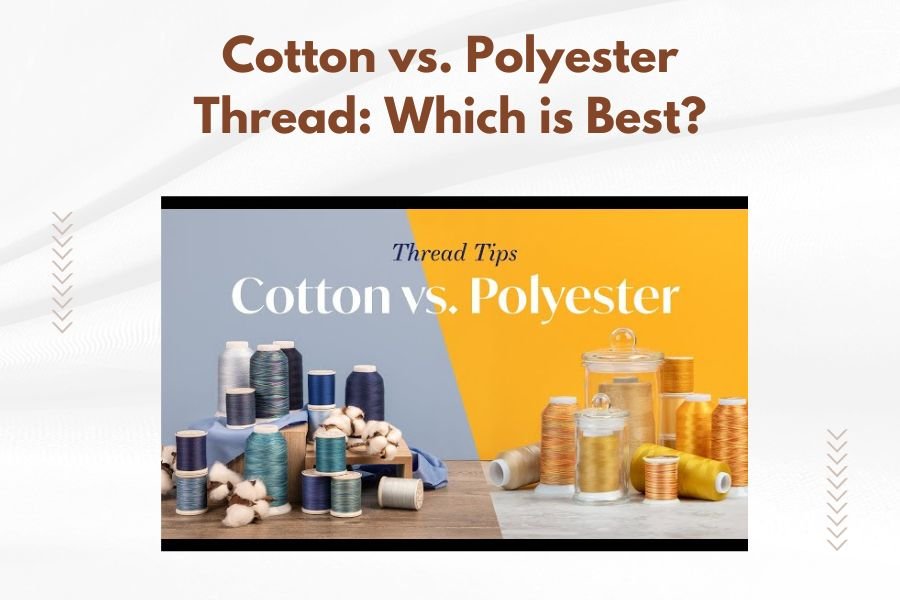
Cotton thread works best for natural fabrics and quilting, while polyester thread excels in high-stress seams and synthetic materials.
Your thread choice depends on your project type, fabric blend, and durability needs rather than one being universally better.
What Makes Cotton and Polyester Thread Different?
Think of cotton vs. polyester thread like comparing a comfortable cotton t-shirt to a stretchy athletic shirt. Each has its place in your closet, just like each thread type serves different sewing needs.
Cotton thread comes from natural cotton fibers. It breathes well and shrinks with your fabric. Polyester thread uses synthetic materials that resist breaking and hold color longer.
Cotton Thread Properties
Cotton thread feels soft and works beautifully with natural fabrics. It has a matte finish that blends naturally into cotton, linen, and wool projects.
You’ll find cotton thread shrinks about 3-5% when washed. This matches how cotton fabric behaves, so your seams stay even.
Heat Resistance in Cotton
Cotton can handle high iron temperatures without melting. This makes pressing seams much easier, especially in quilting projects.
Cotton Thread Strength
Cotton breaks more easily than polyester when pulled hard. Research shows cotton thread has about 40% less tensile strength than equivalent polyester thread.
Polyester Thread Properties
Polyester thread shines brighter and feels slightly stiffer. It comes in more color options and keeps those colors longer through washing.
This thread type stretches slightly under stress, then returns to its original length. That flexibility helps prevent broken seams in activewear.
Durability of Polyester
Polyester resists UV damage, chemicals, and frequent washing better than cotton. Your seams will outlast the fabric in many cases.
Color Fastness
Polyester holds dye differently than cotton. Colors stay vibrant for years, even with regular washing and sun exposure.
When Should You Choose Cotton Thread?
Cotton thread works best when you want your thread to behave exactly like your fabric. Are you working with 100% cotton quilting fabric? Cotton thread will shrink at the same rate.
Best Cotton Thread Projects
- Hand quilting and traditional patchwork
- Heirloom sewing with natural fabrics
- Garments that need frequent pressing
- Projects where you want invisible seams
Cotton Thread for Quilting
Many quilting experts prefer cotton thread because it creates less tension on delicate fabric pieces. The thread won’t overpower lightweight cotton prints.
Cotton thread also breaks cleanly when you need to remove stitches. Polyester tends to fray when you rip out seams.
Natural Fabric Compatibility
Cotton, linen, and wool fabrics all have similar care requirements to cotton thread. You can wash everything at the same temperature without worry.
When Should You Choose Polyester Thread?
Polyester thread handles stress better than cotton. Do you sew activewear, outdoor gear, or children’s clothes that get heavy use? Polyester won’t let you down.
Best Polyester Thread Projects
- Synthetic and blended fabrics
- Activewear and swimwear
- Heavy-duty items like bags and outdoor gear
- Machine embroidery
Stretch Fabric Sewing
Polyester thread moves with stretchy fabrics without snapping. Cotton thread often breaks when spandex or knit fabrics stretch during wear.
High-Speed Machine Sewing
Modern sewing machines run fast and create heat through friction. Polyester handles this stress better than cotton, which can weaken from heat buildup.
Thread Weight and Quality Comparison
Both cotton and polyester come in similar weight ranges. Weight 50 works for most general sewing, while weight 40 handles heavier fabrics.
| Feature | Cotton Thread | Polyester Thread |
|---|---|---|
| Strength | Medium | High |
| Heat Tolerance | High | Medium |
| Shrinkage | Yes (3-5%) | Minimal |
| Color Options | Good | Excellent |
| Price | Higher | Lower |
Thread Quality Grades
Both thread types come in different quality levels. Premium cotton thread costs more but creates less lint and breaks less often.
Cheap polyester thread can leave residue in your machine and cause tension problems. Invest in good thread regardless of type.
Mercerized Cotton Benefits
Mercerized cotton thread goes through a chemical process that makes it stronger and shinier. It combines some benefits of both thread types.
Machine Settings for Different Threads
Your sewing machine needs slight adjustments for different thread types. Cotton thread often requires lower tension settings than polyester.
Tension Adjustments
Start with your machine’s standard tension setting. Cotton thread may need slightly looser tension because it’s less stretchy than polyester.
Test your stitches on scrap fabric first. Perfect tension creates even stitches that look the same on both sides.
Needle Selection Tips
Universal needles work with both thread types for most projects. Heavy polyester thread may need a larger needle size to prevent thread damage.
Cost Considerations
Cotton thread typically costs 20-30% more than equivalent polyester thread. However, thread cost rarely makes up more than 5% of total project expenses.
Good quality thread prevents frustration and rework time. Cheap thread that breaks constantly costs more in the long run.
Value for Money Analysis
Consider your project’s lifespan when choosing thread. A quilt you’ll keep for decades deserves quality cotton thread. A quick costume might work fine with basic polyester.
Environmental Impact
Cotton thread biodegrades naturally, while polyester thread lasts indefinitely in landfills. This matters if environmental impact influences your crafting choices.
Some manufacturers now make recycled polyester thread from plastic bottles. This reduces waste while maintaining polyester’s performance benefits.
Conclusion
Neither cotton nor polyester thread wins in every situation. Cotton works best for natural fabrics, quilting, and projects needing high heat pressing. Polyester excels with synthetic fabrics, high-stress seams, and machine embroidery.
Many experienced sewers keep both types in their most-used colors. This way, you can match your thread choice to each project’s specific needs. Remember that good quality matters more than thread type for most sewing success.
Start by matching your thread to your fabric content when possible. Cotton with cotton, polyester with polyester blends. This simple rule will guide you correctly in most situations.
What thread weight should I use for quilting cotton fabric?
Weight 50 cotton thread works best for most quilting projects. It’s strong enough for piecing but fine enough to not add bulk in seam intersections.
Can I mix cotton and polyester thread in the same project?
Yes, but use cotton thread for structural seams and polyester for decorative topstitching. Different shrinkage rates might cause puckering if you use both in the same seam.
Why does my polyester thread keep breaking during sewing?
Check your needle – it might be too small or dull. Also try loosening your tension slightly, as polyester thread behaves differently than cotton in your machine.
Which thread type works better for hand sewing?
Cotton thread feels more comfortable for hand sewing and doesn’t tangle as easily as polyester. It also ties off more securely at the end of your stitching.
How can I tell if my old thread is still good to use?
Pull a length of thread firmly between your hands. Good thread stretches slightly then holds. Brittle thread that snaps easily should be replaced regardless of type.
