
You can quilt perfect scallops on your machine by using the right foot, setting proper tension, and following curved templates or built-in decorative stitches.
Machine quilting scallops requires steady speed, the correct presser foot, and practice with curved motions to create smooth, even edges.
What Makes Machine-Quilted Scallops Look Professional
Perfect scallops come down to three key elements: consistent curves, even spacing, and smooth thread tension. When these work together, your quilt edges look like they came from a high-end shop.
The biggest mistake quilters make? Rushing through the curves. Scallops need patience and steady hands.
Essential Equipment for Machine Scallop Quilting
The Right Presser Foot Makes All the Difference
A walking foot or free-motion quilting foot gives you the control you need. Walking feet help feed fabric evenly through curves. Free-motion feet let you guide the fabric manually.
I found that most quilting experts recommend starting with a walking foot if you’re new to curved quilting. It’s more forgiving than free-motion work.
Thread and Needle Selection
Use high-quality cotton or polyester thread that matches your fabric weight. Heavier threads show scallop details better, but they need larger needles.
For most quilting cotton, a size 14 needle works well. Thicker threads might need a size 16.
Templates and Marking Tools
You’ll need scallop templates or stencils to mark your pattern. Water-soluble markers disappear after washing, making them perfect for this job.
Some quilters use masking tape to create gentle curves. It’s removable and gives you a physical guide to follow.
Machine Settings for Perfect Scallops
Stitch Length and Width
Set your stitch length between 2.5 and 3.0 for most scallop work. This creates visible definition without looking chunky.
If your machine has decorative stitches, many include scallop patterns. These automatically adjust width and length for you.
Tension Adjustments
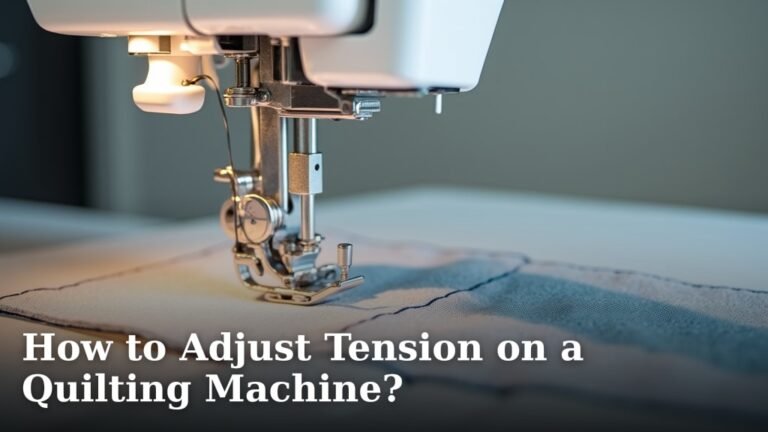
Start with normal tension settings. If your top thread shows on the back, lower the top tension slightly. If bobbin thread shows on top, raise it.
Test on fabric scraps first. Different thread types can change how tension behaves.
Speed Control
Slow and steady wins the scallop race. Set your machine to about 50% speed if it has that option.
Fast stitching makes it hard to follow curves smoothly. You want time to guide the fabric properly.
Step-by-Step Scallop Quilting Process
Planning Your Scallop Layout
Measure your quilt edge and divide it by your desired scallop width. You might need to adjust scallop size slightly to fit evenly.
Mark the center points of each scallop first. This helps keep everything symmetrical.
Marking the Pattern
Place your template at the first corner and trace lightly. Move the template along, matching up the connection points.
Double-check that your scallops will meet properly at corners. Sometimes you need to adjust the first few to make everything work out.
Starting Your First Scallop
Begin stitching at the lowest point of a scallop curve. This gives you the most control as you work up and around.
Keep your hands relaxed but steady. Think of guiding the fabric, not forcing it through the curves.
Maintaining Consistent Curves
Move the fabric in small, smooth motions. Jerky movements create pointed spots instead of gentle curves.
If you’re using free-motion quilting, move your hands in rhythm with the needle. Fast needle, fast hands. Slow needle, slow hands.
Connecting Scallops Smoothly
The transition between scallops is where many quilters struggle. Practice makes these connections invisible.
Slow down extra at connection points. Take your time to line up with your marked pattern.
Advanced Techniques for Complex Scallop Designs
Double and Triple Scallop Rows
Multiple rows create elegant borders. Stitch the innermost row first, then work outward.
Keep consistent spacing between rows. A quilting ruler helps maintain even distances.
Varying Scallop Sizes
Mixing large and small scallops adds visual interest. Plan this carefully so the pattern repeats properly.
I came across quilts where large scallops alternate with two small ones. This creates a nice rhythm.
Adding Fill Patterns Inside Scallops
Echo quilting inside each scallop makes them pop. Stippling adds texture without competing with the scallop shape.
Keep fill patterns simple. The scallop edges should stay the main feature.
Troubleshooting Common Scallop Problems
Uneven Curves and Wobbles
Wobbly scallops usually come from inconsistent speed or hand movement. Practice helps, but there are quick fixes too.
Try reducing your stitch speed even more. Going slower gives you better control over curved lines.
Thread Tension Issues
Curved stitching can reveal tension problems that straight lines hide. The fabric curves differently, changing how threads interact.
Test your settings on a practice sandwich with the same fabrics and batting you’re using.
Puckering Along Curves
Puckering happens when the machine feeds fabric unevenly through curves. A walking foot usually solves this.
Make sure you’re not pulling or pushing the fabric. Guide it gently and let the machine do the work.
Finishing Scalloped Edges
Trimming and Binding Scalloped Quilts
Cut carefully along your scalloped quilting lines, leaving about 1/4 inch seam allowance.
Binding scallops takes patience. You’ll need to ease the binding around each curve and miter the inner points.
Pressing Curved Seams
Press lightly and use the tip of your iron to follow curves. Don’t drag the iron, which can stretch the bias edges.
Steam helps curved seams lay flat, but don’t overdo it. Too much moisture can distort your careful shaping.
Practice Exercises for Scallop Mastery
Simple Curve Drills
Before tackling full scallops, practice simple curves on scraps. Draw gentle arcs and follow them with straight stitching.
Work on consistent speed and smooth hand movements. These basics transfer directly to scallop work.
Template-Free Scallops
Once you’re comfortable with marked patterns, try freehand scallops. This builds confidence and gives you more creative freedom.
Start with larger scallops, which are more forgiving than small tight curves.
Conclusion
Perfect machine-quilted scallops come from preparation, practice, and patience. Start with the right equipment, set up your machine properly, and take your time with each curve.
Remember that even experienced quilters needed practice to master scalloped edges. Your first attempts might not be perfect, and that’s completely normal. Each scallop teaches you something new about controlling curves and managing fabric flow.
The key is consistent practice with quality materials. Once you master basic scallops, you can explore variations like multiple rows, mixed sizes, and decorative fills. Your quilts will have that professional finish that makes people ask, “How did you do that?”
How long does it take to quilt scallops on a full-size quilt?
A full-size quilt border typically takes 2-4 hours for basic scallops, depending on your experience level and scallop complexity. Simple single-row scallops work faster than multiple rows or decorative fills. Plan extra time for your first few scalloped projects as you build your curve-stitching skills.
Can you use regular sewing thread for machine scallop quilting?
Regular sewing thread works for scallop quilting, but quilting thread performs better. Quilting thread has stronger fibers and less lint, which helps with the constant direction changes in curved stitching. Cotton quilting thread gives the best stitch definition for showing off your scallop shapes.
What’s the best scallop size for beginners?
Start with scallops that are 3-4 inches wide. This size is large enough to control easily but small enough to look proportional on most quilts. Very small scallops require more precision, while extra-large ones can look overwhelming. Medium scallops let you focus on technique without fighting tight curves.
Do you need a special machine to quilt scallops?
Any sewing machine that handles quilting can create scalloped edges. You don’t need computerized features or expensive equipment. A reliable straight stitch, even tension, and the ability to control your speed are the main requirements. A walking foot attachment helps but isn’t absolutely necessary.
How do you fix mistakes in machine-quilted scallops?
Small wobbles can often stay – they add handmade character. For major mistakes, use a seam ripper to remove stitching carefully, then re-stitch that section. Work slowly when removing stitches from curves to avoid damaging fabric. Sometimes it’s easier to incorporate small mistakes into the design rather than ripping out large sections.